If you’ve ever found yourself scratching your head, staring at a Hyundai Sonata’s brake discs while trying to replace or upgrade them, you’re not alone. I’m the owner of Brake Discs By Sizes, and I field this question at least a dozen times a week from Sonata owners, independent mechanics, and even fleet managers who run a handful of these mid-size sedans. The truth is, there’s no one-size-fits-all answer here—but that’s actually a good thing, because getting the right size isn’t just about fitting; it’s about stopping safely. Brake Discs By Sizes
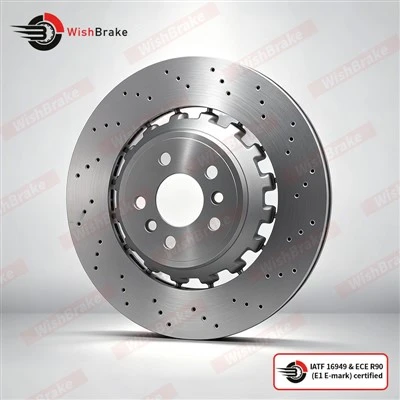
First off, let’s cut through the noise: brake disc size is measured in millimeters (mm) and refers to the outer diameter of the disc, not the thickness (though thickness matters too, more on that later). For most Hyundai Sonata models made in the last 20 years, the front brake discs are going to be the larger of the two—because front brakes do most of the heavy lifting when you hit the pedal. Rear discs are smaller, often around half the front size, for a good reason: weight distribution. A Sonata’s engine is up front, so 60-70% of its weight sits on the front wheels when braking, meaning those discs need more surface area to dissipate heat and slow the car down.
Let’s break it down by model year, because that’s where most people mess up. The 6th-gen Sonata, which ran from 2010 to 2014, is super common on the road. For front discs here, the standard size is 280mm. Rear discs? Those clock in at 262mm. Wait, that’s not a huge difference, right? Yeah, because this gen Sonata is on the smaller side for mid-size sedans, not to mention the base trim had a 2.4L engine, while the turbo Sport models upped things a bit. Speaking of trims—if you’ve got a 2011-2014 Sonata 2.0T, don’t just grab the 280mm discs. Those Sport trims came with upgraded front discs, 300mm to be exact. I see people mix this up all the time, and it leads to squealing brakes, longer stopping distances, or even warped discs if they’re using the wrong size.
Fast forward to the 7th-gen Sonata, 2015 to 2019. This is when Hyundai cranked up the power, especially with the 1.6T and 2.0T engines. Base trims still rock 280mm front discs, but the higher trims (like the Limited or Sport 2.0T) moved up to 305mm front discs. Rear discs here went up too—base rears are still 262mm, but the trims with bigger fronts often have 284mm rears to match, so you don’t get uneven wear on the pads. If you’re the type who loves upgrading your car, maybe you swapped out your original suspension or added bigger tires? That’s another reason to double-check your size—wider tires need more braking force, so a stock size might not cut it.
Now the 8th-gen Sonata, which launched in 2020 and is still going strong. This one’s a bit different because it has hybrid variants too. For gas-only trims (1.6T, 2.5L), front discs are 305mm, rear are 284mm. The hybrid? It’s even a bit more specific—hybrid front discs are 280mm, rear are 262mm. Why? Hybrids are heavier because of the battery, but Hyundai tuned the braking system to work with regenerative braking too. Regen slows the car down using the electric motor, so the hydraulic brakes (and their discs) don’t have to work as hard all the time. That means the disc size can be smaller, which saves weight and helps with fuel efficiency. Cool, right? But if you’re a hybrid owner doing a lot of stop-and-go city driving, your discs still wear out, and you need the exact right size.
Wait, what about the old 5th-gen Sonata, 2005 to 2009? Those are still out there, too, especially as fleet cars or hand-me-downs. Front discs here were 270mm, rear were 262mm. No crazy differences there, just a smaller size for the older 2.4L and 3.3L V6 models. I’ve had guys come in with a 2006 Sonata that’s been driven 150k miles, and they’re like “why are my front discs only 270mm?” Because that’s what Hyundai spec’d back then. Upgrading to 280mm is a solid mod if you want better stopping power, just make sure the caliper bracket fits—some people try to jam a bigger disc on the stock caliper, and that leads to rubbing, which is a headache.
Now, here’s the part most people ignore: disc thickness. It’s not just the diameter that matters. For all those Sonata models I mentioned, front disc thickness is usually between 22mm and 28mm, rear is 18mm to 24mm. If your disc is thinner than the minimum spec (you can find that in your owner’s manual, or if you bring it to a shop, they’ll measure it for you), you have to replace it. Driving a warped or too-thin disc is dangerous—your brakes will vibrate when you stop, and stopping distance can go up by 10 feet or more at 60 mph. That’s the difference between a close call and a crash, trust me.
I get it—when you’re buying brake discs, you don’t want to guess. That’s why at Brake Discs By Sizes, we stock every Sonata size I just mentioned, plus the hard-to-find ones for the trims most places don’t carry. Last month, a mechanic brought in a 2013 Sonata Hybrid, and he couldn’t find the 280mm front discs anywhere—every supplier only had the 305mm ones for the Sport trims. We had them in stock, same day, and he was back on the road by lunch. No waiting around for shipping, no returning the wrong size.
A common question I get: “Can I use a bigger disc than what Hyundai specs?” Short answer: yes, but only if you do it right. If you upgrade to a bigger front disc, you’ll need to make sure your wheel can clear it. A lot of 16-inch stock wheels won’t fit a 300mm+ disc—you might need 17s or bigger. Also, your brake caliper has to match, and you might need new pads too. It’s a mod that works for performance builds, but if you’re just replacing worn stock discs, stick to the spec size. No need to overcomplicate it—stock is designed for your car’s weight, power, and driving habits.
Another thing: wear and tear. How often do you need to replace Sonata brake discs? If you drive mostly highways, they can last 70k to 100k miles. If you do a lot of city stop-and-go, towing, or driving in hilly areas, they might only last 30k to 50k. That’s because every time you hit the brakes, the disc gets hot, expands, then cools down. Over time, that causes wear, and if you don’t replace them, they can crack or warp. Our customers tell us they save 20% to 30% on brake jobs when they buy from us, because we give the right size every time, no mistakes.
Wait, let’s clarify one more thing: if you’re looking at rotors, that’s the same as brake discs, right? Yeah, in most places, people use them interchangeably. So when someone says “Sonata brake rotors,” they mean the same thing I’m talking about here. Just a regional slang difference, no technical gap.
I see a lot of online forums where people argue about what size is “correct” for a Sonata. The number one rule is check your VIN (vehicle identification number). Hyundai uses the VIN to build your exact car, so if you pull it up on our site or at the auto parts store, it’ll tell you the exact front and rear disc size. That’s way more reliable than guessing by model year or trim. I’ve had people with a 2015 Sonata Limited show up, and their VIN says 305mm front, while their friend’s 2015 Limited has 280mm—turns out, one was the federal version, the other was the California emissions model, and Hyundai tweaked the brakes a little for that. VIN is non-negotiable.
So what if you’re replacing both front and rear? Don’t mix sizes. If your front is 305mm, your rear should match (or be within a few mm, not 20mm smaller). Uneven disc sizes can make your steering pull to one side when you brake, or wear out your pads faster. We sell Sonata disc pairs all the time, front and rear, so you don’t have to hunt for two different sizes.
At the end of the day, brake discs are one of those parts you shouldn’t cheap out on. I’ve seen guys buy cheap off-brand discs that are the right size, but warp in 10k miles, because the metal is thin or the casting is bad. Our discs are made from high-carbon cast iron, which is resistant to heat and warping, and we test every size to make sure it meets Hyundai’s specs. We don’t cut corners—because if your brakes fail, that’s not a small repair, that’s a safety issue.
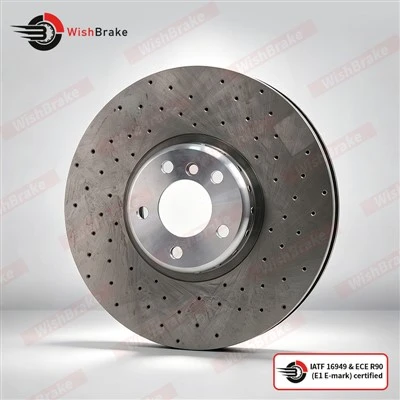
If you’re not sure what size your Hyundai Sonata needs, don’t guess. Shoot us a message, tell me your model year, trim, and VIN (if you’ve got it), and we’ll point you to the exact size you need. Whether you’re a DIYer replacing them in your garage, a mechanic looking for bulk stock, or a fleet manager updating a dozen Sonatas, we’ve got you covered. No hidden fees, no wrong sizes, just brake discs that fit and work the way they should. Don’t risk your safety with the wrong disc—reach out to us today to lock in the right size for your Sonata.
Composite Brake Discs References
Hyundai Motor America. (2021). 2021 Sonata Brake System Specifications. Official Service Manual.
NHTSA. (2018). Brake Component Size Guidelines for Mid-Size Sedans. Vehicle Safety Database.
Automotive Brake Industry Association. (2020). Disc Brake Sizing Standards for Passenger Vehicles. Industry Technical Report.
Qingdao Wish Auto Parts Co., Ltd.
Qingdao Wish Auto Parts Co., Ltd. is one of the most professional brake discs manufacturers and suppliers in China. We are committed to providing high quality customized automotive brake discs with competitive price. Welcome to wholesale CE approved brake discs in stock here and get quotation from our factory. 1 year warranty is available.
Address: No.45 Pengwan Road, Qingdao, Shandong Province, China
E-mail: SALES@wishbrake.com
WebSite: https://www.wishbrakeparts.com/
