If you’ve ever stood on the manufacturing floor next to an electric furnace during a melt, you know that transformer hum—low, deep, and unshakable. Most folks I talk to fixate on the coils or the output voltage, but here’s the thing: that core right in the middle? It’s the unsung hero keeping the whole thing from turning into a $100k paperweight. I’ve been selling electric furnace transformers for 12 years, and if I had a dollar for every time a new client asked, “Wait, what does that core actually do?” I’d have enough to buy a second home (no, really, my wife already nags me about the first one). Today let’s break this down like we’re chatting over a cold beer after a long shift—no stuffy engineering jargon, I promise. Electric Furnace Transformer
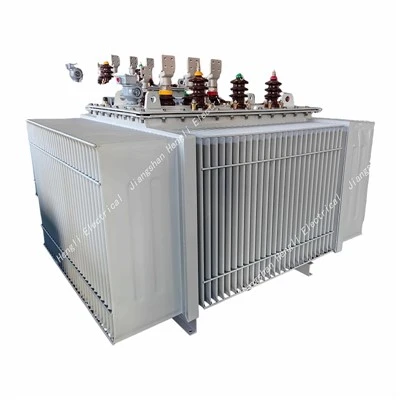
First, let’s ground this in the basics so we’re all on the same page. An electric furnace transformer’s whole gig is cranking your grid’s boring, low-amperage (that’s current, for the new folks) line voltage up or down to feed the furnace. Most arc furnaces, which are the workhorses for steel, copper, and even some rare metals, run on super high current—like, enough to light up a whole neighborhood, but at a low enough voltage to avoid blowing the place up. Transformers do this via two sets of coils: a primary coil hooked to the grid, and a secondary coil hooked to the furnace. But coils alone can’t do this efficiently. That’s where the core comes in. It’s not just a hunk of metal holding coils in place—its whole job is moving energy from one coil to the other without wasting half of it as heat or noise.
Let’s get specific about what the core actually does, step by step. First up: it’s a magnetic highway. Faraday’s Law of Induction (don’t zone out, this is way simpler than it sounds) says that if you run an alternating current (AC) through a coil, it creates a magnetic field. That field cuts through the second coil, and bam—you get electricity in the secondary. But here’s the catch: air is garbage at holding magnetic fields. If your coils were just floating in open air, most of that magnetic field would leak into the walls, the floor, or the sky, and you’d end up with a transformer that only converts 50% of your power—wasting thousands in electricity bills every month. The core is designed to be the most magnetic material possible, so it grabs that entire magnetic field and shoves it straight from the primary coil to the secondary. No leaks, no wasted energy. For electric furnace transformers, which often run 24/7 in tough environments, that efficiency isn’t a “nice to have”—it’s make or break. A 2% efficiency loss on a 10 MVA furnace? That’s $20k a year in wasted power. I’ve seen it firsthand: a client in Detroit bought a cheap transformer with a bad core 5 years back, and by year 3, their power bill was so high they almost shut down their melt shop entirely. They swapped to one of our units and saved $180k in year 1 alone.
Next: the core tames the chaos of AC. AC switches direction 50 or 60 times a second, right? That means the magnetic field in the core is flipping polarity just as fast. If the core was a solid block of iron, this flipping would cause something called eddy currents—tiny little electric currents swirling around inside the core itself. Those currents turn into heat, and again, you’re wasting energy. Worse, they can cause the core to vibrate so bad it’ll rattle bolts loose or even crack. So how do we fix that? We build the core out of thin, insulated sheets of silicon steel, stacked together like a giant metal sandwich. Each sheet is only 0.2 to 0.5 millimeters thick, and coated in a thin layer of varnish to stop eddy currents from jumping between them. Silicon steel also has a special property: it’s super permeable, meaning it’s way better at holding magnetic fields than regular iron, and it reduces that annoying hum too. The stacked design isn’t just for strength—it’s for controlling that AC chaos. I once had a millwright tell me he could tell a good transformer core just by putting his hand on the tank: if it vibrates less than a fridge, the core’s built right. If it feels like a jackhammer, run for the hills.
Wait, let’s not forget about the core’s role in handling the huge loads electric furnaces throw at it. Arc furnaces aren’t like your home oven—when you first strike an arc between the electrodes, it’s a massive, sudden load. One second you’re running at 10 MVA, the next you’re at 50 MVA, and the core has to handle that jump without saturating. Core saturation is a big deal: if the magnetic field gets too strong, the core can’t hold any more, and the whole thing stops converting power efficiently. For regular distribution transformers (the ones on power poles), this isn’t as big a deal, but for electric furnace transformers, saturation is a killer. It causes voltage drops, makes the hum way louder, and can even damage the coils if it’s bad. That’s why our cores are sized specifically for the surges electric furnaces create—we don’t cut corners on cross-sectional area, like some cheap manufacturers do. A lot of guys will skimp on core size to save a few bucks, but then the unit can’t handle a full melt without acting up. I had a client in Texas call me at 2 a.m. once, their transformer was dead because of core saturation during a scrap melt. We dispatched a team at 5 a.m., swapped it out by noon, and they were back to melting steel for the night shift. That’s the kind of reliability the core provides when you need it most.
Now, let’s talk about what goes into making a good core, because not all cores are created equal. I’ve seen cores made from cheap, low-grade steel that rusts after a few months in a humid mill, or stacked wrong so eddy currents sneak in. The best cores for electric furnace transformers use grain-oriented silicon steel (GO steel)—it’s rolled in a specific direction so the magnetic field flows along the grain, way more efficiently than non-oriented steel. We also apply a high-temperature insulation coating, because furnace rooms get hot—like, 120°F in the control room, 180°F right next to the transformer. If the insulation on the core sheets breaks down, you get shorted turns and a dead transformer. And then there’s the core clamping—you have to hold those stacked sheets tight, otherwise vibration over time will loosen them, create more eddy currents, and eventually crack the core. I check every core we build personally, every single time. I’ve caught bad stacking twice in 12 years—would’ve been a disaster for the client, so I sent it back no questions asked. Reputation’s everything in this game, and the core is where you can’t cut corners.
Let’s also bust a myth real quick: some people think the core is just a structural part, holding the coils together. Nope. I’ve had a few clients say, “Can I skip the heavy core to save weight?” No way. The core is actually the backbone of the transformer’s magnetic circuit. Without it, you don’t have a magnetic path, so no power conversion, period. It’s like the axle on a semi truck—if it’s weak, the whole thing falls apart. You wouldn’t try to drive a semi with a bicycle axle, right? Same logic here.
Now, why does this matter to you, if you’re buying an electric furnace transformer? Let’s be real: you care about uptime. If your transformer goes down, your furnace goes dark, your employees are standing around, and you’re losing thousands every hour. The core is the number one reason transformers fail prematurely, or run inefficiently. A bad core means higher power bills, more downtime, and higher repair costs. A good core? It means 20+ years of reliable operation, lower energy costs, and peace of mind that your melt will keep running when you need it to.
I hear you saying, “Okay, so the core is important. But what about when I’m picking a transformer?” Let me give you a few quick takeaways that I pass on to every client:
First, ask about the core material. If they’re not using grain-oriented silicon steel, walk away. Simple as that.
Second, ask about stacking and insulation. Are the sheets insulated? How tight is the clamping? Vibration is your enemy here.
Third, don’t buy on price alone. I’ve seen transformers that cost $20k less that failed in 3 years, versus our units that last 20. That’s not a saving—that’s a loss.
At the end of the day, I’ve been in this industry long enough to know that everyone wants to talk about the flash of the arc or the size of the furnace. But the core? It’s the quiet workhorse that makes all that possible. It takes the messy, wild power from the grid, tames it, and delivers it to your furnace so you can melt steel, copper, whatever you’re working with.
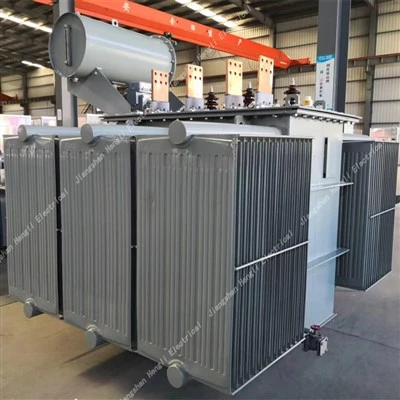
If you’re in the market for an electric furnace transformer, or you’re tired of dealing with a core that’s causing problems—whether it’s high power bills, too much vibration, or constant downtime—hit us up. We don’t cut corners on cores, we build them to handle the harsh mill environments, and we stand behind every unit we sell. We know your furnace is your livelihood, and that’s why we take the core seriously.
Electric Furnace Transformer REFERENCES
- Electrical Transformers: Principles and Applications, Second Edition, S. A. Ryder, CRC Press.
- Power Transformer Design and Practice, J. L. Blackburn, Marcel Dekker, Inc.
- Industrial Electric Furnaces and Their Power Supplies, R. N. Dunlop, Iron and Steel Society.
Zhejiang Jiangshan Hengli Electrical Co., Ltd.
Zhejiang Jiangshan Hengli Electrical Co., Ltd. is one of the most professional electric furnace transformer manufacturers and suppliers in China, featured by quality products and low price. Please rest assured to wholesale cheap electric furnace transformer in stock here and get pricelist from our factory. Customized orders are welcome.
Address: 212 Fuzhu Street Sidu Town, Jiangshan, Zhejiang, China
E-mail: henglijs@foxmail.com
WebSite: https://www.henlypower.com/
