If you’ve spent any time in the industrial chemical, petroleum, pharmaceutical, or beverage manufacturing space, you’ve probably heard the terms “distillation plant” and “distillation column” thrown around—often used interchangeably by folks who haven’t dug into the nuts and bolts of process design. As a supplier who’s worked with both small craft distillers scaling up and global refining operations upgrading their core equipment, I’ve lost count of how many times a potential client has asked me: “Wait, are those the same thing? I thought we just needed a bigger column.” The short answer is no. Mixing these two up isn’t just semantics—it can lead to bad capital decisions, production delays, or even gaps in process efficiency that cost thousands of dollars a month. Today, I’m breaking down exactly where each fits, so you can walk into a equipment conversation with clarity. Distillation Plant
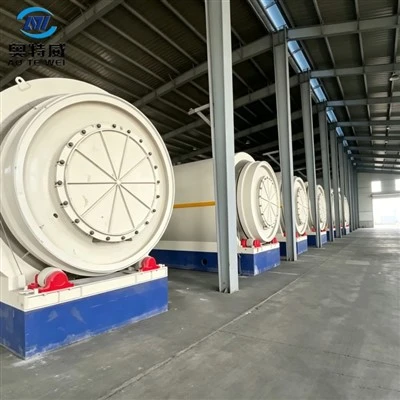
Let’s start with the simplest, most fundamental piece: the distillation column. This is the workhorse, the core hardware that does the actual separating. At its most basic, it’s a tall, cylindrical pressure vessel (sometimes vertical, occasionally horizontal for specialized applications) stacked with internal components—trays, packing material, or a combination of both—that create a series of mini separation zones, called theoretical plates. Here’s how it works in a nutshell: a hot, vapor-rich mixture rises up through the column, while a cooler, liquid-rich reflux stream flows down. Every time vapor meets liquid, heavier components in the vapor condense out into the liquid, and lighter components evaporate out into the rising vapor. As the vapor moves higher, it gets richer in the lightest components, and as the liquid moves lower, it gets richer in the heaviest. That’s how you pull, say, pure ethanol from a fermented beer wash, or separate propane from butane in a natural gas processing plant.
The beauty of a distillation column is its specificity. It’s designed for a single, targeted separation task—sometimes even a single product. A craft gin distiller might use a 6-inch diameter copper column to separate ethanol from water and flavor oils to get that distinct 95% ABV spirit. A refinery might have a 30-foot diameter crude column split into fractions like gasoline, diesel, and jet fuel. The column itself doesn’t need much beyond raw materials for its shell, internals for separation, and basic controls to manage flow, temperature, and pressure. It’s modular, scalable for specific outputs, and optimized for repeatable, high-purity separations.
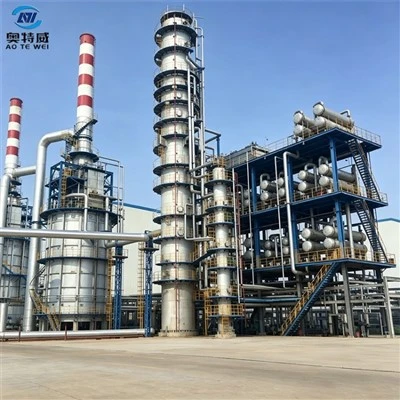
Now, what is a distillation plant? A distillation plant is the entire system, the whole operation that surrounds that column to make it functional. Think of the column as the oven in a restaurant kitchen, and the plant as the entire kitchen: the refrigerators, mixers, prep surfaces, ventilation, and even the software that tracks inventory and orders. You can’t run a profitable, consistent restaurant with just an oven, right? Same goes for a distillation plant.
A typical distillation plant includes the core distillation column, but adds a suite of auxiliary equipment that handles everything before, during, and after the separation process. Let’s run through what you’d find in a standard industrial distillation plant, whether it’s for chemical manufacturing, beverage production, or specialty solvent recovery. First, the feed system: raw material storage tanks that hold the mixture you want to separate, pumps to move that mixture, and pre-treatment units (filters, heat exchangers, pH adjusters) to get the feed into the column at the exact right temperature, pressure, and purity. Then, there’s the reboiler at the bottom of the column, which heats the liquid left over from the separation to create the rising vapor that drives the whole process—you can’t get that vapor just from the column itself. At the top, there’s a condenser that turns the vapor that’s separated into light components back into liquid, plus a reflux drum that stores that liquid, sending most of it back down the column as reflux (critical for separation efficiency) and sending the rest out as your finished product.
A distillation plant also has auxiliary systems most people don’t think about: pressure control valves to keep the column from over-pressurizing, safety relief valves that discharge vapor if something goes wrong, waste handling units that get rid of leftover heavy components safely, and process control systems (PLCs, sensors, HMI screens) that monitor every variable—temperature at every tray, flow rate, pressure, product purity—in real time. For applications that need consistent product quality, like pharmaceutical solvent recovery or fuel production, you’ll also have analyzers that test the output stream to make sure it meets specifications, and even energy recovery units that reuse waste heat from the reboiler to pre-heat incoming feed, cutting down on utility costs by 20% or more.
Let’s use a real-world example to make this concrete, because that’s when the difference clicks. Last year, I worked with a small craft distiller in Kentucky who had just hit 10,000 cases a year and wanted to expand. They’d upgraded from a 2-inch home-style column to a 12-inch commercial column, but their production still wasn’t hitting the volume they expected, and their energy bills were double what their competitor’s were. When we did an audit, we realized their mistake: they’d bought the column itself, but tried to retrofit it into their existing setup that had no proper reboiler, condenser, or control system. The column was too small for a standalone unit, and they were wasting half the steam they were using because they had no heat recovery. We ended up replacing their “half plant” with a fully integrated distillation plant that paired that exact same column with a purpose-built reboiler, condenser, and energy recovery system. Within three months, their volume went up 60%, their steam costs dropped 45%, and they were able to add two new product lines because the plant’s controls could be adjusted for different spirit ABVs. That’s the gap between a column and a plant: the column is a tool, the plant is the system that makes that tool useful for production.
Another key difference is flexibility and purpose, which is where people run into big mistakes when planning new projects. A distillation column is purpose-built for one separation under specific conditions. If you have a column designed to separate ethanol from water, you can’t easily reconfigure it to separate acetone from methanol without major modifications to the internals, pressure rating, and feed system. A distillation plant, on the other hand, can be designed for flexibility. A specialty chemical manufacturer might have a single plant that runs three different separation processes, switching between products by adjusting the plant’s control system, changing the feed tanks, and swapping out small internal parts (like packing material) in the column. For process engineers, that flexibility is huge—it means you can run a single plant to serve multiple product lines without investing in a whole new facility. For our small distiller, that meant they could switch from bourbon to rye gin in a weekend, not a month.
Cost is another practical difference. A standalone distillation column is a fraction of the cost of a full distillation plant. For a mid-sized column, you might be looking at $50,000 to $200,000, depending on diameter, material (stainless steel vs. copper), and pressure rating. A full distillation plant for a similar throughput? That’s $500,000 to $2 million, depending on the auxiliary systems, safety features, and energy recovery. The tradeoff is obvious: if you’re a hobbyist or small batch producer making 100 gallons a month, a standalone column might make sense. If you’re looking to produce 10,000+ gallons a month, or scale to that level, the plant is non-negotiable. Trying to cut corners and buy just a column almost always leads to extra costs down the line for the auxiliary equipment you’re missing.
I’ve also seen this play out in industrial refining. A few years back, a refinery out in Texas reached out to us because they were having trouble with their diesel production. They’d modified an old column to separate diesel from gasoline, but it was consistently off-spec, producing too many heavy compounds in the diesel stream. When we looked at their setup, we realized they’d kept the old auxiliary systems from the original crude processing plant, so the column wasn’t getting the right pressure, feed pre-treatment, or reflux rate. The column itself was fine—it was integrated into a plant that wasn’t designed for the diesel separation task. We ended up replacing the auxiliary systems (the reboiler, control system, and feed pre-treatment) without even touching the column, and their diesel quality hit spec in two weeks, with no need to replace the core hardware. That’s a perfect example of how the column is the heart, but the plant is the entire circulatory system that keeps the process working.
Now, let’s get into the nuances that come up in specialized applications, because it’s not always as cut and dry as “column is part of plant.” In some cases, small, standalone distillation units (like those used in lab settings or small craft operations) are sometimes colloquially called “distillation plants,” but technically, even those small units are just a column with basic auxiliary parts—so the line blurs a little for low-volume, low-pressure applications. But for any industrial, scalable, or high-volume operation, the distinction is clear: the column is the separation core, the plant is the integrated system that delivers consistent, safe, efficient production.
If you’re planning to upgrade your distillation process, or are just starting out and trying to figure out what equipment you need, here’s my advice: don’t ask for a “distillation column” or a “distillation plant” without being specific about your production goals. If you’re a hobbyist or small batch producer looking to make 100 to 500 gallons a month, a standalone column paired with basic auxiliary parts might fit your needs. If you’re looking to scale to thousands of gallons a month, produce multiple products, hit regulatory quality standards, or keep energy costs low, you need a full distillation plant. The worst decision I see clients make is either buying a standalone column when they actually need a plant, leading to wasted investment, or overbuying a plant with features they don’t need when a smaller, column-based setup would have worked.
I’ve spent the last 15 years working with clients across every industry that uses distillation, from craft distilleries to global chemical producers, and the number one mistake I help them avoid is mixing up these two terms. It’s not just about vocabulary—it’s about getting the right equipment for your goals, avoiding costly delays, and keeping production running smoothly. If you’re in the market for new distillation equipment, whether you’re expanding an existing setup or launching a new production line, take the time to talk through your exact needs. Skip the generic terminology, share your production volume, desired product quality, and space and budget constraints, and we can help you figure out exactly what you need, whether that’s a precision-engineered distillation column, a fully integrated distillation plant, or a hybrid setup that balances cost and performance.
If you’re ready to talk through your specific needs or get a custom quote for distillation equipment, reach out to our team today to start a discussion. We work with clients of all sizes, from small craft operations to large industrial facilities, and we focus on delivering equipment that’s built to last, efficient, and tailored to your exact production goals.
Batch Pyrolysis Plant References
Perry, J. H. (1997). Perry’s Chemical Engineers’ Handbook (7th ed.). McGraw-Hill.
Smith, R. (2005). Chemical Process Design and Integration. John Wiley & Sons.
Kister, H. Z. (1992). Distillation Design. McGraw-Hill.
Shangqiu Aotewei Environmental Protection Equipment Co., Ltd.
Shangqiu Aotewei Environmental Protection Equipment Co., Ltd. is one of the most professional distillation plant manufacturers and suppliers in China, also supports customized service. Please feel free to buy CE approved distillation plant at competitive price from our factory. Welcome to contact us for pricelist.
Address: No.88 Longhai Road, Liangyuan District, Shangqiu City, Henan Province, China
E-mail: colin@henanpower.com.cn
WebSite: https://www.aoteweitech.com/
