If you’ve ever stood in a substation at dusk, watching the hum of high-voltage cables vibrate through concrete pads, or listened to a maintenance technician talk about the quiet, costly damage unplanned electrical faults inflict on industrial sites, you’ve likely encountered a problem that neutral grounding philosophy exists to solve. For nearly two decades, I’ve worked as a supplier of neutral grounding solutions—first as an on-site troubleshooter for mid-sized manufacturing plants, then as someone who helps teams select and deploy grounding systems that don’t just “work” but work with the unique rhythms of their power distribution networks. Over those years, I’ve seen how a misunderstood grounding philosophy can turn a routine power outage into a $100,000 loss for a food processing plant, or how a well-designed system can keep a chemical plant running through a storm that would have shut lesser facilities down. Let’s break down what neutral grounding philosophy really is, why it matters, and how it aligns with the work we do every day. Neutral Grounding
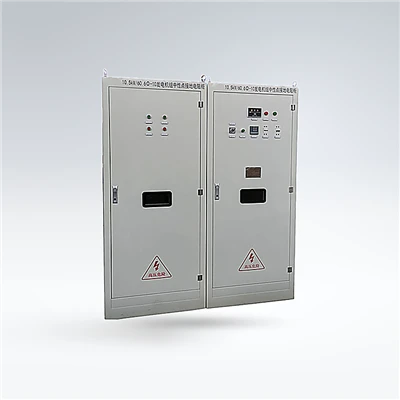
At its core, neutral grounding refers to the intentional connection of the neutral point of a power system— the midpoint of a three-phase generator, transformer, or alternator—to the earth via a grounding conductor. But the philosophy behind that connection isn’t one-size-fits-all. It’s rooted in two conflicting, long-standing priorities: keeping personnel and equipment safe from electrical faults, and minimizing the disruption those faults cause to continuous power delivery. Every grounding decision hangs on balancing these two goals, and that balance is what defines a system’s neutral grounding philosophy.
To get to the heart of that balance, start with what happens during a ground fault, the most common electrical failure in distribution networks. When a phase conductor (the line that carries power to your equipment) accidentally touches the earth, a building frame, or a conductive piece of machinery, current flows from that phase into the ground instead of back to the power source’s neutral. Without intentional grounding, that current has no clear path back to the source, so it disperses through the ground unevenly. That uneven current creates step potential (the dangerous voltage difference between your feet if you’re standing near the fault) and touch potential (the voltage between your hand and a metal object connected to the fault), both of which can kill a worker instantly. It also creates transient overvoltages—sharp, unexpected spikes in voltage that can burn out insulation on motors, transformers, and control systems, leading to unplanned downtime.
The alternative to no intentional grounding is ungrounded neutral, a philosophy once more common in rural power systems where uninterrupted power was critical (think farms that couldn’t afford to lose power to refrigeration or irrigation). Ungrounded systems let a phase fault occur without immediately tripping the entire circuit, so operators could trace and fix faults later instead of shutting down the whole network. But over time, those systems had a fatal flaw: the uneven current that built up through stray capacitance (the tiny electrical charge stored in lines) could cause sustained overvoltages that damaged equipment, or even lead to arcing ground faults—continuous electrical arcs between a phase and earth that could spark fires or explode in industrial settings. That risk led to a shift toward grounded neutral philosophies, but not all grounding is the same.
The three main neutral grounding philosophies used today are solidly grounded, resistance grounded, and reactance grounded, each tailored to a specific application. Solidly grounded systems connect the neutral directly to earth with no added resistance or reactance, creating a low-impedance path for fault current. This philosophy prioritizes safety above all else: the large fault current trips circuit breakers and fuses instantly, stopping a fault before it can cause major damage. It’s the standard for low-voltage industrial and commercial buildings, 120/240V residential systems, and high-voltage transmission lines where rapid fault isolation is non-negotiable. But solidly grounded systems have downsides: the large fault current often causes circuit breakers to trip unexpectedly even for minor faults, leading to frequent, unplanned outages. For facilities like continuous manufacturing lines or hospitals, that’s a dealbreaker.
That’s where resistance grounded systems come in, the philosophy we see deployed most frequently in mid-sized industrial plants, commercial data centers, and mining operations. Resistance grounded systems add a purpose-built resistor between the neutral and earth, limiting fault current to a safe, controlled range—usually between 10A and 1,000A, depending on the system size. This philosophy strikes a middle ground: it’s low enough to keep step and touch potential at safe levels, but high enough to prevent the arcing ground faults and sustained overvoltages that plague ungrounded systems, and it doesn’t trip breakers for minor faults. Instead, operators get a warning that a fault is present, letting them schedule a shutdown during off-hours instead of halting production mid-shift. For a plant that runs three shifts a day, that can save hundreds of thousands of dollars a year in lost output.
Reactance grounded systems, the third major philosophy, use an inductor (instead of a resistor) to connect the neutral to earth, limiting fault current to a very low level—usually less than 10A. This philosophy is most common in high-voltage transmission networks and large power generation stations. It prioritizes minimizing fault current to the point that even if a phase touches earth, the system can often stay online temporarily, a critical feature for grids where massive blackouts could affect thousands of customers. But reactance grounded systems carry risks: if two-phase faults occur (a rare but possible event), they can create high overvoltages that damage equipment, making this philosophy a poor fit for most industrial facilities that need to protect sensitive machinery.
Over my years as a neutral grounding supplier, I’ve seen firsthand how choosing the right philosophy isn’t just a technical decision—it’s a business decision. Last year, we worked with a mid-sized pharmaceutical plant that had been using a solidly grounded system for its 480V distribution network. The plant’s circuit breakers were tripping an average of 12 times a month, often during high-production shifts, costing them an estimated $15,000 each time in lost inventory and overtime for technicians. We worked with their engineering team to switch to a resistance grounded philosophy, installing a neutral grounding resistor sized to limit fault current to 200A. Since the upgrade, breaker trips have dropped to less than once a month, and the plant has reported over $150,000 in annual savings. That’s the impact a clear, well-matched neutral grounding philosophy can have.
Another common mistake I see is companies treating neutral grounding as an afterthought, a cheap add-on instead of a core component of their power system. Too often, a plant will buy a new transformer, install it, and then grab a random resistor or grounding electrode off a shelf without considering how it integrates with their existing network. A grounding resistor that works for a 1,000kVA transformer might not work for a 5,000kVA unit, leading to either too much fault current (endangering personnel) or too little fault current (allowing damaging transients to build up). Our team doesn’t just sell equipment—we work with clients to audit their existing power system, map their fault history, and recommend a philosophy aligned with their specific operational needs.
It’s also important to address a common misconception about neutral grounding: some people think “neutral grounding philosophy” is just a technical term, not something that affects frontline workers. But that’s not true. A poorly designed grounding system can mean a maintenance technician reaches for a metal panel during a fault and gets a fatal shock. It can mean a motor in a food processing plant burns out mid-production, spoiling thousands of pounds of product. It can mean a data center loses power during peak hours, leading to lost revenue and damage to client relationships. That’s why our work isn’t just about selling resistors, electrodes, or transformers—it’s about building safety and reliability into the fabric of the power systems that keep businesses running.
If you’re in the market for neutral grounding solutions, the first step is to ask the right questions, not just about equipment specs, but about what your facility needs from its grounding philosophy. Are you a manufacturing plant where unplanned downtime costs more than occasional minor faults? A data center where every minute of outage is costly? A small commercial building where personnel safety is the top priority? Each of these will point to a different philosophy—resistance grounded for manufacturing, solidly grounded for small commercial, reactance grounded for large transmission. Our team has the expertise to walk you through that assessment, help you select the right equipment, and oversee installation to make sure it meets your needs.
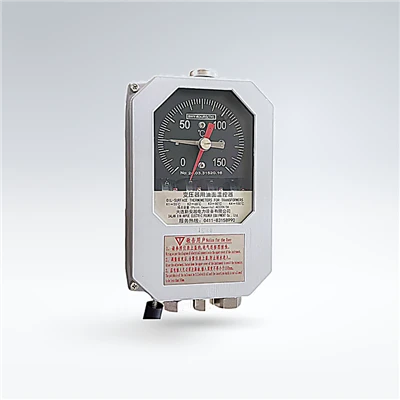
If you’re ready to learn more about how a neutral grounding philosophy tailored to your operation can improve safety and reduce downtime, reach out to our team to schedule a consultation. We’re here to answer your questions, review your power system, and help you find the right solution for your facility.
Transformer Accessories References
- IEEE Std 141-2013, IEEE Recommended Practice for Electric Power Distribution for Industrial Plants
- IEEE Std 1100-2018, IEEE Recommended Practice for Powering and Grounding Electronic Equipment
- Electrical Grounding and Bonding Handbook, National Fire Protection Association (NFPA) 70
Dalian Xin’anyue Electric Power Equipment Co., Ltd.
Dalian Xin’anyue Electric Power Equipment Co., Ltd. is one of the most reliable neutral grounding manufacturers and suppliers in China, featured by quality products and good price. Please rest assured to wholesale durable neutral grounding in stock here from our factory. We also accept customized orders.
Address: No.99, Group 1, Chongwangmiao Community, Taiping Street, Pulandian District, Dalian City, Liaoning Province, China
E-mail: sales@dlxay.com
WebSite: https://www.xayelectric.com/
