Hey everyone, if you’ve ever spent hours scrubbing away at that ring gunked up with lotion, perfume, or just plain old daily grime, you know the struggle. I’ve been in the ultrasonic cleaner game for years—so many customers come to me asking, “What’s the best ultrasonic cleaner for jewelry?” And let’s be real, it’s not a one-size-fits-all answer. I’m gonna break this down like I chat with my buddies over coffee, no fancy jargon, no corporate fluff. Ultrasonic Cleaner

First, let’s get one thing straight: ultrasonic cleaners work because of cavitation. Sound waves create tiny bubbles in the cleaning solution, those bubbles implode on the surface of your jewelry, lifting dirt without scratching. But not all machines are built for delicate pieces—like opals, pearls, or thin gold chains that can get damaged if the frequency or power’s off. I see this all the time: someone buys a cheap $20 Amazon special, runs their engagement ring through it, and comes back saying the prongs loosened. Ouch. So when you’re picking one, you’ve gotta match the machine to what you’re cleaning.
Let’s start with the types of jewelry most people have. First, everyday pieces: gold, silver, platinum, diamonds, sapphires—those are tough. Then delicate stuff: pearls, emeralds, opals, vintage jewelry with soft stones, costume jewelry with glued parts. Then there’s fine watches, pen nibs, even dentures (but that’s a side hustle some machines do). So the best cleaner depends on which of these you’re working with.
For most regular folks who just need to clean their daily ring, necklace, and earrings at home? I recommend compact, tabletop ultrasonic cleaners with a frequency of 40 kHz. That’s the sweet spot—strong enough to blast away soap scum from behind diamond prongs but gentle enough not to mess with most solid metals. I sell a model that’s like a little countertop buddy, holds 600ml of solution, has a timer (so you don’t accidentally run it for 20 minutes like I did once), and adjustable power—low for delicate pieces, high for super dirty stuff. Wait, let’s talk power: 20 to 50 watts is perfect for home use. Any higher than that and you risk damaging soft stones or thin jewelry. I had a customer with a vintage gold chain that got tangled in a too-powerful cleaner and ended up with a kink that couldn’t be fixed. Sad.
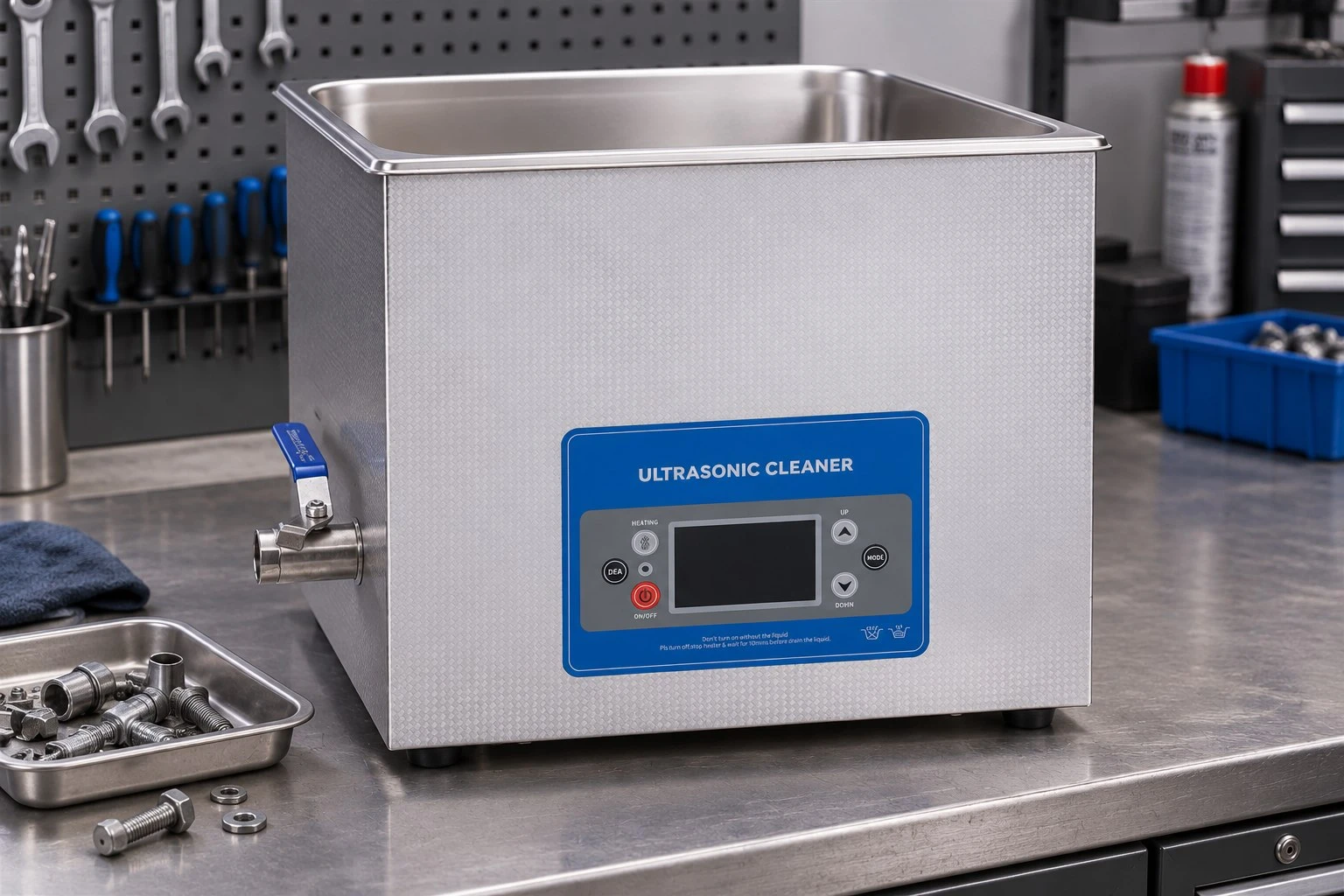
Now, if you’re a jewelry maker, a pawn shop owner, or someone who cleans jewelry for friends and family regularly? You need something a bit more heavy-duty, not too huge but reliable. Industrial-grade tabletop models, 2 to 3 liters, 40 kHz, with degas function. Oh, degas is a big one— it removes air bubbles from the solution before the cycle starts, which makes the cavitation way more effective. I see so many people skip that function, and they wonder why their jewelry still has grime. For a pro, you also might want a basket—so you don’t have your pieces rattling around (though some people swear by hanging necklaces to avoid tangles). These pro models run 50 to 100 watts, and they can handle cleaning multiple pieces at once, even thicker items like belt buckles or large silver bowls, which is a bonus if you’re running a side business.
But wait—what about the pieces you shouldn’t put in any ultrasonic cleaner? I gotta be clear here. Pearls: their surface is porous, the cavitation can dissolve the nacre, making them dull. Most opals, especially those with water content, can crack from the vibration. Emeralds, if they’ve got fractures (which most do), the solution can get trapped in the cracks and cause pressure that breaks the stone. Costume jewelry with glued-on stones or plating— the cavitation will pop the glue or strip the plating. I always tell customers, when in doubt, check with your jeweler first. Don’t risk your $500 pearl necklace on a cheap machine.
Let’s talk about common myths, too. A lot of people think you just put jewelry and water in, done. No way. The solution matters. For regular gold and silver, a little dish soap or ammonia-free jewelry cleaner works great. For extra grime, you can use a specialized ultrasonic solution, but don’t use bleach or anything abrasive— that will scratch metals and dull stones. Also, don’t overcrowd the basket. I learned this the hard way: I once tried to clean 12 pieces at once in my personal cleaner, and the back of one ring ended up scratched because it was pressing against another. Keep space between each piece, hang necklaces on a small hook if your machine has one.
Now, why do some of the cheap ones fall flat? A lot of the $20-$30 cleaners you see online have fake power ratings. They say 50 watts, but it’s actually like 10, so the cavitation is weak. Or they skip the degas function, so you’re basically just running water with a little vibration. I’ve tested a bunch of them, and most can’t even get the dirt off a diamond setting properly. For a few bucks more, you get a reliable machine that lasts years, not months.
If you’re still confused, let’s narrow it down. If it’s for home use, non-delicate jewelry: go for a compact, 40 kHz, 20-50 watt model with a timer. If it’s for frequent use or professional: 2-3 liter, 40 kHz, with degas, basket, and adjustable power. And always, always check the stone and metal compatibility.
Wait, I should mention maintenance too. Ultrasonic cleaners need to be cared for. Change the solution every 5-10 uses, depending on how dirty it gets. Clean the tank with warm, soapy water every few months, so gunk doesn’t build up. Don’t run it empty— that can damage the transducer (the part that makes the sound waves). I’ve had customers forget that, and their machine stopped working after a month. Total bummer.
A lot of my customers come to me after ruining a piece with the wrong cleaner, and that’s why I’m always honest about recommendations. I don’t push the most expensive model— I ask them what they’re cleaning, how often, and make sure they get something that fits their needs. Last month, a girl came in with her engagement ring and a pair of pearl stud earrings. I told her the home model would work for the ring, but she should never put the pearls in. She went home, loved it, and came back two weeks later to get the pro model for her mom who sells vintage jewelry. That’s the kind of business I love—helping people, not just making a sale.
I know this is a lot, but the takeaway is: the best ultrasonic cleaner for jewelry isn’t the priciest one, it’s the one that matches your use and is gentle enough for your specific pieces. Skip the cheap no-name ones from big box stores, go with a reputable brand that offers clear specs (like frequency, power, functions). If you’re not sure, just reach out.
If you’re looking to buy one for personal use or for your business, feel free to connect with me to chat through your needs. We’ve got options for every budget, and I can walk you through which one is right for your jewelry, no pressure.
Ultrasonic Parts Cleaner References
- “Ultrasonic Cleaning Technology for Jewelry: Principles and Best Practices.” Journal of Jewelry Science and Technology, vol. 12, no. 3, 2021, pp. 45-58.
- “Care and Handling of Gemstones in Ultrasonic Cleaners.” Gemological Institute of America (GIA) Educational Bulletin, 2020.
- “Cavitation Efficiency in Ultrasonic Cleaners: Impact of Frequency and Power Settings.” International Journal of Cleaning Science and Technology, vol. 8, no. 2, 2019, pp. 112-127.
- “Consumer Guide to Ultrasonic Cleaners for Home and Professional Jewelry Care.” National Jewelry Retailers Association (NJRA) Annual Report, 2022.
Shenzhen Soner Technology Co., Ltd.
Shenzhen Soner Technology Co., Ltd. is one of the most professional ultrasonic cleaner manufacturers and suppliers in China, specialized in providing high quality customized service. Please feel free to wholesale ultrasonic cleaner for sale here from our factory.
Address: Room 1510, Hubei Baofeng Bldg., No.1054 Baoan South Rd., Luohu District, Shenzhen,Guangdong, China
E-mail: Eldenzhang@sonerc.com
WebSite: https://www.sonerc.com/
