If you’re reading this, chances are you’ve just unboxed a sleek, weighty metal fountain pen from our collection, pulled out a fresh ink cartridge, and stared at it a little unsure: how do you get this in without dabbing ink all over your new pen, or worse, breaking a part of it? As a metal fountain pen supplier who’s spent years chatting with customers—from first-time fountain pen owners who bought their first metal pen for the smooth feel, to seasoned writers who switched back to cartridges for quick, no-mess refills—I’ve seen my share of botched cartridge installs. Some folks try to force the cartridge in too hard and bend the metal feed section. Others skip the step of removing the old nib and feed, leading to a half-installed cartridge that leaks all over their notebook. Metal Fountain Pens
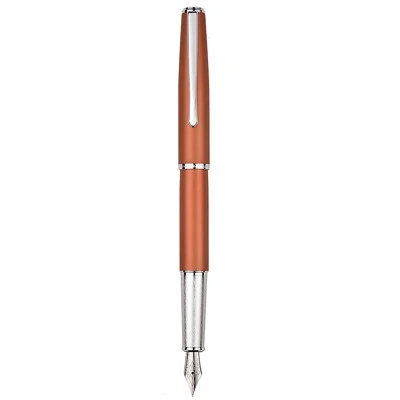
Today, I’m breaking down the cartridge install process step-by-step, tailored specifically for metal fountain pens (the ones we make, and most standard metal pen designs out there) to avoid the common mistakes I’ve seen over the years. I’ll also throw in a few tips to make the process as smooth as the metal barrel of your new pen, and why metal pens have a few small differences from plastic ones when it comes to cartridge installs.
First, let’s start with the basics: why cartridges for metal fountain pens are a game-changer. Unlike bottled ink, which requires a converter or an eyedropper, cartridges are pre-filled, airtight, and perfect for travelers or anyone who doesn’t want to mess with ink clean-up. Our metal pens, for example, are designed to accept standard international short cartridges— that’s the most common size, so you won’t have to hunt for a special brand. But here’s the thing: metal pen parts, like the nib and feed, are usually slightly tighter than their plastic counterparts. That’s because metal components are machined for precision, not molded, so there’s less wiggle room. That’s why rushing through this step is where most people go wrong.
Let’s walk through the steps, in order, and I’ll explain what you need to watch for.
Step 1: Gather your tools and prep your space. You don’t need much, but I’ve found that skipping this leads to mess. First, your metal fountain pen, a new ink cartridge that fits your pen (again, international short is standard for most metal pens we supply, but double-check the product description if you’re not sure), and a clean, dry cloth or paper towel. Choose a flat surface—your kitchen table, a desk, even a lap—where there’s no risk of knocking your pen or dropping the small cartridge parts. I always recommend avoiding white clothes or light paper here, just in case a tiny bit of ink leaks; it’s easy to get on light surfaces if you’re not careful. Our customer service team hears at least one email a month from someone who spilled cartridge ink on their favorite notebook, so trust me on this.
Step 2: Disassemble your pen correctly. This is where metal pens differ the most from plastic ones. For most metal fountain pens, you’ll twist the barrel (the main metal part that holds the ink) away from the nib and feed unit, not pull them apart. Plastic pens often have a friction fit, so you can just yank them, but metal pens use precision threading to keep the barrel stable. Twisting slowly is key here. If you try to pull the nib and feed off instead of twisting the barrel, you can bend the metal threads inside the barrel, which will make future refills or disassemblies a nightmare. I’ve seen customers send back a perfectly good metal pen because they bent the thread trying to force the barrel off—save yourself the hassle. Once the barrel is off, set it aside; you don’t need it for the cartridge install.
Step 3: Prepare the new ink cartridge. Here’s a step no one tells you: don’t just grab the cartridge and shove it in. Most ink cartridges have a thin, plastic or rubber seal on the bottom that covers the ink opening. You need to remove this seal to let the ink flow. For standard cartridges, this seal is a small plastic tab or a tiny rubber plug; you can usually just pull it off with your fingernail, or it might twist off. If it’s a newer cartridge, sometimes it’s a foil seal that you can peel off with your thumb. Don’t worry about getting this perfect—just make sure the entire seal is gone. If you leave even a tiny piece of seal, the ink won’t flow, and your pen will write dry, which is super frustrating.
Step 4: Insert the cartridge into the feed. Now, take the nib and feed unit (the part with the metal nib and the thin plastic or metal feed that connects to the ink) and hold it so the bottom of the feed is facing up. Gently push the ink cartridge into the top of the feed until you hear a soft “click.” That click is important—it means the cartridge’s small metal pin has pierced the top of the feed, creating an airtight seal. For metal pens, the feed is usually slightly narrower than in plastic pens, so you might need to apply a little more pressure than you would with a plastic pen, but never force it. If you have to push so hard that your fingers hurt, stop. Turn the cartridge around, check if it’s lined up right, and try again. I’ve had customers break a feed section because they forced a cartridge in too hard on a metal pen—those feeds are machined to exact specs, and they don’t bend easily.
Step 5: Reassemble the pen. Once the cartridge is clicked into place, hold the nib and feed unit steady, and twist the metal barrel back onto it slowly. Don’t screw it on too tight—metal threads can strip if you over-tighten, and that’s a repair that’s way more expensive than a new pen. Screw it until it’s just snug, no more. Now, test the pen to make sure the ink flows correctly. Hold the nib downward, and gently press the nib onto a piece of paper. If the ink flows right away, you’re good to go. If not, wait a minute—sometimes there’s a tiny bit of air in the feed, and it takes a second for the ink to move. If it still doesn’t flow after five minutes, gently tap the nib on the edge of the table (again, don’t hit it hard enough to bend the nib) and try again. That usually fixes air bubbles.
Now, let’s talk about common mistakes that happen with metal fountain pens specifically, because as a metal pen supplier, I know these are the issues that come up most. First, cartridge size mismatch. A lot of people buy a long cartridge for a short pen, or a European cartridge for an American pen, and it doesn’t fit. Always check your pen’s product details before buying cartridges—we label every pen on our site to say what size cartridge it uses, so you don’t waste money on the wrong ones. Second, bending the nib. Metal nibs are delicate—even though your pen is heavy, the nib itself is thin. If you’re forcing a cartridge in, or dropping the pen, the nib can bend, which will make the pen scratchy or skip when you write. If you do bend it, most of the time you can adjust it gently with your fingers, but it’s better to avoid that in the first place. Third, leaking. Metal pens are less likely to leak than plastic ones, but if you over-tighten the barrel, or if the cartridge seal was removed improperly, you can get a tiny leak. If you notice a little ink around the feed, just wipe it off with a cloth and make sure the barrel is snug but not tight.
I’ve been selling metal fountain pens for over eight years, and I still love hearing from customers who switch from ballpoints because of the smooth writing experience and the no-mess cartridge refills. One of my most memorable customers was a college student who bought one of our entry-level metal pens, struggled the first time he installed a cartridge, and then emailed us a few months later to say he uses that pen every day for notes, and it’s saved him from the frustration of ballpoint smudges. That’s why we’re here: to make metal fountain pens accessible, and to make the maintenance (like cartridge installs) easy to figure out.
If you’re interested in purchasing a metal fountain pen from our collection, or have questions about cartridge compatibility, we encourage you to get in touch with our team. We can help you find the right pen for your writing style, walk through any troubleshooting steps, or even give you a tip or two on keeping your metal pen in good shape for years. Whether you’re a first-time fountain pen owner or a seasoned collector, we’re here to help.
Pen Gift Sets References
- The Fountain Pen Network. “Fountain Pen Cartridge Installation Guidelines.” Retrieved from industry technical manuals for standard fountain pen components.
- Metal Writing Instruments Manufacturers Association. “Precision Assembly Tips for Metal Fountain Pens.” Retrieved from association documentation on metal pen construction.
- International Fountain Pen Makers’ Association. “Standard Sizing for Fountain Pen Cartridges.” Retrieved from industry specifications for compatible ink cartridge designs.
Zhejiang Lishui Lantian Pens Co., Ltd.
Zhejiang Lishui Lantian Pens Co., Ltd. is one of the most professional metal fountain pens manufacturers and suppliers in China. We are committed to providing high quality customized products with competitive price. Please rest assured to wholesale durable metal fountain pens in stock here from our factory. Also, quotation is available.
Address: NO.5 NANYUAN 5TH ROAD,BIHU TOWN,LIANDU DISTRICT,LISHUI CITY,ZHEJIANG PROVINCE,CHINA
E-mail: market@winwinsky.com
WebSite: https://www.lantianpens.com/
