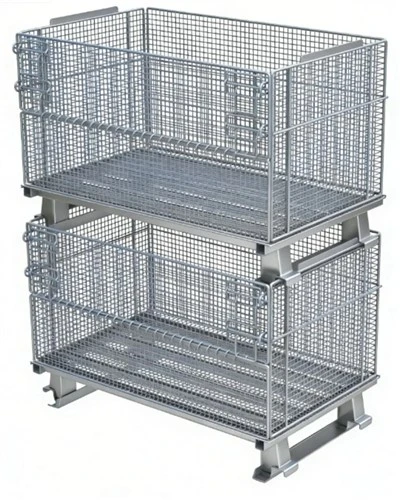
Hey there! If you’re scrolling through this blog, chances are you’re either in the market for foldable stillage cages, already using them, or just curious how these workhorses of warehouses and shipping yards stay in good shape. As someone who’s been supplying these cages for over a decade now, I can’t tell you how many times I’ve gotten questions like, “Do these even need maintenance? They look like just metal bins that fold up—what’s there to fix?” Foldable Stillage Cage

Let me cut to the chase: yeah, foldable stillage cages do need maintenance. Wait, no—actually, they don’t need all that fancy, time-consuming stuff people associate with heavy machinery. But if you skip the basic, no-fuss upkeep, you’ll end up with bent frames, stuck folding hinges, or rust spots that turn into big problems faster than you think. I’ve seen it firsthand: a client who cut corners on checking their cages monthly ended up with 200 unusable units after a year because a hinge snapped mid-unfold during a busy shipment run. That’s not a headache anyone needs.
First, let’s break down why maintenance for foldable stillage cages is different from, say, fixing a forklift. These things are built to take a beating—stacked high, dragged across concrete, loaded with pallets of boxes or even heavy parts. The whole point of making them foldable is to save space when they’re not in use, right? So the moving parts here are the star of the show: the hinges, the locking latches, the corner brackets that fold when you collapse them. Those are the bits that take the most wear, and they’re the ones you can’t ignore.
Let’s start with the quick, daily checks. I always tell my clients that if their staff uses these cages every day, a 2-minute walkaround before every shift is non-negotiable. What’s on that list? First, test the folding mechanism. Grab a cage that’s been sitting in a corner overnight, try to unfold it. Does it stick at the hinge? If it does, that’s a red flag. A quick spray of WD-40 (but not too much—you don’t want grease getting on your goods) can fix that. Wait, I’ve seen people use random oils before, like 3-in-1, but WD-40 is better because it doesn’t attract as much dust and grime.
Next, check the locking latches. Those little metal tabs that hold the cage open when it’s in use? If one’s bent, it won’t lock properly, and when you stack a load on it, the whole thing could collapse. I’ve had a client who had a load of fragile glassware break because a latch failed—turns out their staff had been prying the latch open with a screwdriver instead of pulling the release tab. Small, stupid habits like that break parts fast, so training your team to handle these cages gently goes a long way.
Then there’s the weekly stuff, which takes about 10 minutes per 50 cages (if you’re doing it right, not rushing). This is when you dive a little deeper. Wipe down the frames to get rid of dirt, dust, and any spilled stuff—like wet paint, food packaging residue, or even moisture from frozen goods. Moisture is the big enemy here, especially if your cages are kept outside in a yard. Even a tiny rust spot on a corner can spread if you don’t sand it down and touch it up with a little metal primer. I’ve had a supplier once tell me that rust eats through the steel of a stillage cage about 3 times faster when it’s exposed to road salt in winter, so if you’re in a place where they use salt on roads, you’ll want to rinse your cages off more often—maybe every two weeks.
Wait, also check the mesh sides. A lot of foldable cages have wire mesh on the sides, and if something sharp pokes a hole in it, that’s a spot where things can fall out, or even worse, get stuck and cause a jam when folding. Patching small holes with a bit of wire or a mesh repair kit is way cheaper than replacing an entire side panel.
Now, what about if you’re storing empty cages for a long time? That’s a common scenario—people stack 10 or 20 folded cages in a warehouse when they’re not using them. Don’t just leave them there. Every month, pull some out and check the bottom corners. When folded, the corners rub together, and if there’s a little paint chip, that’s where rust starts. Also, make sure they’re stacked evenly—if one cage is off-kilter, it can bend the top frame of the one below it. I’ve had a client who stacked 30 folded cages too high, and the bottom 5 all had bent frames. Fixing them cost more than a few new cages, so don’t skip that.
Oh, and let’s talk about repairs. I know a lot of people think, “Why fix it when I can just buy new?” But the good thing about foldable stillage cages is that most parts are replaceable. A bent hinge can be swapped out in 5 minutes with a wrench. A broken latch is like $5, not $50 for a new cage. But if you wait too long to fix a bent frame, that’s when you’re looking at replacing the whole thing. I always tell clients that it’s way cheaper to do small maintenance than to replace units every year because of neglect.
Wait, I should also mention that not all cages are the same. Some are made for light loads—like retail clothing, some are for heavy industrial parts, even for things like produce that might have moisture. The maintenance needs change a little. For example, cages used for produce need more regular cleaning because of leftover produce juice, which is sticky and attracts bugs and mold. Cages for heavy loads? They need more frequent checks of the welds, especially where the legs meet the frame. I’ve seen welds snap on a cage loaded with 1,000 lbs of engine parts—total disaster.
Let me give you a real example from my business. A manufacturing client bought 100 cages from me 3 years ago. They didn’t do any regular maintenance—just used them and stored them outside. After 18 months, half of them were unusable: rust spots had turned into holes, hinges were seized, two frames were bent. They ended up spending more than they would have on a maintenance plan to fix them. Then another client, a logistics company, took my advice and did daily checks, weekly cleaning, and monthly hinge lubrication. Their cages are still going strong after 5 years, no major repairs. That’s the difference.
Also, here’s a pro tip I learned: keep a small maintenance kit on hand in your warehouse. A can of WD-40, a wire brush, some metal primer, a few replacement hinges and latches, and a wrench. It takes up no space, and you can fix small issues as they pop up, instead of calling someone or waiting for a replacement cage. I always include a little kit with every bulk order I send out—clients love that, it saves them time and money.
Wait, do you have questions about how to actually do any of this? Like, how to sand a rust spot? Or how to adjust a bent hinge? Shoot me a message, I’ll walk you through it. The last thing I want is for someone to mess up a simple fix because they don’t know how.
Let’s wrap this up: foldable stillage cages don’t need complicated maintenance, but they do need consistent, basic care. Skipping it leads to broken parts, unusable units, and extra costs down the line. Taking 2 minutes a day, 10 a week, and 30 minutes a month to check these things will make your cages last way longer than if you ignore them.
If you’re tired of replacing broken stillage cages, or you’re looking for durable, easy-to-maintain foldable cages for your operation, hit me up. We can chat about what you need, answer any questions you have about maintenance, and get you set up with units that work for your business.
Pallet Rack References:
- Industrial Packaging & Logistics Association. (2021). Best Practices for Maintainable Material Handling Equipment.
- Material Handling Industry. (2022). Foldable Stillage Cage Durability and Maintenance Guidelines.
- U.S. Occupational Safety and Health Administration (OSHA). (2020). Preventing Material Handling Equipment Failures in Warehouses.
Taizhou Ziyue Metal Products Co., Ltd.
As one of the leading foldable stillage cage manufacturers in China, we offer a wide range of products with superior quality. We warmly welcome you to wholesale bulk foldable stillage cage for sale here and get quotation from our factory. For price consultation, contact us.
Address: No.18, Gudun Line, Industrial Agglomeration Area, Fenjie Town, Taixing City, Taizhou City, Jiangsu Province
E-mail: 18352658999@163.com
WebSite: https://www.ziyuemetal.com/
