If you’re in the dairy game—whether you run a small family farm, a medium-scale dairy processing plant, or something in between—you know that good milk storage isn’t just a nice extra. It’s make-or-break. I’ve been working with milk storage tanks for over a decade now, first as a farm hand, then as a rep for a tank supplier, and I’ve seen first-hand what happens when you cut corners: spoiled batches, lost profits, headaches with regulators, and even unhappy customers who won’t come back. A lot of folks shopping for tanks focus first on price, or size, or how it looks, but the real magic is in the small, science-backed features that keep milk safe, high-quality, and ready to use or ship. Today I’m breaking down the must-have features of a good milk storage tank, from what I’ve learned in the field. Milk Storage Tanks

First up is cooling—this is non-negotiable, no two ways about it. Milk is basically a petri dish for bacteria, right? It’s got all the nutrients microbes love, so if it sits warm even a little, bacteria multiply like crazy. The rule of thumb we repeat to every client is: cool milk from 98°F (that’s cow body temp, duh) down to 38°F or lower within two hours of milking. A lot of cheaper tanks use old, weak cooling systems that take 4 or 5 hours to hit that temp, which is a huge red flag. The best tanks have direct expansion cooling coils, not indirect ones. Wait, what’s the difference? Indirect uses a water jacket around the tank to cool it, which can have hot spots where water doesn’t circulate right, leaving little pockets of warm milk where bacteria can grow. Direct expansion coils are mounted right on the inner tank wall, so the cold is evenly spread across every inch of the tank. That means no warm spots, so every drop of milk hits safe temp fast. Also, look for tanks with digital temperature controls, not analog dials. Analog is fine for a lot of things, but dairy needs precision—if you’re off by even 2°F, you’re risking spoilage. Digital controls let you set exactly what temp you want, and they’ll alert you if something’s off, like if the power cuts out temporarily or the cooling unit stops working. I’ve had a client a few years back with an old analog tank that stayed at 45°F overnight; by morning, his whole batch had to be dumped, and it cost him over $2,000. That’s the kind of mistake you can avoid with a good cooling system.
Next, the inner tank material. This isn’t just “stainless steel”—not all stainless is made equal. A lot of cheap tanks use 201 series stainless, which is cheaper but softer, and it stains way easier. Stains on a milk tank are a breeding ground for bacteria, even if you scrub hard. The gold standard is 304 food-grade stainless steel. It’s non-reactive, so it won’t leach any weird chemicals into your milk, it’s super smooth, and it resists staining and corrosion way better. Also, the inner surface has to be polished, not brushed. Brushed steel has tiny little scratches and grooves where milk residue gets stuck, even after a full wash. Polished (we call it “mirror finish” in the biz) has a Ra value—for anyone who doesn’t know, that’s a measure of surface smoothness—below 0.8 microns. That’s so smooth you can’t feel the scratches with your finger, so milk doesn’t stick. I always tell clients to run a finger along the inner wall of a tank before they buy it; if it feels rough, walk away. Another thing here: the design of the inner tank should have no hard crevices or dead spots where milk can sit. Round bottoms and rounded corners are way better than flat ones. Flat bottoms collect residue at the bottom, and those little bits can grow bacteria over time. We’ve designed our tanks with a sloped round bottom that drains completely when you pull a sample or empty the tank, so nothing is left behind. That’s a small design choice but it makes a huge difference for cleaning and safety.
Cleaning is a big part of milk storage, too, and a lot of tanks skimp here. You need a tank that’s easy to sanitize, because leftover milk residue is the number one cause of off-flavors and bacterial growth. A good cleaning system is key. Many modern tanks have CIP (clean-in-place) capabilities, but not all CIP systems are the same. Look for a CIP system with adjustable spray balls that reach every part of the tank—top, sides, bottom, even the lid. Some cheap spray balls only cover half the tank, so the back and corners get missed, and you end up with milk buildup. Also, the tank lid should be easy to remove and seal tight. You don’t want gaps where dirty water or debris can get in, or where milk can splash out and cause contamination. A lot of small farm tanks have flimsy lids that don’t seal well, which is a problem for dust, bugs, or even rain if the tank is outside. Tanks with a clamp-style lid or a gasket that compresses evenly around the rim are the way to go. Also, check the drainage valve. It should be large enough so it drains the entire tank quickly, without leaving any milk sitting in the valve. Small valves get clogged, and residue builds up there all the time. We use 2-inch ball valves on our tanks, which open wide enough to get every last drop out, and they’re easy to take apart and clean by hand too, for deep sanitizing between batches.
Temperature monitoring and record-keeping might sound boring, but regulators care about this a lot, and it makes running your operation way easier. A good tank will track temperature 24/7, and save that data so you can show it to health inspectors, or just keep tabs on how your milk is storing. A lot of newer tanks sync to your phone or computer now, so you don’t have to walk out to the farm every 10 minutes to check the dial. If the temp creeps above 40°F, you get a text or an alert right away, so you can fix it before anything goes wrong. That’s way better than old-school tanks where you only check temp once a day, and by then it’s too late. I worked with a small dairy in Vermont last year that had a tank without remote monitoring, and a faulty cooling unit caused a whole batch to go bad over a weekend—they lost 500 gallons of milk, which is their whole monthly supply for their local market. If they’d had a remote alert, they would’ve gotten a notice when the temp started rising, and fixed it before the whole batch was ruined.
Another feature that people overlook is insulation. If you’re storing milk outside, or in a barn that’s not climate-controlled, good insulation is non-negotiable. The insulation keeps the cold in, so your cooling system doesn’t have to work overtime to maintain temp, which saves you money on electricity, and it keeps the milk at a consistent temp even when the outside temperature spikes. For example, if it’s 90°F outside and your tank has bad insulation, the cooling unit has to run nonstop, which wears it out faster and drives up your power bill. The best tanks use polyurethane foam insulation, which is dense and has a high R-value—meaning it’s really good at preventing heat transfer. The thickness matters too; for tanks over 500 gallons, you want at least 2 inches of insulation, and for smaller tanks, 1.5 inches is the minimum. Skip the tanks with thin, cheap insulation—they might cost less upfront, but you’ll pay for it in higher electric bills and shorter cooling unit life within a year or two.
Wait, let’s talk about size and capacity, because that’s a big one too. A lot of people buy a tank that’s either too small or too big. If you’re a small farm that milks 10 cows a day, a 1,000-gallon tank is way too big—you’ll be topping it off every day, and the milk will sit there longer than it should, raising spoilage risk. If you’re a mid-sized farm that milks 50 cows, a 500-gallon tank is way too small, and you’ll be making two trips to haul milk to the processor every day, which is a waste of time and gas. A good supplier should help you calculate the right size for your operation, based on how many cows you milk, how often you pick up or haul milk, and how much storage you need to hold it between milks. It’s not just about square footage in your barn—don’t just grab the biggest tank that fits.
Also, durability and ease of maintenance. A milk tank is a big investment, right? You want it to last 15, 20 years, not 3. Look for tanks with galvanized steel frames or skids that can handle being moved, cleaned, and placed on uneven ground without bending. The cooling unit should be a reputable brand—don’t go with the cheap off-brand units that break down every 6 months. Brands like Copeland or Danfoss have a proven track record, and parts are easy to find, which means less downtime if something does go wrong. Also, check if the supplier offers service and support locally. If your tank breaks down at 2 a.m. on a holiday, you don’t want to wait 3 days for a technician to show up. Most good tank suppliers will have service techs in major dairy areas, or at least a 24/7 hotline to walk you through basic fixes, like resetting a controller or cleaning a filter.
I’ve heard a lot of clients say “it’s just a tank, how hard can it be?” But after seeing hundreds of tanks in use, I can tell you that the small details make all the difference. A tank with a perfect cooling system and 304 stainless might cost a little more upfront, but it will save you thousands in spoiled milk, lower electric bills, and fewer maintenance calls over its lifetime. And don’t get me wrong—there are cheap tanks out there, but they’re not worth the risk. Spoiled milk doesn’t just cost you the product; it costs you your reputation with your customers and your milk processor. If you’re looking for a new tank, or upgrading your current one, don’t just shop on price. Ask about the cooling system, the inner steel grade, the CIP setup, insulation, and support.
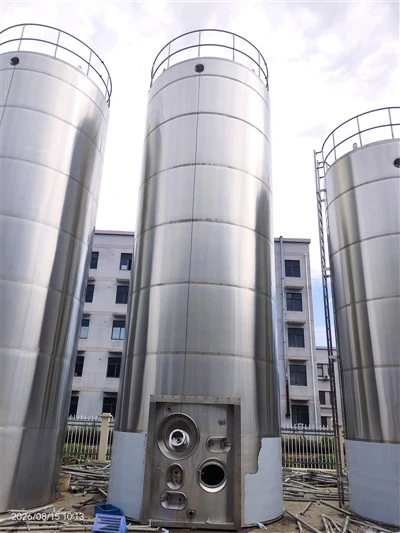
At the end of the day, a good milk storage tank is one that keeps your milk safe, keeps your costs down, and makes your job easier. It’s not about fancy bells and whistles—it’s about core features that work with the science of milk, and the needs of your operation. If you’re ready to look at tanks that check all these boxes, we’re here to walk you through every step, help you find the right size and features for your farm or plant, and answer any questions you have. No pushy sales talk, no confusing jargon, just real advice based on what works in the dairy industry.
Cream & Butter Production Unit References
- National Milk Producers Federation. (2021). Dairy Farm Equipment and Safety Guidelines.
- Food and Agriculture Organization of the United Nations. (2019). Small-Scale Milk Handling and Storage.
- International Dairy Federation. (2020). Recommended Practices for Milk Storage Tanks in Dairy Operations.
Shandong Chenma Machinery Co., Ltd.
Shandong Chenma Machinery Co., Ltd. is one of the most professional milk storage tanks manufacturers and suppliers in China. As we have world-leading production equipment and strong manufacturing capabilities, we warmly welcome you to buy high quality milk storage tanks made in China here from our factory. For price consultation, contact us.
Address: No.1666 Xinluo Street, Jinan City, Shandong
E-mail: admin@sdchenma.com
WebSite: https://www.chenmadairy.com/
