If you’re a small business owner—say, you run a farm-to-table bakery, a craft brewery, a small-scale animal feed operation, or a specialty grain retailer—chances are you’ve thought long and hard about your grain mill. Because here’s the thing: a bad mill doesn’t just waste time. It wastes grain, messes up your end product, and eats into profits before you even turn around. As someone who’s been in the commercial grain mill game for years (not just a random blogger, for real—I’ve talked to hundreds of small business owners who’ve burned through money on the wrong gear), I can tell you this: the “best” mill isn’t the shiniest one or the priciest one. It’s the one that fits your specific hustle, your space, and your bottom line. Commercial Grain Mill
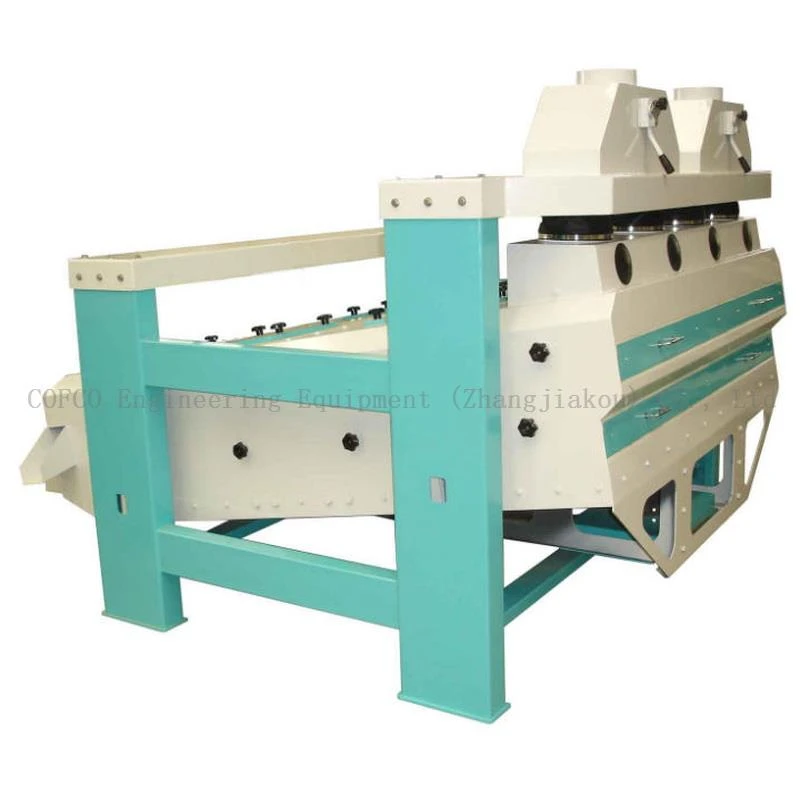
Let’s start with the basics you actually care about, not the marketing fluff. First, skip the home kitchen mills. Those cute little countertop ones? They’re great for grinding flour for a single loaf, but if you’re running a bakery that turns out 50 loaves a day, or a brewery that needs 100 pounds of malt for a batch, they’ll burn out in weeks. Commercial mills are built for consistent, heavy use, but not all commercial mills are equal. There are two main types that work for small businesses: stone mills and roller mills. Let’s break ’em down.
Stone mills are the OG. They use two round stones that rub against each other to crush grain. Why do people love ’em? They produce a coarser, more nutrient-dense flour—perfect for artisanal bakeries that sell whole-grain breads where texture matters. If your brand is all about “stone-ground” on the label, this is non-negotiable. But wait, there’s a catch: stone mills can’t handle super fine grinds consistently. If you’re a brewer needing malt fine enough for mashing, or a pasta maker that wants ultra-smooth semolina, a stone mill might leave something to be desired. Also, they’re a bit slower than roller mills, so if you’re cranking out high volumes, you might need a model with extra stones to keep up.
Then there are roller mills. These use two (or more) rotating cylinders that squeeze grain between them, kind of like a clothes wringer but way more precise. They’re faster, way more consistent on grinds (you can adjust them for fine flour, coarse feed, or perfect malt), and they don’t heat up the grain as much? Wait, no—wait, actually, some roller mills can heat grain if they’re not set right, but modern ones have cooling systems for small businesses. The big win here is versatility. If you’re a small operation that does both flour for baking and grain for animal feed, or you switch between malt for brewing and corn for tortillas, a roller mill can handle it. They’re also smaller than large stone mills, so if you’ve got limited space in your shop or back barn, they’re easier to fit.
But let’s get specific because small businesses aren’t a monolith. A bakery in a 1,000-square-foot commercial kitchen has totally different needs than a 5,000-square-foot feed operation. Let’s talk about the key factors to weigh before you pull the trigger:
-
Daily volume. This is non-negotiable. Let’s say you’re a craft bakery that grinds 50 pounds of grain a day. A mill that does 100 pounds an hour is overkill, but a countertop mill that does 5 pounds an hour is too slow. You need something that can handle your peak load without burning out. If you’re a brewery doing 200 pounds of malt a week, you don’t need a mill that grinds 1,000 pounds an hour—but you do need one that doesn’t take forever to set up and clean. I’ve seen so many small business owners buy a mill that’s too big, leaving it half-used and taking up space, or too small, having to grind twice as much and wasting labor.
-
Grind consistency. This is make-or-break for consistency in your product. If you’re selling whole-grain bread, customers expect the same texture every time—no random chunks or fine powder in the same bag. For brewers, uneven malt grinds lead to inconsistent mash efficiency, which means off-flavors and wasted grain. Roller mills win here because their adjustable rollers let you lock in a specific grind size, no guesswork. Stone mills can be a bit more finicky—you have to balance the stones regularly to get even grinds, which takes time and know-how.
-
Space and setup. Most small businesses don’t have a huge industrial floor plan. If you’re in a rented kitchen, you might need a mill that’s easy to move or set up on a counter. Some smaller roller mills are compact enough to sit on a sturdy workbench, while even small stone mills can be heavy (like 200+ pounds) and need a dedicated spot. Also, think about power: do you have 110V outlet, or do you need 220V? A lot of entry-level commercial mills run on standard household power, which is a big plus for small businesses that don’t want to rewire their space.
-
Cleanup and maintenance. Let’s be real—no one wants to spend 2 hours after a long day scrubbing a mill. Some mills have parts that are dishwasher-safe, others you have to hand-wash. Stone mills have two stones that can develop static over time, which means grain dust gets stuck, and you have to take them apart regularly to clean. Roller mills usually have fewer moving parts, and their cylinders are easy to wipe down. Also, maintenance costs: how much do replacement parts cost? Can you fix it yourself, or do you need a tech to come out? For small businesses, low maintenance and affordable parts are huge—you don’t want a $500 repair bill every month.
Now, let’s talk about the models that actually work for small businesses, not the fancy industrial ones for big farms. From what I’ve seen, the sweet spot is between 50 and 500 pounds per hour (PPH) of capacity. For volumes under 100 PPH, a compact roller mill is usually the way to go—like the ones we carry that are built for small bakeries and breweries. Wait, but I should mention some real user examples. A few months back, I worked with a craft bakery in Portland that was using a countertop mill that broke every 3 months. They switched to a compact roller mill that does 80 PPH, and they’ve had zero issues in 6 months. Another client is a small family-run feed operation in Iowa—they had a large stone mill that took up half their storage space, and they swapped for a smaller roller mill that does 200 PPH, saved space, and cuts their grinding time in half.
Wait, but what about if you’re into organic grains? Some small businesses prioritize that, and you might worry about mill contamination. Modern commercial mills have stainless steel parts and never touch the grain with anything that’s not food-safe—so neither stone nor roller mills have a big issue here, as long as you choose one with food-grade materials. Just skip the cheap models with plastic parts; they can leach chemicals over time.
Also, don’t sleep on portability. A lot of small business owners do pop-ups, or transport grain to different locations for grinding. Some compact roller mills are on wheels, which is a game-changer if you’re not grinding in a fixed space. I’ve had clients who take their mill to farmers’ markets and grind fresh grain on-site for customers—that’s a huge selling point for their business, and the portability makes it easy.
Let’s address the big mistake I see all the time: buying the cheapest mill you can find. A $200 commercial mill might seem like a steal, but it’s probably going to break in a month, waste grain, and give you inconsistent grinds. I’ve had customers come back to me after buying a cheap mill, saying they lost $1,000 in wasted grain and labor because the mill couldn’t keep up. It’s way better to spend a bit more upfront on a mill that’s built to last—most quality commercial mills have a 1-2 year warranty, so if something goes wrong, you’re covered.
Another thing: customer support. When you’re running a business, you can’t afford to have your mill down for a week. A lot of cheap mill brands have no customer service—you send an email and never hear back. The brands we work with have same-day support, and they can ship replacement parts within 2 days. That’s worth paying a little extra for.
Wait, let’s wrap this up with a quick decision guide to make it easy. If you’re a small bakery selling artisanal whole-grain bread, value stone-ground texture, and grind 50-150 pounds a day: go with a compact stone mill, make sure it has adjustable gap settings for consistent grinds. If you’re a craft brewery, a small animal feed operation, or a business that needs versatility (switching between flour, malt, and feed), stick with a compact roller mill—look for one that does 100-300 PPH, runs on standard power, and is easy to clean. If space is super tight, go for a benchtop model; if you need portability, get one on wheels.
Now, here’s the thing—this is just what I’ve learned from talking to hundreds of small business owners over the years. Every operation is a little different, so there’s no one-size-fits-all. If you’re still not sure which mill is right for you, don’t guess. Reach out to us, tell me about your daily volume, what you’re grinding, your space, and your needs, and I’ll help you pick something that works for your budget and your hustle. I’m not here to push the most expensive mill—I’m here to make sure you get one that doesn’t become a money pit.
At the end of the day, the best commercial grain mill for a small business is the one that lets you do what you do best: make great products, keep your customers happy, and grow your business. Don’t let a bad mill slow you down. Connect with us to discuss your requirements and find the perfect fit for your operation.
Flour Automatic Packing Machine References:
- American Society of Agricultural and Biological Engineers. (2021). "Commercial Grain Milling Equipment for Small-Scale Operations." Standard ASABE S580.1.
- Craft Bakers Association. (2022). "Equipment Guide for Small-Scale Artisanal Bakeries." Industry Report.
- Brewer’s Association. (2023). "Malt Processing Equipment for Craft Breweries." Technical Brief.
- National Animal Feed Association. (2021). "Small-Scale Feed Milling Best Practices." Guidelines for Producers.
- Food and Agriculture Organization of the United Nations. (2022). "Post-Harvest Equipment for Smallholder Commercial Enterprises." Field Guide.
COFCO Engineering Equipment (Zhangjiakou) Co., Ltd.
COFCO Engineering Equipment (Zhangjiakou) Co., Ltd. is one of the most professional commercial grain mill manufacturers and suppliers in China, also supports customized service. Please feel free to wholesale advanced commercial grain mill for sale here from our factory. Quality products and reasonable price are available.
Address: No.4 ZhongLiang Street, high-tech industrial development zone, Zhangjiakou, Hebei, PRC
E-mail: mayihui@cofco.com
WebSite: https://www.ceeflourmill.com/
