If you’ve ever worked with magnesium compounds for industrial applications, agriculture, or construction, you’ve probably seen magnesium oxide and magnesium hydroxide listed side-by-side on material datasheets—and wondered how to tell them apart beyond their basic chemical formulas. As a magnesium oxide supplier who’s spent the last 12 years working with manufacturers, farmers, and construction crews to source and deliver consistent, high-purity magnesium materials, I can tell you this: the difference between MgO and Mg(OH)₂ isn’t just chemical jargon. It’s the difference between a product that performs as intended and one that falls short of your project needs. Let’s break this down in plain terms, no dense textbook equations required, and explain why choosing the right one matters for your bottom line. Magnesium Oxide
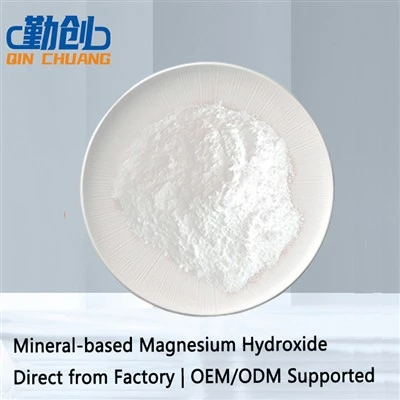
First, let’s start with the basic chemistry, because that’s where all their differences stem from. Magnesium oxide has a simple ionic structure: one magnesium ion paired with one oxygen ion, so its formula is MgO. When you expose MgO to moisture—like steam, water vapor, or liquid water—something happens. It undergoes a hydration reaction, where water molecules react with MgO to form magnesium hydroxide, which has the formula Mg(OH)₂. That reaction sounds straightforward, right? But the timing, conditions, and end result of that change are huge. MgO is hygroscopic, meaning it actively absorbs water from its surroundings to trigger that conversion. Mg(OH)₂, on the other hand, is already in its hydrated state; it won’t take on more water in the same reactive way unless you apply intense heat or pressure later on. That core difference in hydration reactivity is what makes these two magnesium compounds useful for totally different jobs.
Let’s talk about practical uses, because that’s what most of my customers care about when they reach out to me. For construction and industrial materials, magnesium oxide is the star of the show. If you’ve ever worked with magnesium oxide boards (used for interior walls, exterior sheathing, or subfloors), you know they’re durable, fire-resistant, and mold-resistant. That’s because MgO reacts very slowly with moisture when mixed with other components like magnesium chloride or perlite, forming a hard, cement-like matrix that’s way more stable than traditional gypsum board. I’ve shipped MgO to contractors for commercial building projects where fire resistance is non-negotiable, like apartment complexes or school buildings, and they swear by it for its ability to stop flames in their tracks—something Mg(OH)₂ can’t match, because it doesn’t have that slow, controlled reactivity that creates that strong structural bond.
Agriculture is another big space where MgO and Mg(OH)₂ are used, but for different reasons. Soil needs magnesium to help plants produce chlorophyll, so both compounds are used as soil amendments. But MgO acts as a slow-release source of magnesium, which means it breaks down gradually in soil to feed plants over months, rather than all at once. That’s perfect for row crops like corn or soybeans, which need a steady supply of nutrients throughout their growing season. Mg(OH)₂, by contrast, reacts faster in soil and is often used to adjust soil pH (lime amendment) because it’s a mild base that neutralizes acidic soil quickly. Farmers who reach out to me usually know which one they need, but I always make sure to ask specific questions about their crop type and soil condition to steer them toward the right product—no sense selling a slow-release MgO to a farmer who needs fast pH adjustment for new seedlings.
Then there’s industrial applications like water treatment, where both compounds have distinct roles. Mg(OH)₂ is commonly used as a neutralizing agent for acidic wastewater because it’s safe to handle, easy to transport (since it’s already hydrated, it doesn’t absorb moisture during shipping like MgO does), and reacts quickly to raise the pH of water to meet regulatory standards. I’ve supplied Mg(OH)₂ to municipal water treatment plants and manufacturing facilities that produce acidic byproducts, and they love that it’s less reactive during transport, so there’s less risk of it breaking down in transit. MgO, on the other hand, is used in industrial processes like steel manufacturing, where it acts as a refractory material lining furnaces to withstand extremely high temperatures. Its high melting point (around 2800°C, compared to Mg(OH)₂ which decomposes at just 350°C) makes it ideal for that job—something Mg(OH)₂ could never do, because it would break down into magnesium oxide and water the second it’s exposed to furnace heat.
Now, let’s get into performance and handling, because that’s where a lot of my customers run into confusion. If you handle MgO, you have to be careful about how you store it. Because it’s hygroscopic, it will absorb water from the air if it’s not sealed properly, which reduces its reactivity and purity over time. I always advise my customers to store MgO in airtight containers or climate-controlled warehouses, especially if they’re buying large quantities for construction or industrial use. Mg(OH)₂ doesn’t have that same hygroscopic property, so it’s much easier to store—no need for special climate control, just a dry, covered area. That makes Mg(OH)₂ a better choice for customers who don’t have dedicated storage for hygroscopic materials, like small farms or small-scale manufacturers.
Purity is another key point. MgO and Mg(OH)₂ have different purity standards for different uses. For example, pharmaceutical-grade MgO is used in antacids and nutritional supplements because it’s highly pure (usually 99% or higher) and easy for the body to absorb magnesium from. Pharmaceutical-grade Mg(OH)₂ is also used in antacids, but it’s a different product—think Milk of Magnesia, which is a suspension of Mg(OH)₂ in water. For industrial grades, the purity requirements change: construction-grade MgO needs to have consistent reactivity to form the strong matrix I mentioned earlier, so impurities like calcium or iron have to be kept below a certain threshold. Mg(OH)₂ for water treatment needs to have high neutralizing capacity, so its purity standards focus on low heavy metal content to avoid contaminating water.
I’ve had so many customers reach out over the years, confused about which magnesium compound they need, and that’s why I always make a point to walk them through their specific needs. Last year, a contractor called me because he’d been using MgO for subfloors but had a bad batch that he said “stopped reacting” after a few weeks. I asked him how he was storing it, and he told me he’d left the pallets outside for three days before installing them in a new home. Turns out, the MgO had absorbed moisture from rain and high humidity, so it couldn’t form the strong bond it was supposed to. I helped him get a fresh, properly stored batch of MgO, and he used it for several more projects without issue. Another time, a farmer called me asking for Mg(OH)₂, thinking it was the same as MgO, because he’d seen both listed as soil amendments. I explained that his corn crop would benefit more from slow-release MgO, and we adjusted his order, which resulted in healthier corn yields that season.
At the end of the day, the core difference between magnesium oxide and magnesium hydroxide comes down to reactivity and hydration state. MgO is the reactive, hygroscopic magnesium compound that forms the basis of many structural, fire-resistant, and slow-release products. Mg(OH)₂ is the hydrated, more stable compound used for pH adjustment, fast neutralization, and products that don’t need high-temperature resistance or slow reactivity. If you’re in the market for either, don’t just go by the name—think about the conditions your product will be used in, the performance you need, and how you’ll store it. If you’re still not sure, reach out to a supplier who knows their stuff (that’s me, by the way) to walk you through your options.
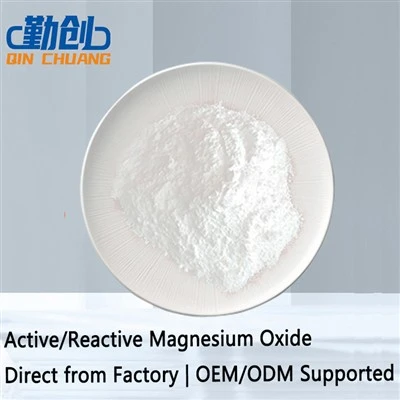
I’ve been in the magnesium compound business for over a decade, and I’ve learned that the best partnerships come from understanding what my customers actually need, not just selling them a product because it’s in stock. Whether you’re a contractor needing MgO for fire-resistant walls, a farmer needing soil amendments, or a manufacturing facility needing a water treatment agent, I can help you source the right magnesium material for your project, with consistent quality and reliable delivery. If you have questions, need a quote, or want to talk through your specific needs, don’t hesitate to get in touch.
Magnesium Carbonate References
- Aitken, R. (2010). Magnesium Compounds: Properties, Production, and Applications. Wiley.
- USDA. (2021). Agricultural Use of Magnesium Compounds for Soil Health. Agricultural Materials Division.
- American Concrete Institute. (2018). Performance of Magnesium Oxide-Based Construction Materials. ACI Materials Journal.
- Environmental Protection Agency. (2020). Use of Magnesium Hydroxide for Industrial Wastewater Neutralization. EPA Water Resources Report.
- Lide, D. R. (Ed.). (2005). CRC Handbook of Chemistry and Physics (86th ed.). CRC Press.
Xingtai Qinchuang New Material Technology Co., Ltd.
As one of the most professional magnesium oxide manufacturers and suppliers in China, our products have good reputation in the market. Please feel free to buy high quality magnesium oxide for sale here and get quotation from our factory. For price consultation, contact us.
Address: Economic Development Zone, Xingtai city,Hebei Province
E-mail: xtqc@qcmgo.com
WebSite: https://www.qc-mgo.com/
