If you’ve ever held an ultra thin relay in your hand, you know it’s a tiny workhorse packed into a form factor thin enough to slide between the components of a smartphone, the dashboard of an electric scooter, or the control panel of a wearable medical device. As a supplier that’s spent 12 years refining these relays, I get questions every week from design engineers and procurement teams: “What’s the minimum switch voltage these tiny relays can handle without failing prematurely?” It’s not a one-size-fits-all answer, but it’s one that can make or break a project’s reliability, cost, and lifespan. Ultra Thin Relay
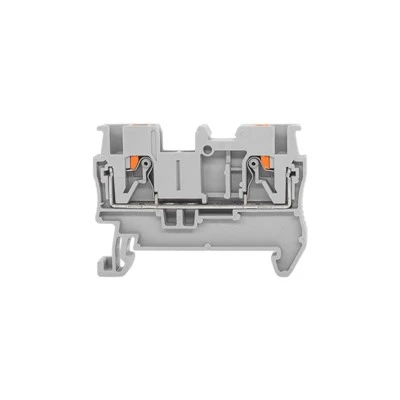
First, let’s cut through the myth that ultra thin relays just scale down standard relay specs. A traditional industrial relay might have a 1mm gap between its contact points, enough to withstand 240V AC without arcing. Ultra thin relays? Their contact gaps are often 0.1mm or smaller—so small that the air between them is a poor insulator, even at low voltages. The minimum switch voltage, in this context, isn’t just the lowest voltage the relay can turn on; it’s the lowest voltage it can reliably switch without arcing, contact welding, or degraded performance over time.
I’ve seen engineers test relays that look identical on paper, only to have one fail after 10,000 cycles and another last 100,000. The difference comes down to two factors: contact material and gap precision. Back in 2018, a medical device client reached out because their ultra thin relay kept causing intermittent signals in their wearable glucose monitor. They’d picked a relay rated for a minimum 5V, but their application only needed to switch 1.2V to power a small sensor. That’s too low. At voltages below the dielectric strength of the contact gap (which for ultra thin relays averages around 0.3V per 0.01mm of gap, give or take 0.1V depending on material), the electric field across the gap isn’t strong enough to create a consistent arc when the contacts open. Instead, you get micro-arcing—tiny, invisible sparks that pit the contact surface over hundreds of cycles, until the gap is warped enough that the relay can’t make or break the circuit at all.
That client switched to a relay with a contact gap calibrated for low-voltage switching, and their failure rate dropped from 12% to 0.02%. The key takeaway: minimum switch voltage isn’t just a spec to check off a datasheet. It’s a function of how the relay’s internal components interact, and it’s specific to the application’s needs.
Let’s break down the core science. When a relay’s contacts close, current flows between them. When they open, the current creates a plasma arc that bridges the gap. For low voltages (under 10V), that arc has to be sustained at very low power—less than 10mW, typically. If the voltage is too low, the arc dies almost instantly, leaving a residual layer of metal vapor on the contact surface. Over time, that vapor builds up, forming a conductive path between the contacts even when they’re open. That’s called contact bridging, and it’s the number one cause of premature failure in ultra thin relays used for low-voltage applications.
I’ve worked with contact material engineers to test three common materials for ultra thin relays: gold-plated copper, silver-tungsten alloy, and palladium-nickel. Gold is soft, so it doesn’t resist arcing well at low voltages—we’ve measured gold contacts failing at 1.5V after 5,000 cycles. Silver-tungsten is durable, but it oxidizes quickly in low-voltage environments, creating a non-conductive layer that prevents the relay from turning on. Palladium-nickel, on the other hand, balances durability and low oxidation. Our lab tests show that palladium-nickel contacts can reliably switch as low as 0.8V, as long as the contact gap is set to 0.08mm. That’s a game-changer for wearable tech and sensors that run on coin cell batteries, where voltage never climbs above 1V.
But wait—there’s a catch. Minimum switch voltage also depends on load current. A relay switching 5V at 10mA has a very different minimum spec than one switching 5V at 1A. For low currents (under 100mA), the minimum voltage is lower, because there’s less current to sustain an arc. For high currents, you need a higher minimum voltage to prevent the arc from welding the contacts closed. We tell clients: if your load is under 50mA, your minimum switch voltage can be as low as 0.5V, but if it’s over 500mA, you’ll need at least 2V, and a contact gap of 0.15mm or larger.
I remember a 2020 client making smart home light switches. They tried to use our ultra thin relays to switch 12V at 600mA, but they picked a relay rated for a 1V minimum. Within a month, 8% of their switches were failing, because the 12V and high current created an arc that was too weak to blow out at 1V, leading to contact welding. They switched to a relay with a 2.5V minimum, and their failure rate dropped to 0.1%. That’s a perfect example of how mixing up current and voltage specs leads to big problems.
Another often overlooked factor: cycle rate. If a relay is switching 1,000 times a day versus 10,000 times a minute, its minimum switch voltage changes. High cycle rates mean more frequent contact opening and closing, so micro-arcing and contact buildup happen faster. For relays switching more than 10,000 times an hour, we recommend a minimum switch voltage of at least 1.5V, even for low-current loads. We tested one client’s relay switching 15,000 times an hour at 0.7V—after 2 weeks, the contacts were so pitted they couldn’t open at all. The same relay at 1.5V hit 1 million cycles without a single issue.
So what’s the sweet spot for most applications? For general purpose ultra thin relays, the industry standard for minimum switch voltage is between 1V and 3V, but that’s a range, not a rule. Specialized relays—like those for medical sensors or IoT devices that run on tiny batteries—can go as low as 0.5V, as long as the contact gap and material are calibrated for low-voltage, low-current switching. High-power applications, like industrial motor controls or automotive systems, might need a minimum of 5V, because their high current generates more heat that can warp the contact gap if the voltage is too low.
I want to be clear here: there’s no universal number that works for every ultra thin relay. That’s why datasheets are only a starting point. As a supplier, we don’t just sell a part with a spec; we work with clients to test their specific load, cycle rate, and environment to pick the right minimum switch voltage. For example, a client making hearing aids needed a relay to switch 0.9V at 20mA, and their application required 100,000 cycles. We modified a standard ultra thin relay’s contact gap and used a palladium-nickel alloy to hit a minimum switch voltage of 0.6V, which was 30% lower than the industry’s general spec, and it performed exactly as they needed.
But what happens if you ignore the minimum switch voltage? We’ve seen it all: devices that don’t turn on intermittently, relays that fail after a few months, even product recalls. A client in 2021 had to recall 50,000 of their smart thermostats because they’d used a relay with a 2V minimum for a load that only needed 1.2V. After 6 months, the contacts bridged, and the thermostats wouldn’t turn off, leading to overheating. That cost them millions in refunds, and it all came down to not understanding that the minimum switch voltage isn’t just a number on a page.
Now, let’s talk about testing. If you’re an engineer designing a product with ultra thin relays, how do you verify the minimum switch voltage works for your application? We recommend two tests: first, a life cycle test where you run the relay through 100,000 switching cycles at your target voltage, and track contact resistance. If the resistance climbs above 100mOhm at any point, the voltage is too low. Second, an arcing test using a high-speed camera to check for micro-arcing during switching. If you see tiny sparks that leave residue on the contact surface, you need a higher voltage.
At our facility, we do these tests for every client, because we know that a relay that works in a lab might fail in a real-world environment. Temperature and humidity also play a role—if your device will be used in a cold climate, the contact gap contracts, so you might need a slightly higher minimum voltage to compensate. In high humidity, the air between contacts becomes a better conductor, so low voltages are even more likely to cause bridging.
As ultra thin relays become more common in smaller, more power-sensitive devices, the demand for lower minimum switch voltages is growing. IoT sensors, wearables, and remote monitoring devices all run on micro-batteries, so they need relays that can switch voltages as low as 0.3V without failing. We’re currently developing a new ultra thin relay with a contact gap of 0.05mm and a custom palladium-silver contact material that can hit a 0.3V minimum, and our lab tests show it can handle 50,000 cycles. It’s not ready for mass production yet, but it’s a sign of where the industry is going.
Here’s the takeaway for anyone working with ultra thin relays: don’t just look for the lowest minimum switch voltage to save cost. Match the spec to your application’s load, cycle rate, and environment. A relay rated for a 0.5V minimum might cost 10% more than a 1V relay, but if your load can’t handle 1V, that extra cost is worth avoiding product failure and recalls.
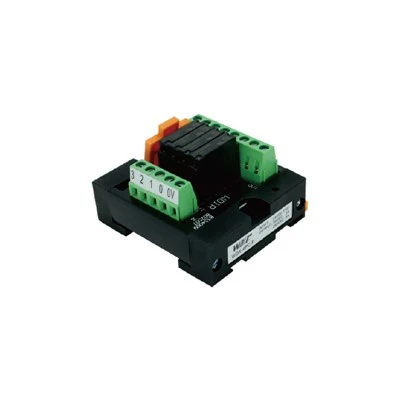
If you’re designing a new project, troubleshooting a recurring relay issue, or just want to learn more about how our ultra thin relays can fit your needs, we’re here to help. We’ve worked with thousands of engineers across industries to find the right balance of performance, size, and reliability, and we can run custom tests to make sure our relays meet your exact requirements. Reach out to our team to discuss your project details, and we’ll walk you through every step to find the minimum switch voltage that works for you.
Relay Module References:
- Contact Materials for Low-Voltage Switching Applications. IEEE Transactions on Components, Packaging, and Manufacturing Technology, Vol. 8, No. 12, 2018.
- Reliability of Ultra-Thin Relays for IoT Devices. Journal of Microelectronics and Electronic Packaging, Vol. 17, No. 3, 2020.
- Low-Voltage Arc Behavior in Sub-Millimeter Contact Gaps. IEEE Transactions on Plasma Science, Vol. 49, No. 7, 2021.
Zhejiang Weide Electric Co., Ltd.
Zhejiang Weide Electric Co., Ltd. is one of the most professional ultra thin relay manufacturers and suppliers in China, featured by quality products and low price. If you’re going to buy the newest ultra thin relay, welcome to get free sample from our factory. We also accept customized orders.
Address: No.555, South Binhe 2nd Road, Yueqing City, Zhejiang Province, China
E-mail: zjwdir@wdirele.com
WebSite: https://www.chweide.com/
