As a seasoned supplier of casting parts, I understand the critical importance of proper storage for these products. Casting parts, whether they are made of metals like aluminum, steel, or iron, or other materials, are often the result of a complex manufacturing process. Ensuring their proper storage not only maintains their quality but also extends their lifespan, which is beneficial for both us as suppliers and our valued customers. In this blog, I will share my insights on how to store casting parts properly. Casting Parts
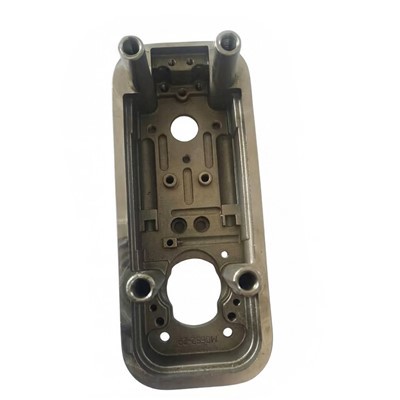
Understanding the Characteristics of Casting Parts
Before delving into the storage methods, it is essential to understand the characteristics of casting parts. Different materials have different properties, such as susceptibility to corrosion, oxidation, and mechanical damage. For example, aluminum casting parts are relatively lightweight and have good corrosion resistance, but they can be easily scratched. Steel casting parts, on the other hand, are strong and durable but are prone to rust if not properly protected. Iron casting parts are heavy and have high strength, yet they are also vulnerable to oxidation.
The shape and size of casting parts also play a significant role in storage. Complex – shaped parts may have protruding edges or thin sections that are more likely to break during handling and storage. Large – sized casting parts require more storage space and special handling equipment, while small – sized parts can be easily lost if not stored properly.
Selecting the Right Storage Environment
Temperature and Humidity Control
The storage environment’s temperature and humidity are crucial factors. Most casting parts are sensitive to extreme temperatures and high humidity. High temperatures can cause thermal expansion, which may lead to dimensional changes in the parts. In addition, high humidity can accelerate corrosion processes.
For metal casting parts, a temperature range of 10 – 30 degrees Celsius and a relative humidity of less than 60% are generally recommended. To achieve this, storage facilities can be equipped with air – conditioning and dehumidification systems. Regular monitoring of the temperature and humidity inside the storage area using sensors is also necessary to ensure that the conditions remain within the appropriate range.
Ventilation
Good ventilation is essential for preventing the accumulation of moisture and harmful gases. In a poorly ventilated storage area, moisture can condense on the surface of casting parts, leading to corrosion. Additionally, some casting processes may leave behind residues that can emit harmful fumes. Adequate ventilation helps to remove these fumes and maintain a clean and dry environment.
Ventilation systems can be designed to provide a continuous supply of fresh air. Natural ventilation can be enhanced by installing windows and vents, while mechanical ventilation systems such as fans and exhaust ducts can be used for larger storage facilities or areas with high – density storage.
Protection from Dust and Contaminants
Casting parts should be protected from dust and other contaminants. Dust can scratch the surface of the parts and affect their appearance and functionality. Contaminants such as chemicals, oils, and dirt can also cause corrosion or other forms of damage.
To prevent dust and contaminants from reaching the casting parts, storage areas should be kept clean. Floors should be swept regularly, and the storage racks should be wiped down. Additionally, parts can be covered with dust – proof covers or stored in sealed containers.
Choosing the Appropriate Storage Equipment
Storage Racks
Storage racks are an essential part of storing casting parts. They provide a stable and organized way to store parts, making it easier to access and manage inventory. When choosing storage racks, several factors need to be considered.
The load – bearing capacity of the racks is crucial. Heavy casting parts require racks with high load – bearing capabilities. The design of the racks should also be suitable for the shape and size of the parts. For example, parts with irregular shapes may require custom – designed racks to ensure proper support.
Containers and Boxes
For small – sized casting parts, containers and boxes can be used for storage. These containers should be made of durable materials that can protect the parts from damage. Plastic containers are a popular choice as they are lightweight, inexpensive, and can be easily labeled.
When using containers, it is important to ensure that the parts are properly cushioned to prevent them from moving around and getting scratched or damaged during handling and storage. Foam inserts or bubble wrap can be used to provide cushioning.
Pallets
Pallets are used for storing large – sized casting parts or for stacking multiple containers. They provide a stable base for the parts and make it easier to move them using forklifts or other handling equipment. Pallets should be made of strong materials such as wood or plastic and should be in good condition to prevent the parts from tipping over or getting damaged.
Proper Handling and Placement
Handling Techniques
Proper handling techniques are essential to prevent damage to casting parts during storage. When moving parts, appropriate lifting equipment should be used. For heavy parts, forklifts or cranes are necessary, while for smaller parts, hand trucks or pallet jacks can be used.
Operators should be trained on how to handle the parts safely. They should avoid dropping or banging the parts, as this can cause cracks or other forms of damage. When lifting parts, the center of gravity should be properly aligned to prevent the parts from tipping over.
Placement on Storage Racks
When placing casting parts on storage racks, they should be arranged in an orderly manner. Heavy parts should be placed at the bottom of the racks to ensure stability. Parts should be spaced evenly to prevent them from rubbing against each other and causing damage.
If possible, parts should be stored in a way that allows for easy inspection and access. This can help to identify any potential issues such as corrosion or damage early on.
Surface Protection
Coating
Applying a protective coating to the surface of casting parts is an effective way to prevent corrosion and oxidation. There are various types of coatings available, such as paint, varnish, and anti – rust oils.
The choice of coating depends on the type of material, the storage environment, and the intended use of the parts. For example, if the parts are to be used in a marine environment, a coating with high corrosion resistance is required.
Packaging
In addition to coatings, proper packaging can also provide additional protection. Parts can be wrapped in protective films or placed in sealed bags. This helps to prevent moisture, dust, and contaminants from reaching the surface of the parts.
Regular Inspection and Maintenance
Inspection
Regular inspection of casting parts during storage is crucial. This allows for the early detection of any issues such as corrosion, damage, or dimensional changes. Inspections can be carried out visually or using non – destructive testing methods such as ultrasonic testing or magnetic particle testing.
Inspection intervals should be determined based on the type of material, the storage environment, and the expected lifespan of the parts. For example, parts stored in a high – humidity environment may need to be inspected more frequently.
Maintenance
If any issues are detected during the inspection, appropriate maintenance measures should be taken immediately. This may include cleaning the parts, reapplying coatings, or repairing any damage.

Proper storage of casting parts is a comprehensive process that involves understanding the characteristics of the parts, selecting the right storage environment, choosing appropriate storage equipment, using proper handling and placement techniques, providing surface protection, and conducting regular inspection and maintenance. By following these guidelines, we can ensure that our casting parts maintain their quality and performance, which in turn satisfies our customers’ needs.
Casting Parts If you are in the market for high – quality casting parts and want to learn more about our products and services, we invite you to contact us for a procurement discussion. We are committed to providing you with the best solutions for your casting part requirements.
References
- ASM Handbook Volume 5: Surface Engineering.
- ASTM International Standards on Metal Casting and Storage.
- "Fundamentals of Metal Casting" by R. N. Wright.
Suzhou Ruchun Machinery Technology Co., Ltd.
We’re well-known as one of the leading casting parts manufacturers and suppliers in China, also support customized service. We warmly welcome you to buy high quality casting parts made in China here from our factory. If you have any enquiry about cooperation, please feel free to email us.
Address: Room 406, Building C, No. 88 Baifu Road, Kunshan Development Zone, Suzhou
E-mail: xumeng73@sina.com
WebSite: https://www.ruchun-machinery.com/
