Ultra Low Pressure Reverse Osmosis (RO) membranes have emerged as a revolutionary solution in water treatment technology, offering energy – efficient and cost – effective ways to purify water. As a supplier of Ultra Low Pressure RO Membranes, I often receive inquiries about their suitability for various applications, especially in high – altitude regions. This blog will delve into the technical aspects, performance, and practical considerations to determine whether Ultra Low Pressure RO Membranes are suitable for high – altitude water treatment. Ultra Low Pressure RO Membrane
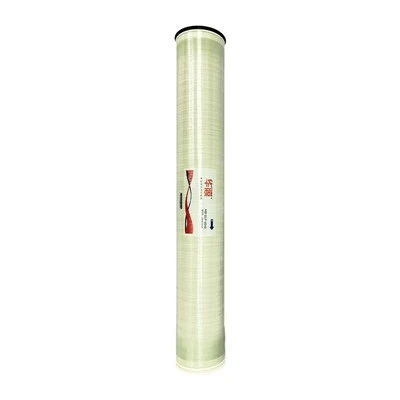
Technical Principles of Ultra Low Pressure RO Membranes
Firstly, it’s essential to understand the working principle of Ultra Low Pressure RO Membranes. Reverse osmosis is a process that uses a semi – permeable membrane to separate dissolved solids, ions, and other contaminants from water. The membrane allows water molecules to pass through while blocking the passage of larger molecules and ions. Ultra Low Pressure RO Membranes are designed to operate at significantly lower pressures compared to traditional RO membranes. This is achieved through advanced membrane materials and manufacturing techniques that optimize the membrane structure and surface properties.
The lower operating pressure requirement of Ultra Low Pressure RO Membranes translates into reduced energy consumption, which is a major advantage in water treatment systems. Energy costs often account for a substantial portion of the total operating expenses in water treatment plants. By using Ultra Low Pressure RO Membranes, operators can achieve the same level of water purification with less energy input, leading to significant cost savings.
High – Altitude Water Characteristics
High – altitude regions present unique water treatment challenges due to the distinct characteristics of the water sources and the environmental conditions. At high altitudes, water sources are often derived from snowmelt, mountain streams, or glaciers. This water usually has low temperatures, high levels of particulate matter such as sediment and silt, and potentially high concentrations of natural organic matter (NOM) and heavy metals depending on the geological composition of the area.
The low temperature of high – altitude water affects the viscosity of the water and the performance of the RO membrane. As the temperature decreases, the viscosity of water increases, which can lead to a reduction in the water flux through the membrane. Additionally, the high content of particulate matter can cause fouling of the membrane surface, reducing its efficiency and lifespan.
Impact of High – Altitude Conditions on Ultra Low Pressure RO Membranes
- Pressure and Permeability
- One of the key factors affected by high – altitude conditions is the atmospheric pressure. As altitude increases, atmospheric pressure decreases. For a water treatment system using Ultra Low Pressure RO Membranes, this means that the net driving pressure across the membrane is reduced. Since Ultra Low Pressure RO Membranes rely on a specific pressure differential to force water through the membrane, the lower atmospheric pressure at high altitudes may require additional pressure boosting to maintain the desired water flux.
- However, modern Ultra Low Pressure RO Membranes are designed to have high permeability, which can help mitigate the effects of reduced pressure to some extent. The high – permeability membranes can still achieve a reasonable water production rate at relatively lower pressures, although the overall performance may be slightly diminished compared to operation at sea – level.
- Temperature Effects
- Low temperatures at high altitudes can have a significant impact on the performance of Ultra Low Pressure RO Membranes. As mentioned earlier, the increased viscosity of cold water reduces the water flux. In addition, the membrane material itself may become more rigid at low temperatures, which can affect its separation efficiency.
- To counteract the temperature effects, pre – heating of the feed water can be considered. This can increase the water temperature to an optimal range for membrane operation, improving the water flux and the overall performance of the RO system. However, pre – heating requires additional energy input, which may offset some of the energy savings achieved by using Ultra Low Pressure RO Membranes.
- Fouling and Scaling
- The high content of particulate matter and natural organic matter in high – altitude water sources can lead to severe fouling of the Ultra Low Pressure RO Membranes. Fouling occurs when particles, colloids, and organic substances accumulate on the membrane surface, blocking the pores and reducing the water flux. Scaling can also be a problem, especially if the water contains high concentrations of calcium, magnesium, and other scale – forming ions.
- To prevent fouling and scaling, proper pre – treatment of the feed water is crucial. This may include processes such as sedimentation, filtration, and chemical treatment. For example, the use of coagulants and flocculants can help remove particulate matter, while anti – scaling agents can prevent the formation of scale on the membrane surface.
Advantages of Using Ultra Low Pressure RO Membranes in High – Altitude Water Treatment
- Energy Efficiency
- Despite the challenges posed by high – altitude conditions, Ultra Low Pressure RO Membranes still offer significant energy savings compared to traditional RO membranes. The reduced pressure requirement means less energy is needed for pressure boosting, even when considering the additional pressure needed to compensate for the lower atmospheric pressure at high altitudes.
- In high – altitude regions where energy sources may be limited or expensive, the energy – efficient nature of Ultra Low Pressure RO Membranes makes them an attractive option for water treatment.
- Cost – Effectiveness
- The lower energy consumption of Ultra Low Pressure RO Membranes leads to lower operating costs. Additionally, the initial investment in a water treatment system using Ultra Low Pressure RO Membranes can be relatively lower compared to a system with traditional RO membranes. This makes them a cost – effective solution for high – altitude water treatment, especially for small – to – medium – scale water treatment plants.
- Environmental Impact
- The reduced energy consumption of Ultra Low Pressure RO Membranes also has a positive environmental impact. By consuming less energy, the carbon footprint of the water treatment process is reduced. In high – altitude regions, which are often ecologically sensitive, minimizing the environmental impact of water treatment is of utmost importance.
Practical Considerations and Case Studies
- System Design
- When designing a water treatment system using Ultra Low Pressure RO Membranes for high – altitude applications, several factors need to be considered. The system should be equipped with appropriate pre – treatment units to remove particulate matter and prevent fouling. In addition, a pressure – boosting system may be required to compensate for the lower atmospheric pressure.
- The layout of the system should also take into account the cold temperatures at high altitudes. Insulation of pipes and membrane modules can help maintain the water temperature and prevent freezing.
- Case Studies
- There have been successful implementations of Ultra Low Pressure RO Membrane – based water treatment systems in high – altitude regions. For example, in some mountainous areas, these systems have been used to treat glacier – melt water for drinking water supply. With proper pre – treatment and system design, the Ultra Low Pressure RO Membranes have been able to provide high – quality drinking water while minimizing energy consumption.
Conclusion

In conclusion, Ultra Low Pressure RO Membranes are generally suitable for high – altitude water treatment, despite the challenges posed by the unique environmental conditions. Their energy – efficient and cost – effective nature makes them an attractive option for water treatment in high – altitude regions. However, proper system design, pre – treatment, and consideration of the specific water characteristics and environmental conditions are essential for optimal performance.
Ultrafiltration Membrane If you are interested in exploring the use of Ultra Low Pressure RO Membranes for your high – altitude water treatment project, I invite you to contact me for a detailed consultation. I would be more than happy to discuss your specific needs, provide technical advice, and offer customized solutions. Together, we can ensure that your water treatment system operates efficiently and effectively in challenging high – altitude environments.
References
- Cheryan, M. "Ultrafiltration and Microfiltration Handbook." Technomic Publishing, 1998.
- Baker, R. W. "Membrane Technology and Applications." Wiley, 2004.
- Greenlee, L. F., Lawler, D. F., Freeman, B. D., Marrot, B., & Moulin, P. "Reverse osmosis desalination: Water sources, technology, and today’s challenges." Water Research, 2009, 43(9): 2317 – 2348.
Fujian Huamo Technology Co., Ltd.
Fujian Huamo Technology Co., Ltd. is one of the most professional ultra low pressure ro membrane manufacturers and suppliers in China, featured by quality products and good service. Please rest assured to wholesale the best ultra low pressure ro membrane made in China here and get price list from our factory. Contact us for custom service and OEM service.
Address: No.6 Hengtong Rd, Shanmei Village, Xiamei Town, Nanan City, Fujian Province, China
E-mail: info@huaromembrane.com
WebSite: https://www.hmromembrane.com/
