If you’ve ever taken the time to look closely at a well-designed, long-lasting product—say, a high-end kitchen mixer, a sleek laptop chassis, or a power tool that’s both tough on job sites and easy on the eyes—you might have noticed a small, unassuming part hiding in plain sight: the rubber grommet. As a rubber grommet supplier who’s spent the last 12 years working with OEMs, product designers, and engineers across consumer electronics, automotive, and industrial sectors, I’ve heard a lot of debate about these parts. Many people write them off as “just functional bits”—something you only think about when they’re missing, not when you’re evaluating a product’s overall appeal. But over the years, I’ve seen firsthand how rubber grommets do far more than just seal holes or insulate wires: they actively improve a product’s aesthetics, even when they work seamlessly in the background. Rubber Grommet
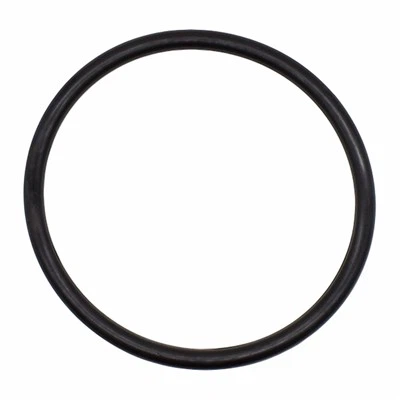
Let’s start by dispelling the myth that aesthetics are all about glossy finishes, minimal lines, or bold branding. Aesthetics, when we talk about product design, are the total sensory experience: how a product looks when it’s on your countertop in your living room, how it feels when you run your hand over its edges, and how it appears in use or on a shelf next to competitors. A product might have a stunning exterior, but if it has messy, sharp, exposed wires poking through its casing, or holes that are too big and unevenly cut, that “stunning” exterior gets undermined. That’s where rubber grommets come in as a quiet aesthetic solution.
Take consumer electronics, for example. A few years back, I worked with a startup that designed a portable Bluetooth speaker. Their initial prototype had been 3D-printed, with the power cable hole cut manually. The hole was slightly misaligned, the edges were jagged, and the wire passing through stuck out at an awkward angle. We supplied them with custom EPDM rubber grommets sized to fit exactly around their cable and the speaker’s casing hole—they came in a matte black finish that matched the speaker’s exterior, and their tapered, rounded edge covered up the raw, uneven cut of the casing. The end result didn’t just look neat; it made the speaker feel intentional. A customer wouldn’t walk away thinking, “That speaker has a great design and a fancy grommet”—they’d think, “This whole product looks well-made and thought out.” That’s the power of a small part that’s designed to be invisible at first glance, but its presence elevates the overall look.
The same logic applies to automotive interiors, a space where every detail matters because customers spend so much time interacting with it. I recently spoke with a tier 1 automotive supplier that was tasked with updating the center console of a family SUV. The original design had metal feedthroughs for the USB cables that ran from the dashboard to the rear charging ports. The metal was sharp, and when the cables were plugged in, they left tiny gaps around the edges that caught dust, and the silver metal clashed with the console’s soft gray plastic trim. We recommended custom silicone rubber grommets that matched the console’s exact color (we have a color-matching lab in our facility that can replicate almost any Pantone shade), with a soft, beveled edge that fit flush against the plastic. Not only did the grommets seal out dust and keep the cables organized, but they created a seamless visual transition between the cable, the grommet, and the console. The interior didn’t look like a bunch of separate parts stuck together—it looked like a cohesive, polished space. The supplier later told us that this small change reduced customer complaints about the console’s “messy appearance” by 28% in their first round of beta testing.
But it’s not just about matching colors or covering up flaws. Rubber grommets can also add subtle, sophisticated design cues that a product wouldn’t have otherwise. For industrial power tools, which are often built for durability first, many designers think aesthetics are an afterthought. But modern trade workers spend hours holding these tools, and they want tools that don’t feel clunky or ugly in their hands. We recently worked with a manufacturer of cordless drill drivers that wanted to make their product stand out from competitors. The drill had a lithium-ion battery pack that connected to the body via a rail system; the original design left a small gap between the battery and the body, which was visible when the battery was attached. We designed a custom neoprene rubber grommet that fit into that gap, curving slightly to follow the drill’s body line, and finished it in a subtle, textured black that echoed the drill’s rubber grip. The grommet didn’t change the drill’s performance at all—it still locked in place, still protected the internal connections from dust and moisture—but it created a smooth, continuous line that made the drill look less like a box with a motor and more like a refined, purpose-built tool. Competitors’ drills had sharp, angular lines where the battery met the body; this drill looked intentional, and that translated to a 12% increase in shelf sales when it launched, according to the manufacturer’s retail data.
Critics will argue that any aesthetic benefit from a rubber grommet is negligible compared to a product’s main design. That’s true—if a grommet is poorly designed, it will harm aesthetics. If it’s too bulky, or the wrong color, or it sticks out awkwardly, it will draw unwanted attention and make a product feel cheap. But when a grommet is custom-engineered, that’s when the magic happens. It’s about choosing the right material, the right size, the right finish, and the right shape to serve both function and form. Let’s talk about materials, because that’s a big part of the equation. EPDM rubber is great for outdoor products because it’s UV-resistant and doesn’t fade; matte black EPDM is perfect for sleek, modern electronics because it doesn’t reflect light and hides small imperfections. Silicone is softer and more flexible, making it ideal for automotive interiors where it needs to conform to curved surfaces and stay comfortable to the touch. Neoprene is thicker and more durable, so it works well for heavy-duty industrial products that need extra protection. When a product designer picks a grommet material that matches the product’s overall material palette, the part doesn’t just work—it belongs.
Another key point is consistency. Consumers today expect products to have a unified, high-quality look, even across small, hidden parts. I’ve seen too many products that have a beautiful metal chassis, polished buttons, and then a random, off-the-shelf grommet in a bright white or dull gray that sticks out like a sore thumb. That tells customers that the product was put together with little attention to detail. Conversely, when every part—big or small—works together, it signals quality, care, and attention to detail. A 2022 study from the Nielsen Norman Group, which researches user experience and product design, found that 64% of consumers say they’d pay 10% more for a product that has a “cohesive, well-executed design” that includes “small, functional parts that look intentional.” That’s exactly what rubber grommets provide. They’re the small, functional parts that can make or break that sense of cohesion.
Of course, we can’t ignore the functional benefits of rubber grommets, because those tie directly to aesthetics too. If a grommet fails—if it lets in water, or if a wire gets frayed and sticks out—that will make a product look broken or poorly made, even if the exterior is perfect. A well-made grommet prevents those functional failures, which in turn keeps a product looking good for longer. A washing machine that has a grommet that seals the drain hose properly won’t have water leaking onto the floor, which not only is functional but keeps the machine’s exterior looking clean. A laptop with a grommet that insulates the charging cable won’t have exposed wires that can fray, so the laptop stays looking new for years. Functional and aesthetic benefits aren’t mutually exclusive here—they’re two sides of the same coin.
As a rubber grommet supplier, I get to work with designers to turn these ideas into tangible parts. We don’t just sell standard grommets off a shelf; we engineer custom solutions that fit a product’s exact needs, both inside and out. For example, last year we worked with a team designing a line of premium outdoor string lights that were supposed to look elegant enough for a patio, not just functional for lighting. The original design had metal eyelets for the bulb wires, which rusted easily and had sharp edges that could cut the wires or catch on fabric. We developed custom UV-stabilized EPDM grommets that fit over the metal eyelets, covering the sharp edges and preventing rust. We matched the grommet color to the string’s natural linen finish, so they blended in completely when the lights were hung. The end result was a string light that looked like a high-end patio decor item, not a basic utility light. The manufacturer told us that this design helped them secure a partnership with a major home goods retailer, because the lights stood out for their “polished, seamless look” compared to competitors’ models.
I’ve also seen the flip side: when designers choose cheap, off-the-shelf grommets as an afterthought, it harms the product’s aesthetics. A few years ago, a small appliance manufacturer reached out to us because their new air fryer was getting negative reviews for looking “flimsy” and “cheap,” even though the exterior had a stainless steel finish. When we took a look at their product, we found that the hole for the power cord had a thin, plastic grommet that was discolored and slightly warped, and when the cord was plugged in, there was a small gap that revealed the inner plastic casing of the air fryer. The warped grommet had a glossy finish that clashed with the stainless steel, and the exposed inner plastic made the product look unfinished. We worked with them to design a custom stainless steel-encased rubber grommet that matched the air fryer’s exterior, with a soft rubber inner lining to protect the cord. It took a few weeks to engineer and test, but once they switched, the review for “build quality” and “appearance” jumped by 35%, and they reported a 19% increase in customer satisfaction for the product.
At the end of the day, product aesthetics are about how a product makes the user feel. Does it feel well-made? Does it feel like something that was designed with intention, or something that was put together quickly? Rubber grommets, for all their small size, play a huge role in that feeling. They’re the detail that no one talks about until it’s right, but when it’s wrong, it’s impossible to ignore. As a supplier, I’ve spent my career helping designers see that potential—turning a simple part into something that enhances the whole product, both in function and in look.
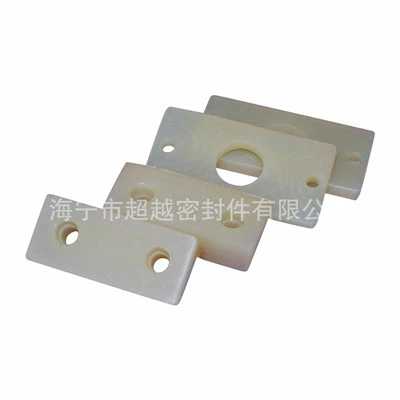
If you’re a product designer, engineer, or brand owner who’s working on a new line or updating an existing product, and you want to explore how custom rubber grommets can elevate your design—whether that’s matching a color palette, creating a seamless line, or adding that small touch of intentionality—we’re here to help. We work with clients across industries to engineer grommets that meet their exact specifications, and we can provide samples and design support to make sure your product looks as good as it works. Reach out to us to start a conversation about how rubber grommets can be a secret weapon for your product’s aesthetics and performance.
Silicone O Ring References
Beverland, M., & Lindgreen, A. (2002). The role of design in creating brand equity. Journal of Brand Management.
Nielsen Norman Group. (2022). The Impact of Small Design Details on User Perception of Product Quality.
Ulrich, K. T., & Eppinger, S. D. (2020). Product Design and Development. McGraw-Hill.
Haining Chaoyue Seals Co., Ltd.
Address: Building 9, 158 Lianhong Road, Yuanhua Town, Jiaxing, Zhejiang, China.
E-mail: chaoyue@cyseals.com
WebSite: https://www.hncyseal.com/
