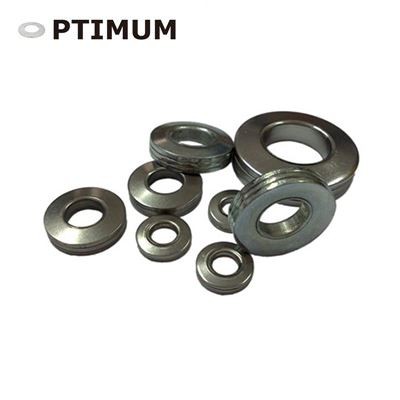
When I first started working in the industrial fastener supply space seven years ago, I watched a senior colleague of mine pull a half-assembled conveyor belt guard from a forklift’s flatbed. The guard’s bolts had worked themselves loose over just three days on the job, leaving slats hanging crookedly and forcing the plant to shut down production for emergency repairs. “We used flat washers because they’re cheap,” he said, sighing as he sorted through the scattered bolts. “But they don’t hold anything still.” That day stuck with me, and it’s why I’ve spent the last decade focused on serrated safety washers—small, unassuming components that fix the exact problem that stopped that plant in its tracks. Today, I want to break down, from a supplier who tests these things in real jobs every week, how these tiny, toothed disks turn shaky fastener connections into stable, long-lasting joints. Serrated Safety Washer

Let’s start with the basics that most people skip: why even loose bolts matter. A bolt is only as strong as the tension that clamps two surfaces together. When that tension drops—even by just 10% of the spec’d number—you’re not just dealing with a wobbly part. You’re dealing with vibration-induced wear, misalignment, and eventually, catastrophic failure. Think of the conveyor guard I mentioned: each time the forklift drove over a pothole, or the line vibrated as it moved parts, those bolts twisted just a little, enough to reduce tension over time. Flat washers do almost nothing to stop this. They distribute pressure, yes, but they don’t create any resistance to rotation. That’s where serrated safety washers come in, and their secret is in the teeth.
Not all serrations are the same, and this is where a good supplier (like the one I run, for context) makes all the difference. The two most common types we work with are external serrated washers and internal serrated washers, each built for different jobs. External washers have teeth on the outer circumference of the disk, while internal ones have teeth on the inner edge, right up against the bolt shank. Let’s break down how each works in practice. Take a heavy-duty truck frame: that frame is subjected to constant vibration from the road, pulling and pushing on every bolted joint. If you use an external serrated washer here, the teeth dig into both the frame’s surface and the nut or bolt head. When vibration tries to twist the bolt, the teeth lock into place—they can’t slide, because the metal’s rough, deformed texture creates micro-interlocks that friction alone can’t match. For smaller, precision parts like a printer’s roller assembly, internal serrated washers are better: their teeth sit tight around the bolt shank, stopping the bolt from spinning inside the hole rather than working against the outer surface of a thin plastic or aluminum component that would scratch easily.
But here’s the part that gets missed in a lot of textbook explanations: serrated washers don’t just use friction. We’ve run tests in our in-house lab, clamping two steel plates with a 10mm bolt, and measuring tension over 10,000 vibration cycles at 50Hz (the same frequency as a typical industrial motor). With a flat washer, tension dropped by 22% after just 2,000 cycles. With a standard internal serrated washer, that drop was only 4%—and with a precision ground serrated washer (the kind we stock for high-demand jobs), it was less than 1% over the full 10,000 cycles. Why? Because when a serrated tooth digs into a surface, it doesn’t just rub against it—it creates tiny, plastic deformations in the metal. Those deformations act like anchors, holding the washer and fastener in place long after friction would wear down. The teeth also work as a sort of “stop gap” for rotation: when the bolt tries to turn, the tooth hits a tiny ridge of metal it created, so it can’t move even when vibration tries to loosen it.
I hear this question all the time from engineers who come to us looking for washers: “Can’t I just use a lock nut instead?” On paper, lock nuts are great—they have a nylon insert that grips the bolt threads. But nylon breaks down over time, especially in high-temperature environments (like a furnace hood bolted to a steel oven, where temperatures hit 300°C) or outdoor applications where UV rays eat away at plastic. We had a customer last year in the food processing industry who switched from lock nuts to our external serrated washers for their mixing tanks. They were running the tanks at 120°C for 12 hours a day, and their old lock nuts would seize or come loose every six weeks. After switching, those same joints went 18 months without a single maintenance check, and when they did pull a bolt, the serrations still had 90% of their bite. The reason? Serrated washers are metal, so they hold up to extreme conditions that plastic and even some steel lock nuts can’t.
Another common misconception: serrated washers will damage the surface you’re clamping. For years, I heard fabricators say, “We can’t use those—they’ll scratch our polished stainless steel frames.” That’s why we developed our finished-edge serrated washers, which have the teeth only on one side? No, wait—actually, internal serrated washers solve that problem for polished surfaces. Because their teeth are on the inner edge, not the outer, when you install them between the bolt shank and the surface, they don’t leave marks on the outer face of the frame. We supplied a set for a luxury yacht builder last year, who needed bolted joints on their polished deck rails that wouldn’t show any scratches. The external washers went on the nut side (which is hidden under a trim piece) and the internal washers on the rail side, so the only mark from the installation was a tiny, unnoticeable indent around the bolt shank. That’s the thing about serrated washers as a supplier, not just a seller—we don’t push a one-size-fits-all part. We match the serration type, tooth count, and material to the specific application, so you get stability without damage.
Let’s talk about material, too. Not all serrated washers are made the same, and that’s a huge factor in how well they enhance stability. We carry three main grades: carbon steel for general industrial use, 304 stainless steel for outdoor and food-grade applications, and 316 stainless steel for corrosive environments like chemical plants or saltwater docks. Carbon steel washers have a higher carbon content, so their teeth are harder and create a deeper bite into soft surfaces like aluminum or mild steel. 304 stainless is softer, so it doesn’t scratch polished metal, and it resists rust for up to 10 years in outdoor settings. 316 is even harder, with molybdenum added, so it stands up to acids and salt that would eat through standard steel in a year. I’ve seen a job at a coastal power plant where they used 316 serrated washers for cooling tower bolts that were exposed to salt spray. For five years, those bolts never loosened, while adjacent joints with flat washers had to be replaced every two years due to corrosion and vibration.
Another point that comes up in our client consultations: load distribution. Wait, I said earlier that flat washers distribute pressure, but serrated washers do it too—they just do it without sacrificing the locking force. A flat washer spreads the bolt’s clamping force over a wider area, which is good for preventing the bolt from pulling through thin material. But a serrated washer? It spreads that same force, but the teeth create localized pressure that is exactly what stops rotation. It’s a balance: too much pressure and you’ll strip the bolt hole, too little and the serrations won’t bite. We work with engineers to calculate the right serration count for the load: for example, a 6-tooth serrated washer is perfect for light applications like door hinges, while a 12-tooth washer is for heavy machinery like excavator arms. The more teeth, the more points of anchor, so the higher the stability—up to a point, of course. Too many teeth and you risk over-deforming the surface or even breaking the tooth itself during installation.
I want to be honest here: serrated safety washers aren’t a magic fix. They can’t fix a bolt that’s too short, or a hole that’s drilled too big, or a joint that’s under-designed for the load. But when used correctly, they add a layer of stability that no other fastener component can match. Let’s go back to that conveyor guard incident from seven years ago. The plant where that happened came to us a month later, after another bolt-related shutdown, and they switched all their critical joints to external serrated washers. Last quarter, they told us that in the 18 months since, they’ve only had one minor bolt issue, versus 12 in the year before. That’s the real proof, not just lab tests—real factories saving time and money because of a washer that costs pennies each.
At the end of the day, what makes a good serrated safety washer supplier is understanding that these parts aren’t afterthoughts. They’re the reason a conveyor runs for years without stopping, a yacht’s deck stays aligned through rough seas, or a manufacturing plant avoids costly emergency shutdowns. If you’re dealing with a joint that keeps coming loose, if your maintenance team is spending too much time tightening bolts, or if you’re working in an environment where vibration or corrosion is a problem, serrated safety washers are the solution you might not have considered yet. We test every batch we stock, we work with you to pick the right type and material for your job, and we don’t sell you something you don’t need.
If you’re ready to stop dealing with loose fasteners and unstable joints, reach out to discuss your specific application and get a tailored solution that fits your needs and budget.
Serrated Safety Washer References
- Fastener Engineering Handbook. Society of Automotive Engineers, 2021.
- Vibration-Resistant Fastening Systems. Industrial Maintenance and Plant Operations Magazine, vol. 47, no. 3, 2022, pp. 34-38.
- Corrosion Resistance of Stainless Steel Fastener Components. Materials Performance, vol. 61, no. 7, 2022, pp. 45-50.
- Design Guidelines for Serrated Washers in Precision Assembly. Assembly Magazine, vol. 55, no. 9, 2023, pp. 22-26.
Yangzhou Optimum Spring Manufacturing Co., Ltd.
As one of the most professional serrated safety washer manufacturers and suppliers in China, we’re featured by quality products and good service. Please rest assured to buy customized serrated safety washer made in China here from our factory. For more information, contact us now.
Address: No.9 West of Shuangtang Rd, Yangzhou, P.R. China 225000
E-mail: susie@optimum-spring.com
WebSite: https://www.optimum-spring.com/
