As a marine battery charger supplier, I get this question almost every week from boat owners, both new and seasoned: Can a marine battery charger charge multiple batteries at once? The short answer is yes— but the how, when, and why matters a lot, especially when you’re dealing with the harsh, variable conditions of life on the water. I’ve spent over a decade in this industry, talking to hundreds of captains, weekend anglers, and yacht maintenance crews, and I’ve seen firsthand that a wrong choice here can leave you stranded mid-cruise, or even damage your expensive marine batteries beyond repair. Marine Battery Charger
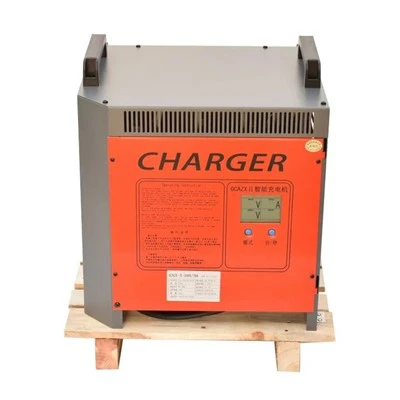
Let’s start with the basics that make marine battery setups different from your car or home. A typical recreational boat might have four, six, or even eight batteries: cranking batteries to start the engine, deep cycle batteries to power your trolling motor, house batteries for your fridge and lights, and sometimes an auxiliary battery for a generator. Unlike a home battery bank, marine batteries are often grouped in series or parallel to get the right voltage for your system. For example, two 12V batteries wired in series make 24V for an older engine, while two wired in parallel keep 12V but double the amp-hour capacity for long runs.
Most people assume you need a separate charger for each battery, but that’s not true— if you set it up right. The key here is voltage matching. If all the batteries you want to charge are the same voltage (say, all 12V house batteries), you can absolutely connect them to one marine charger, as long as the charger’s total output is high enough to handle the combined draw. But wait— there’s a catch. Batteries don’t charge at the same rate, especially as they get older or have different use histories. A brand-new lithium house battery will accept charge differently than a 5-year-old lead-acid deep cycle, and if you just wire them all together to one charger, the weaker battery will end up overcharged or undercharged while the stronger one gets too much current, shortening its life. That’s where a lot of boat owners go wrong, and it’s why we always emphasize this point when we help customers size their chargers.
I’ll use a real example from a customer I worked with last summer: a guy out of Tampa who had a 32-foot center console with three 12V deep cycle house batteries and a separate 12V cranking battery for his Yamaha outboard. He tried using a cheap, generic automotive charger to top them all up after a weekend of fishing, and two weeks later, the cranking battery died mid-trip to the fuel dock. When he brought them to our shop to test, we found the deep cycles had pulled the charger’s voltage down so low that the cranking battery never got a full charge, and one deep cycle was already sulfated— a common issue from undercharging that can’t be reversed. We set him up with a 6-bank marine charger that has independent charging for each bank, plus built-in voltage regulation, and he’s told us he hasn’t had a battery issue since. That’s the difference between a generic charger and a marine-specific one designed for multiple battery systems.
Now, let’s break down the two main ways to charge multiple marine batteries: parallel charging (same voltage) and series charging (different voltage, like 24V or 36V cranking systems). Parallel charging is the most common for house batteries. If you have two 12V, 100Ah deep cycle batteries wired in parallel, their combined capacity is 200Ah at 12V. A 10-amp charger will charge them both at a combined rate, so it will take roughly 10 hours to get them from 50% to full, instead of 5 hours for one. But as I mentioned earlier, this only works if all batteries in the parallel bank are the same type, age, and state of charge. Mixing a new lithium battery with a old lead-acid one in parallel is a recipe for trouble because lithium charges much faster, and the lead-acid will act as a sort of “current sink,” slowing the lithium’s charge and risking overheating if the charger can’t adjust.
Series charging is for higher voltage systems, like a 24V or 36V trolling motor or engine. If you have two 12V batteries wired in series to make 24V, you need a charger rated for 24V output to charge them. You can’t use two separate 12V chargers here because they’d each charge one battery individually, and again, if one is weaker, it will get overcharged. Modern marine series chargers are calibrated to balance the charge across both batteries in the series bank, so they each get the exact voltage and current they need, no mismatches. That’s why for a lot of our customers with dual-voltage systems, we recommend a 2-bank charger: one bank for the 12V house system, one for the 24V cranking system.
Another thing I see all the time is boat owners thinking “bigger charger is better” when charging multiple batteries. That’s not always the case. A 30-amp charger for four 12V batteries might seem fast, but if those batteries can only accept a maximum of 15 amps each, wiring them all to a 30-amp charger will push too much current into each, leading to overheating, gassing (which is dangerous for enclosed bilges), and reduced lifespan. We always calculate the total required amp-hour capacity of your battery bank first, then size the charger to match that, plus add a little headroom for future battery replacement or upgrades. For example, a 4-battery bank totaling 400Ah will need a charger with at least 20 amps of output, but if you plan to upgrade to 600Ah batteries next year, go for a 30-amp charger so you don’t have to replace it.
There’s also the type of battery to consider, and this is a huge point that many new boat owners miss. Lead-acid (flooded, AGM, gel) and lithium marine batteries have different charging requirements. Lithium, for example, needs a specific absorption voltage and charging profile, and most standard marine chargers don’t support that. So if you have a mix of lithium and lead-acid batteries, you can’t charge them on the same charger bank— even if they’re the same voltage. We carry chargers with configurable charging profiles that let you switch between flooded, AGM, gel, and lithium, so you can have a bank for house batteries set to AGM and a separate bank for a lithium auxiliary battery, all on one charger unit. That’s a game-changer for anyone with mixed battery setups.
I also want to talk about safety, because marine environments are unforgiving. Wiring multiple batteries to a single charger without proper circuit protection can lead to short circuits, fires, or even battery failure. Every battery bank should have a fuse or breaker between the charger and the battery, sized to match the charger’s output. For example, a 10-amp charger needs a 10-amp fuse, not a 20-amp one, so if there’s a short, the fuse blows before any damage is done. We include this info in every charger installation guide we send out, and our techs will walk customers through it over the phone when they’re installing their system. I’ve seen too many customers skip this step, and I’ll never forget the time a customer in Miami had a battery short in his bilge because he didn’t have fuses, and the smoke alarm only went off when the fire was already big enough to burn through the fiberglass. Safety isn’t something to cut corners on, especially when you’re dealing with electrical systems on a boat that’s often sitting in water.
Now, is there a time when you shouldn’t charge multiple batteries at once? Yes. If your batteries are of different types, different voltages, or significantly different ages and states of charge, it’s better to charge them individually. For example, if you have a set of three old deep cycle batteries that are at 10% charge and a new cranking battery that’s at 70% charge, charging them all together will leave the cranking battery undercharged or the old batteries getting overcharged. In that case, use a separate portable charger for the cranking battery first, then top up the deep cycles together. Or, if you want to charge them all on one charger, get a model with individual charging ports and balancing capability, which will adjust the current to each battery based on its needs.
As a supplier, we’ve seen the evolution of marine chargers over the last decade, and the biggest improvement has been in multi-bank technology. Early multi-bank chargers were just splitters that sent the same voltage to every bank, which caused all the problems I mentioned earlier. Now, modern smart chargers have individual microprocessors for each bank, so each one can monitor and adjust its output independently. A 4-bank smart charger will charge a 12V house bank, a 12V cranking battery, a 24V trolling motor bank, and a lithium auxiliary battery all at the same time, each at its optimal voltage and current, no mismatches, no overcharging. That’s the kind of setup most of our professional customers (charter boat captains, yacht maintenance companies) use, because reliability is non-negotiable when you’re carrying passengers and expensive gear.
I want to wrap this up with a practical tip from someone who’s been in this field long enough to learn from mistakes. When you’re setting up your charger for multiple batteries, don’t just look for the cheapest unit you can find online. Buy a marine-specific charger, not an automotive or industrial one. Marine chargers are built to handle constant vibration, salt spray, and extreme temperatures (from the Florida sun to a cold lake in the Rockies), while generic chargers will die in a year or two. Also, don’t be afraid to ask for help sizing your system. We get calls every day from customers who have 6 batteries and don’t know what charger to get, and we’ll walk them through exactly what they need, no hard sell.
If you’re a boat owner looking to upgrade your charging system, or you’re planning to add more batteries to your setup, the short answer is: yes, you can charge multiple marine batteries with one charger, as long as you get the right type, size, and setup. The key is matching voltages, using the right charging profiles for your battery types, and adding safety measures like fuses. And if you’re not sure what you need, don’t guess— reach out to a trusted supplier. I’ve been doing this for years, and I’d rather help a customer get the right setup the first time than have them come back later with a dead battery and a problem.
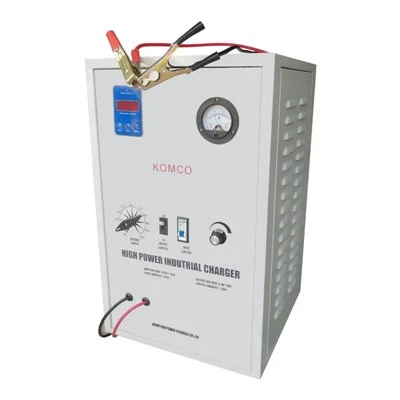
When you’re on the water, the last thing you want is to worry about whether your batteries are charged. A good multi-bank marine charger takes that stress away, so you can focus on fishing, cruising, or enjoying time with family. If you’re ready to upgrade your charging system, reach out to us for customized recommendations and pricing. We’ll work with your specific boat, battery setup, and budget to find the perfect solution that keeps your batteries running strong for years to come.
Battery Charger References:
- Marine Electricity: A Guide to Electrical Systems and Maintenance, American Boat and Yacht Council, 2021
- Lithium-Ion Battery Charging Profiles for Marine Applications, International Electrotechnical Commission, 2022
- Battery Bank Sizing and Charger Selection for Recreational Vessels, National Marine Manufacturers Association, 2020
- Safe Charging Practices for Marine Lead-Acid Batteries, Occupational Safety and Health Administration, 2019
Huizhou Qiangfeng Power Technology Co., Ltd.
Huizhou Qiangfeng Power Technology Co., Ltd. is one of the most professional marine battery charger manufacturers and suppliers in China, featured by quality products and good service. We warmly welcome you to buy customized marine battery charger made in China here from our factory. If you have any enquiry about quotation and free sample, please feel free to email us.
Address: No. 28, Hu’ao Avenue, Shiwan Town, Boluo County, Huizhou City, Guangdong Province
E-mail: Komco@Jinlidianqi.cn
WebSite: https://www.autobatterychargers.com/
