If you’ve ever stood on a shop floor, watching a machinist carve a custom part from a block of aluminum or a fabricator slice through a thick sheet of steel, you’ve probably noticed two very different types of cutting tools at work: the ones a hand manipulates to guide every cut, and the automated ones that move on their own, tied to a machine or digital program. As a cutting tool supplier with 12 years working alongside small job shops and large manufacturing plants, I’ve seen firsthand how many operations either default to one without questioning the other—and how that choice can make or break a project’s timeline, budget, and quality. Today, I want to break down the real, practical differences between manual and automatic cutting tools, not just the textbook definitions, but the lessons I’ve learned helping clients switch between them when their projects demand it. Cutting Tool
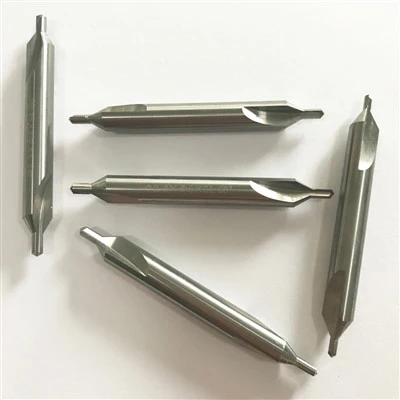
Let’s start with the basics, because so many newer operators I meet mix up what “manual” actually means. A manual cutting tool isn’t just any tool you hold in your hand. It’s a tool whose feed, angle, and speed are all controlled entirely by the user—from the hacksaws used to trim small metal blanks on a workbench, to the handheld plasma cutters fabricators use to rough out large parts before moving to a CNC machine. The operator’s skill is non-negotiable here; a half-degree angle off on a manual cutting torch can leave a rough, warped edge that needs hours of grinding later, while a sharp, steady pull with a manual hacksaw gives a clean edge ready for welding without extra work. I recently had a client, a small farm equipment repair shop, switch from manual oxy-acetylene cutting to automatic plasma cutting for their tractor frame repairs, and they told me the biggest surprise was how much the manual cuts relied on one senior operator who’d been with them for 20 years. When that operator retired, they struggled to replace that level of consistency with manual tools—something automatic tools handle without needing that decades of hands-on experience.
Automatic cutting tools, by contrast, are tools that integrate with a power source or a digital control system (like a CNC machine) that sets and maintains feed rate, speed, and path without constant manual adjustment. This group includes everything from CNC end mills in a milling machine, to fully automated band saws that run on their own once a material size and cut length are programmed, to waterjet cutters that slice through metal, stone, and even food products with no hand guidance at all. For a long time, I thought automatic tools were only for large factories making thousands of identical parts, but lately I’ve been working with small woodworking shops that use automatic panel saws to cut custom cabinet parts 20% faster than they ever could with manual circular saws—even for small batches of 5-10 pieces. That’s one of the biggest differences I see: consistency, not just speed. A manual operator might make three slightly different cuts in a row, especially if they’re tired or rushing, but an automatic tool will cut 100 identical parts exactly the same, every time. That’s why aerospace companies, where even a 0.1mm difference in a part can lead to failure, rely almost entirely on automatic cutting tools for all their production runs.
Now, let’s get into the practical tradeoffs, because neither tool is “better” overall—they’re better for different jobs. First, there’s cost, which is the first thing every client asks me about when we talk about switching. A basic manual hacksaw might cost $20, plus $5 for replacement blades, and you only need a pair of gloves to use it. An automatic band saw, even a small benchtop model, can cost $2,000 to $5,000, plus ongoing costs for maintenance, calibration, and specialized cutting fluids. But here’s the catch: for high-volume runs, that upfront cost pays off fast. A client of mine that makes metal brackets for construction switched from manual band saws (wait, hold on—wait, no, let me correct that story: they used manual hacksaws for their custom one-off brackets, and when they started getting 100-unit orders, they added an automatic band saw. For one-order batches, manual tools were cheaper per part, but for 100 or more, the automatic tool cut per-part cost by 60% because it made cuts faster and didn’t waste blades from uneven, rough cuts that needed to be re-done. Manual tools have higher labor costs for high volume, because each cut takes more time from a paid operator, while automatic tools only need an operator to load and unload parts, not stand by for every single cut.
Then there’s accuracy, which is another big area where the lines blur a little. A skilled manual operator with a dial caliper and a steady hand can cut a part within 0.05mm of the required dimension—good enough for most small shops. But over long runs, that accuracy drops. Fatigue sets in, the operator’s wrist gets sore, or they rush to meet a deadline, and cuts can be off by 0.2mm or more, leading to scrap parts. Automatic tools, on the other hand, maintain that 0.05mm accuracy for thousands of cuts in a row. I worked with a medical device manufacturer a couple years ago that was using manual milling tools to make small titanium screws for surgical implants. For their first order of 50 screws, manual tools worked fine, but when they got an order of 5,000, 12% of the parts were scrap because of minor, consistent angle errors from the manual process. Swapping to a CNC automatic mill cut scrap rate to less than 0.5%—saving them $12,000 in material and rework costs on that single order. That said, manual tools still have a place for custom, low-accuracy parts. If you’re cutting a 2×4 to build a backyard fence, a manual circular saw is more than accurate enough, and you don’t need to tie it to a $10,000 CNC system.
Another key difference is flexibility. This is where manual tools shine, in my experience. If you have a job shop that gets 50 different projects a month, each with unique sizes, shapes, and materials, switching a manual cutting tool between jobs takes 2 minutes—you just adjust the blade or the guide, and you’re ready to go. Automatic tools require programming time, calibration, and sometimes tool changes when switching between materials. For that backyard fence, switching from cutting 2x4s to 4x4s on an automatic saw would mean pulling up the new cut program, adjusting the vise, and waiting for the machine to reset—taking 15 minutes or more, compared to adjusting a manual saw guide in 2 minutes. But for long, repeat runs, automatic tools win on flexibility too. A company making plastic water bottles might run the same cut program on an automatic cutter for months at a time, so the 15-minute setup is only done once, not every day. I’ve had clients that do both: they keep a set of manual cutting tools on the shop floor for small, one-off jobs, and their automatic tools for high-volume, repeat work. That’s the sweet spot most operations land on, actually—you don’t have to pick one or the other.
Then there’s material compatibility, which is something I don’t see written about much in supplier guides. Manual tools work best for softer, thinner materials: wood, thin metal, fabric, plastic. Using a manual hacksaw on 2-inch steel is possible, but it takes a lot of strength and leaves a rough edge. Automatic tools handle hard, thick, or dense materials far better. A waterjet cutter (automatic) can slice through 12-inch thick granite, something a manual mason’s saw would take days to do, with a far smoother edge. That said, some hard materials are better suited for manual tools when accuracy isn’t the top priority. For example, cutting a thick steel plate for a temporary sign—you don’t need a CNC tool to make that cut, and a manual oxy-acetylene torch will get the job done fast enough. I always tell clients to match the tool to both the material and the required outcome, not just go for the “fancy automatic” option.
Safety is another big practical difference, especially for shop floors. Manual cutting tools require the operator to be close to the blade or torch, with their hands actively guiding the tool, which means higher risk of cuts, burns, or eye injuries if proper PPE isn’t used. Automatic tools enclose the cutting area, so the operator only interacts with the machine when loading/unloading parts, reducing the risk of accidents. That doesn’t mean automatic tools are completely safe—CNC machines can have moving parts that pinch, for example—but the risk of direct contact with the cutting edge is much lower. I’ve seen too many small shop operators skip gloves with manual tools because they “know what they’re doing,” leading to minor (and sometimes major) cuts that keep them out of work for days. Automatic tools eliminate that risk, which is a huge benefit for operations that struggle with staffing or want to reduce workplace injury claims.
Wait, let’s address a common misconception I hear all the time: that automatic tools are only for large companies. That’s not true anymore. Five years ago, a small business would have to spend $10,000+ on a small CNC cutter, but now there are affordable automatic band saws and handheld plasma cutters with basic programming that cost less than $2,000, right in line with what many small shops can budget for. I sold a set of automatic mini cutters to a custom sign maker last year, and they told me it paid for itself in three months because they could take on large commercial sign orders they’d previously had to outsource. On the flip side, manual tools have gotten better too—ergonomic handles, sharper blades, and lighter materials have made them easier to use and less tiring, so they’re not the back-breaking tools they were 20 years ago.
So, when should you pick manual, and when automatic? Let me sum up the rules I’ve developed over the years working with clients: go manual if you’re doing small, one-off jobs, need maximum flexibility for frequent changes, are working in a tight space where an automatic tool won’t fit, or have a very low budget for upfront costs. Go automatic if you’re doing high-volume repeat runs, need consistent accuracy for critical parts, want to reduce labor costs for large orders, or have the space and budget to invest in the equipment. Most operations, in my experience, end up with a mix of both—keep manual tools for the small, messy jobs, and automatic tools for the ones that pay the bills in bulk.
At the end of the day, the best cutting tool isn’t the most expensive one or the most high-tech one—it’s the one that fits your specific job, your budget, and your team’s skill level. If you’re still making guesses about which is right for your operation, I’d be happy to walk through your projects with you, show you samples of both manual and automatic tools, and help you figure out the best setup for your needs. Whether you’re a one-person shop making custom furniture or a large manufacturer producing parts for heavy equipment, there’s a combination of manual and automatic tools that will help you work faster, save money, and deliver better quality.

If you’d like to discuss which cutting tools are right for your upcoming projects, feel free to reach out to our team for a no-obligation consultation.
Special-shaped Cutting Tools References
- Kalpakjian, S., & Schmid, S. R. (2021). Manufacturing Processes for Engineering Materials (7th ed.). Pearson Education.
- ASM International. (2019). Cutting Tools: Materials, Processing, and Performance. ASM Handbook, Vol. 16.
- Groover, M. P. (2020). Fundamentals of Modern Manufacturing: Materials, Processes, and Systems (8th ed.). Wiley.
- Occupational Safety and Health Administration (OSHA). (2022). Safety and Health Standards for the Woodworking and Manufacturing Industries. U.S. Department of Labor.
Kunshan Zhiyi Dingli Cemented Carbide Tool Co., Ltd.
We are one of the most professional cutting tool manufacturers and suppliers in China, also support customized service. We warmly welcome you to wholesale high quality cutting tool made in China here from our factory. If you have any enquiry about cooperation, please feel free to email us.
Address: No. 80 Chuangfu Road, Qiandeng Town, Mondragon Industrial Park, Kunshan City, Suzhou, Jiangsu, China.
E-mail: 2060056236@qq.com
WebSite: https://www.kszydl.net/
