If you’ve ever stood on the production floor of a mid-sized cosmetics plant, watching a cartoning machine tuck foundation boxes into clamshells, slide lip gloss tubes into their sleeves, and stack serums into retail-ready cases with breathtaking speed—you’ll notice that every sharp metal edge, every moving part, and every gap that could catch a glove or a strand of hair comes with a quiet, unobtrusive safety guard. That guard is rarely just a hunk of steel. It’s part of a safety interlock system, a make-or-break component for both line workers and production teams that I’ve spent the last decade designing, refining, and installing as a cosmetics cartoning machine supplier. Over the years, I’ve seen what happens when these systems are skimped on, cut corners on, or ignored: a crushed finger that sidelines a team for months, a $20,000 carton roll that tears and halts a 12-hour shift, and worst of all, workers who learn to bypass safety guards to keep a line running, putting themselves at risk. Today, I want to pull back the curtain on what this system actually is, how it works, and why it’s non-negotiable for any brand that values both its people and its bottom line. Cosmetics Cartoning Machine

First, let’s ground this in the unique reality of cosmetics cartoning lines, because safety interlock systems aren’t one-size-fits-all. Unlike manufacturing lines for heavy machinery or metal parts, cosmetics lines handle lightweight, often delicate materials: glossy cardboard boxes that tear easily, plastic blister packs that shift if not aligned, and glass or plastic products that shatter if a carton jams. These lines run fast—some of our high-speed units hit 300 cartons per minute—and every moving part has a specific job: the infeed that pulls flat cartons from a stack, the folding arms that bend their edges, the pusher that loads products, and the outfeed that seals and stacks finished boxes. Each of these parts has gaps, hinges, and sharp edges where a worker might reach in to clear a jam, adjust a misaligned lip gloss tube, or grab a sample mid-run. That’s where the safety interlock system steps in. At its core, it’s a network of sensors, interlocked guards, and control logic that automatically stops the machine whenever a guard is opened, a part is misaligned, or an unusual force is detected—no manual intervention needed, and no chance of a line restarting accidentally while someone is inside.
Let’s break down the key components, because this is where a cosmetics-specific system differs from generic industrial safety setups. First, there are the guard interlocks, the most visible part of the system. On our machines, these aren’t just static metal plates bolted to the frame; they’re hinged or removable guards that have a small locking switch mounted to their edge. If a guard is designed to cover the folding arm (a part that moves at 10 cycles per second during a jam clear), the interlock switch won’t let the machine run if that guard is unlatched. We use two types of these switches, depending on the part they’re guarding: for high-risk areas (like the infeed where cartons are pulled at high speed), we use solenoid interlock switches, which require a specific electrical signal to unlock—meaning a worker can’t just pop the guard open with a screwdriver if the power’s on. For lower-risk areas, like the outfeed stack where finished boxes are collected, we use simpler magnetic interlocks, which trigger a stop if the guard is opened, with no physical parts to wear out over time. We also tailor the placement of these guards to cosmetics line needs: for example, we leave small, purpose-built access panels for clearing carton jams that are located far from moving blades, so workers don’t have to reach across sharp edges to fix a minor misalignment. That’s a choice we made after a client told us their team was reaching into the main infeed guard to grab a torn carton, because the small, dedicated panel was too far from their station.
Next, the control logic is the brain of the system, and this is where our team spends most of our time refining for cosmetics lines. A safety interlock system doesn’t just stop the machine when a guard opens—it also prevents dangerous restarts, and alerts workers to exactly what’s wrong, so they don’t waste time troubleshooting. We program our systems to follow a “lockout-tagout (LOTO) first” rule, which means if a guard is opened during production, the machine shuts down completely, and the only way to restart it is to close that guard, reset the interlock switch, and manually trigger a restart sequence. For cosmetics lines, this is critical because the materials are fragile: a sudden restart mid-jam can tear cartons, shift product alignment, or even break glass serum vials. We also add a secondary set of sensors—called presence-sensing devices, or light curtains—along the most high-traffic parts of the line. These are not the old, bulky light curtains that you have to duck under to run the machine; they’re slim, infrared beams mounted just above the line frame, positioned so that a worker’s hand or arm will break the beam before it reaches any moving part. What makes these cosmetics-specific is that we calibrate the beam height: most lines use a 1-inch height threshold, so a stray tool dropped on the line won’t trigger a false stop, but a worker’s finger or a loose glove will. A generic light curtain for heavy industry might use a 3-inch threshold, which would let a worker’s hand slip past undetected, so we adjust every setup based on the products being packed.
Then there are the load and force monitoring interlocks, the quiet workhorses that most clients never see but rely on every day. Cosmetics cartoning lines have dozens of small moving parts that can jam without a guard being opened: a carton tab that folds wrong, a lip gloss tube that’s slightly too long, a serum bottle that shifts in its tray. If the machine didn’t detect these, it would keep running, tearing cartons, breaking products, and even damaging the machine itself. Our force sensors are mounted on the folding arms and pushers that load products: if the force on a folding arm exceeds a pre-set threshold (calibrated for the stiffness of the cardboard the client uses), the machine stops instantly, before it can tear the carton. For glass products, we add a torque sensor to the pusher that loads the bottles, so if it meets resistance that would indicate a broken or misaligned bottle, it retracts automatically instead of shoving the glass into a carton. We also program these sensors to send data to the line’s HMI (human-machine interface), so when the machine stops, it doesn’t just say “error 42” — it says “folding arm 3 force spike: check carton stack alignment.” That cuts troubleshooting time from 10 minutes to 2 minutes, which is a huge win for production teams working on tight shift schedules.
I’ve seen too many brands cut corners here, especially small startups that want to save money on a generic used machine or a cheap import from overseas. Last year, a mid-sized skincare brand reached out to me after a near-disaster: their used cartoning machine had a basic safety interlock system, but it only stopped the machine when the main infeed guard was opened, not when the smaller access panel near the folding arm was. A new line operator, in a hurry to clear a jam, popped that panel open while the machine was still running, and their glove got caught in the folding arm—they avoided serious injury by a split second, but the carton tear and line downtime cost them $12,000 in lost production that day. The worst part? They’d tried to fix it themselves, gluing the guard switch closed so they could run the machine faster, which is a risky shortcut I see all too often. A proper safety interlock system isn’t just a regulatory requirement (OSHA in the U.S., CE in the EU, and other global standards mandate these systems for all industrial production lines); it’s a way to reduce downtime, protect workers, and extend the lifespan of the machine.
Another common mistake brands make is treating the safety interlock system as a one-time install, not something that needs to be adjusted as production needs change. For example, if a client switches from folding 50-piece foundation palettes to smaller 10-piece lip gloss sets, the weight and size of the products change, so the force thresholds on the load interlocks need to be adjusted. If they switch from a thin, glossy cardboard to a thicker, textured box to meet premium packaging demands, the folding force settings need to be updated to avoid jams. Our team includes in-service technicians who work with clients to adjust these settings every time they change a carton design or product line, and we also provide quarterly check-ups to make sure interlock switches aren’t wearing out (a common issue with moving parts, especially in dusty cosmetics environments where powder or glitter can get into switch housings). We’ve seen clients that skipped these check-ups end up with a guard switch failing mid-run, a jam that takes 45 minutes to clear because the HMI doesn’t show the error, and a worker reaching in blindly to fix it—all avoidable with a properly maintained interlock system.
At the end of the day, the safety interlock system of a cosmetics cartoning machine is more than a collection of sensors and switches. It’s a balance between speed, safety, and production efficiency—three things that are often pitted against each other in manufacturing. As a supplier, my job isn’t just to sell a machine that runs fast; it’s to build a system that keeps workers safe, reduces costly downtime, and adapts to the unique needs of cosmetics production.
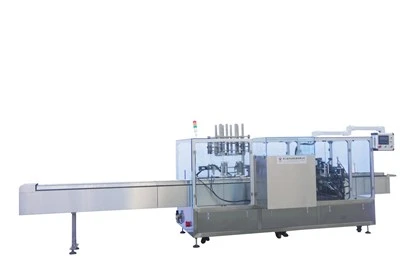
If you’re looking to upgrade your current line or install a new cosmetics cartoning machine with a tailored safety interlock system, we’re here to help. Our team can walk you through every component, adjust settings to match your specific products, and provide ongoing support to make sure your line runs safely and efficiently for years to come.
Food Bagging Machine References
- OSHA. (2022). Safety and Health Regulations for Manufacturing, 29 CFR Part 1910. Occupational Safety and Health Administration, U.S. Department of Labor.
- International Electrotechnical Commission. (2019). IEC 60204-1: Safety of Machinery – Electrical Equipment of Machines, Part 1: General Requirements. IEC Geneva.
- American Society of Mechanical Engineers. (2021). B20.1: Safety Standard for Conveyors and Related Equipment. ASME International.
- European Committee for Standardization. (2020). EN 1037: Safety of Machinery – Prevention of Unexpected Start-Up. CEN Brussels.
- National Institute for Occupational Safety and Health. (2023). Safety in Packaging and Processing Operations. CDC NIOSH.
Zhejiang Tuoyu Packaging Machinery Co., Ltd.
Zhejiang Tuoyu Packaging Machinery Co., Ltd. is one of the most professional cosmetics cartoning machine manufacturers and suppliers in China. With abundant experience, we warmly welcome you to wholesale durable cosmetics cartoning machine made in China here from our factory. Good service and quality products are available.
Address: Workshop No.12, No.11-19, Xinbin Road, Binhai New Area, Pingyang County, Wenzhou City
E-mail: 15868789201@163.com
WebSite: https://www.tuoyupack.com/
