Hey folks, it’s Jake here from the gear reducer team – yeah, the one you might’ve chatted with at the last industrial expo where we brought that faulty sample demo (don’t worry, that was intentional to show how fixable mess-ups hit performance). Lately, I’ve been getting nonstop DMs and calls from folks like you: “Jake, my gear reducer died out of nowhere – no warning, just left my assembly line dead for 3 days.” Or “Our maintenance team just swapped out another one because the gears wore down in half the expected lifespan.” Gear Reducer
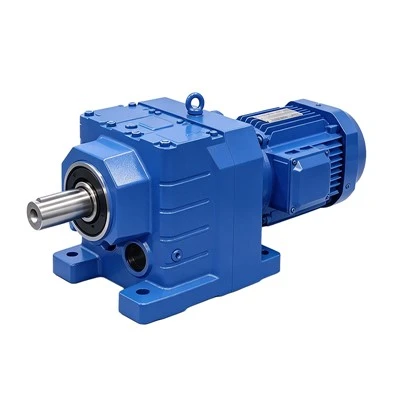
Look, I get it. Gear reducers are the unsung heroes of almost every industrial operation – your conveyor belts, packaging lines, material handling rigs, even the mixing tanks at that food processing plant down in Dallas (shoutout to Sarah there, she still texts me when their reducer runs smooth). But when they fail? It’s not just a part breaking – it’s lost profits, missed deadlines, and your team pulling all-nighters to fix something that should’ve lasted. After 8 years of supplying, inspecting, and troubleshooting hundreds of reducers, I’ve seen the same failures pop up again and again. Let’s cut the jargon and break down the most common ones, straight from the field.
First up – and this is the #1 mistake I see, by far – improper lubrication. Guys, I can’t stress this enough. I’ve had a plant manager tell me they just topped off their reducer with whatever oil was left in the barrel from their hydraulic system. Another went 18 months without checking the oil because “the manual said ‘fill once’.” Let’s be real: gear reducers need specific lubricants. Not regular motor oil, not the stuff you use for your chainsaw, but gear oil with the right viscosity and extreme pressure (EP) additives for the load your reducer’s handling. When you skip that? You get metal-on-metal contact, tiny shavings, and before you know it, the gears are pitted, the bearings are seizing, and your whole unit’s shot. I’ve seen this cause a reducer to fail in 3 months when it should’ve lasted 5 years. And here’s the kicker – most of the time, it’s not a bad part, it’s bad maintenance.
Next, misalignment. This is another easy one to miss, and it creeps up over time, too. You install the reducer correctly, line up the input and output shafts perfectly, everything’s smooth… then a few months later, the foundation shifts a little from the heavy loads, or someone bumps the shaft when moving a pallet of parts. Suddenly, you’ve got angular or parallel misalignment. What does that do? It puts uneven stress on the gears, so one tooth wears down way faster than the others. The bearings take extra load too, so they start to overheat and crack. Last year, we got a emergency call from a construction company – their concrete mixer’s reducer was making a grinding noise mid-pour. When we got there, the installation team had bumped the input shaft during a concrete delivery, and the reducers’ output shaft was off by 2 degrees. By the time we fixed it, half the teeth on the bull gear were gone. Simple fix, but it could’ve been avoided with a quick check after any heavy equipment moving near the reducer.
Third, overload. This one trips up even the most careful operations. “Wait,” you might say, “we sized the reducer for our line’s load.” Yeah, I hear that all the time. But what happens when you add extra product to the conveyor? When a batch of material is heavier than planned? Or when the line runs nonstop during holiday season because you’re rushing to meet a big order? Most reducers have a safety margin, but push them past their rated torque and speed for too long, and you’re asking for trouble. Overloading causes the gears to bend, the shafts to warp, and the housing to crack. I had a client in Arizona who runs a packaging plant – they cranked up their production 20% to handle a big retail order and didn’t adjust the reducers. Within a month, three of their conveyer reducers failed because the gears were under constant excessive torque. No way to run the line, lost a ton of revenue that month. Pro tip: if you’re ramping up production, hit us up – we can help you check if your current reducers can handle the extra load, or suggest upgrades without breaking the bank.
Fourth, contamination. Dirt, dust, moisture, metal shavings – these tiny intruders are like kryptonite for gear reducers. Most reducers have seals to keep stuff out, but old seals crack, or you forget to replace them during maintenance, or the environment’s extra dusty (looking at you, mining guys and construction crews). Let’s say your reducer’s in a sawmill – sawdust gets in, mixes with the oil, turns into a abrasive paste that grinds away at gear surfaces. Or if it’s in a food processing plant that washes down their equipment daily, moisture seeps in, turns the oil into a milky mess that doesn’t lubricate right and causes rust. Last quarter, we got a reducer back from a metal stamping client – their air vent (yes, reducers have tiny air vents to regulate pressure) was clogged with metal shavings from their stamping process. The pressure built up, blew out the seal, and all the oil leaked out – they found the reducer sitting dry, gears locked solid, when they showed up for their morning shift. That could’ve been prevented with a 2-minute vent check every month.
Fifth, bearing failure. Bearings are the workhorses inside the reducer, and they don’t last forever, but most bearing failures aren’t just “old age” – they’re tied to the issues above: bad lubrication, misalignment, overload, contamination. A lot of people think bearings just wear out, but 90% of the time, it’s a preventable failure. For example, if you don’t have the right oil, the bearings don’t get a protective layer, so metal-on-metal contact wears them down. If there’s misalignment, the bearings have to handle extra radial load, so they overheat and fail prematurely. I’ve seen bearings go bad in 6 months because of a tiny piece of dirt getting into the housing during installation – the maintenance team didn’t clean the housing before putting the new reducer in, and that one tiny particle ruined the whole bearing.
Wait, let’s also talk about human error during installation. This is a big one that doesn’t get enough attention. I’ve seen techs tighten bolts so hard they strip the housing. Or they forget to add shims when aligning the shafts, so there’s a gap that causes wobbling. Or they don’t vent the reducer properly, leading to pressure buildup. Last year, a small business owner bought a reducer from a big online retailer, installed it himself, and when it failed after a week, he blamed the “cheap part.” When we inspected it, we found he’d cross-threaded the input shaft bolt, so the shaft wouldn’t turn properly – that was his mistake, not the reducer’s. We still helped him fix it, because that’s how we roll, but it’s a reminder that installation matters as much as the part itself.
Now, I know what you’re thinking – “Okay Jake, so these are common failures. What do I do to avoid them?” Look, I’m not here to sell you a new reducer every time something breaks. Most of the time, fixing the issue that caused the failure is cheaper than replacing the whole unit. That said, if your current reducer keeps failing because it’s not sized right, or it’s not built for your harsh environment, we’ve got options too.
Here’s the thing about gear reducers: they’re not one-size-fits-all. A reducer that works great for a packaging line in a clean warehouse might die in a mining site full of dust and moisture. When you’re sourcing a reducer, it’s not just about the price tag – it’s about matching it to your specific load, environment, and usage. That’s why we take the time to ask you questions when you reach out: what’s the application? How much torque does it need to handle? Is it in a dirty, dusty place? How often do you run it? Because if you get that right, you’re way less likely to have those failures we talked about.
I also can’t stress regular maintenance enough. It doesn’t have to be a huge, expensive project. Check the oil level every month (and make sure you use the right type, not whatever’s handy). Inspect seals and vents for damage or clogs. Do a quick alignment check every few months, especially if the reducer is in an environment where the foundation might shift or there’s heavy equipment moving nearby. Most unplanned failures happen because you skip these small checks.
Look, I’ve been in this game long enough to know that gear reducer failures aren’t just technical – they’re personal. When your line goes down, your team is stressed, your customers are waiting, and you’re trying to figure out how to make up for lost time. That’s why we don’t just sell you a reducer – we’re here for when things go wrong, to help you troubleshoot fast, and to make sure you get a solution that works for your needs.
If you’re dealing with a reducer that’s failing, or you’re looking to upgrade your current setup to prevent those common issues, hit us up to chat. We’ll go over your application, answer all your questions, and help you find the right solution without the confusing sales talk or hidden fees. No pushy pitches, no jargon, just real advice from folks who’ve been in the trenches with you.
Industrial Gearbox References:
- Shigley, J. E., Mischke, C. R., & Brown, T. H. (2011). Standard Handbook of Machine Design (3rd ed.). McGraw-Hill.
- American Gear Manufacturers Association (AGMA). (2020). AGMA 6000-A20: Gear Classification, Application, and Wear.
- Hall, A. S., Holowenko, A. R., & Laughlin, H. G. (2018). Machine Design (5th ed.). SDC Publications.
- Kadir, M. A. (2019). Failure Analysis of Industrial Gearboxes: Common Causes and Prevention Strategies. Journal of Industrial Maintenance and Engineering, 12(2), 45-58.
- International Organization for Standardization (ISO). (2021). ISO 146392: Gear Units – Maintenance and Lubrication.
Taizhou Xinyue Transmission Co., Ltd.
As one of the most professional gear reducer manufacturers and suppliers in China, we’re featured by quality products and good service. We warmly welcome you to buy bulk customized gear reducer made in China here from our factory. If you have any enquiry about pricelist, please feel free to email us.
Address: Taizhou City, Zhejiang Province, China
E-mail: L15757628388@outlook.com
WebSite: https://www.xinyuegearbox.com/
