If you’re a rice farmer or someone who runs a rice combine harvester business, you know your machine isn’t just a tool—it’s the backbone of your harvest, especially during the critical rice-growing season. But what happens when you need to move it across town, or even a few hours away, to a new farm field? Transporting a rice combine harvester on public roads isn’t like moving a small trailer full of tools; it’s heavy, it’s big, and there are a ton of rules you have to follow to keep everyone safe, avoid getting fined, and make sure your machine arrives in one piece. I’ve been supplying rice combine harvesters for over 7 years, and trust me— I’ve seen so many folks cut corners here, and it always ends up costing them way more in repairs, tickets, or even accidents. Let’s break this down like we’re chatting over a cup of coffee, no boring jargon, just what actually works. Rice Combine Harvester
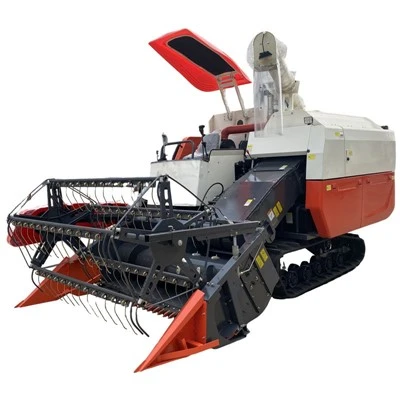
First off, let’s get real: your rice combine is a whole lot heavier and taller than a standard farm truck. Most mid-sized models I sell are around 12 to 15 feet tall, 18 to 25 feet long, and tip the scales at 15 to 20 tons. That means regular roads aren’t built for this—so the first step isn’t hitching up and going. You need to check state and local road rules before you even load your harvester. I can’t tell you how many times a new customer called me panicking because they got pulled over 20 minutes into a move, with a ticket for “oversize load” or no permit. Every county, every state, has different rules—some let you move loads over 10 feet wide only during certain hours, like 9 PM to 5 AM, and you can’t go on interstates or bridges with weight limits under 20 tons. The easiest trick here is to use your phone’s GPS to look up the state’s “oversize load transport” department website, or better yet, call your local DOT (Department of Transportation) a week before moving. Just tell them the exact dimensions of your harvester, its total weight, and where you’re going from and to. They’ll tell you if you need a permit, if you need flag cars (those guys with orange signs that clear the road), and if there are any restricted routes you have to avoid. I always tell my customers: this 15-minute call saves you a $500 fine and a week of delays.
Next, prepping your harvester for the road. This is where so many people mess up. You can’t just leave the grain tank full, right? Wait—yes you can, but only if you’re moving it short distances. For moves over 50 miles, drain the grain tank completely. Full grain adds extra weight and it can shift during bumpy roads, throwing your balance off. Also, if your harvester has a header (that big cutting part on the front), you have to remove it or fold it and secure it tight. Most modern headers can fold down, but I’ve seen headers that stick out 10 feet beyond the combine’s length—way over the road’s “extra length” limit. Failing to secure that header isn’t just a ticket; if it falls off on the highway, it can crash into other cars, and you’ll be liable for everything. Don’t forget the rear tire pressure either. Transport tires need to be a bit softer than when you’re in the field—too hard and you’ll bounce over potholes, too soft and you’ll get a blowout on asphalt. For 18-ton combines, I usually tell folks to run rear tires at 30 to 35 PSI, front tires a bit higher, around 40, just to handle the weight. Also, turn off all loose parts: GPS units, radio antennas, even the side mirrors if they stick out more than 10 feet from the harvester. Those can get torn off by overpasses, which are way lower than you think—most state highways have a 13.5-foot clearance, so if your combine is 14 feet tall, you’re already asking for trouble. I always tell customers to measure the height twice—once from the ground to the top of the cab, once to the top of the grain tank—and add a few inches just to be safe.
Then comes the transport setup: how to hitch your combine and what to use. A lot of people use a regular farm tractor to pull the combine, but wait—if your combine is over 15 tons, a tractor might not have enough power, and even worse, it’s not built to handle the braking force of a heavy combine. The best setup here is a heavy-duty semi-truck with a lowboy trailer. Lowboy trailers are perfect because they’re lower to the ground, which brings your combine’s total height down, and they’re rated for 25 to 30 tons easily. If you don’t have a semi, a 10-wheel farm truck with a heavy-duty hitch (rated for at least 25 tons) works, but make sure your truck has a good braking system. Another thing: never use a bumper hitch—those are for small trailers, not 20-ton machines. You need a fifth-wheel hitch, same as semi-trucks, which connects to the trailer’s kingpin and spreads the weight way better. When securing the combine to the trailer, use heavy-duty steel chains, not rope or bungee cords—obviously, but you’d be shocked how many people try rope. Run chains through the combine’s frame (not the axles, not the body panels) because those are the strongest parts. You should have at least four chains: two on the front, two on the rear, and crank them tight enough that the combine doesn’t shift at all. I always tell customers to have a friend help you shake the combine after securing—if it moves even an inch, tighten the chains more. Also, add a few safety straps on the sides to keep it from tipping if you hit a sharp turn.
Now, the drive itself. This isn’t a joyride. You can’t go as fast as your truck’s top speed—for heavy combines, 35 to 40 MPH is max, even on the highway. Going too fast makes your suspension work way harder, increases the risk of a blowout, and if you have to brake suddenly, you can jackknife the trailer. Also, be extra careful on turns and hills. When approaching a turn, slow down way before you get to it—don’t brake in the middle of the turn, because the heavy weight will make your trailer swing wide. I’ve seen combines scrape against guardrails because people tried to take turns at 50 MPH—total disaster. And if you’re going over 10 miles, stop every 100 miles (or every time you hit a rest stop) to check the chains, tire pressure, and the combine’s alignment. The vibration from driving can loosen chains, and tires can lose pressure without you noticing. Also, if your route has any narrow roads or bridges, go slow—no need to rush, especially since you’re moving a $50,000+ machine.
Wait, what about special cases? Like moving a combine across state lines, or in a rural area with small back roads. For cross-state moves, you might need a trip permit—some states require you to carry a temporary permit for oversize loads, which you can usually get online in 24 hours for $100 to $200. And some states require you to have two flag cars: one in front of the combine to warn oncoming traffic, one in the back. Even if the rule doesn’t say you need them, I recommend it—other drivers might not realize how big your load is, so a flag car with big “OVERSIZE LOAD” signs keeps everyone safe. For rural back roads, make sure you check for low overhangs—like tree branches, old power lines, or even barn roofs—before you go. I once had a customer move a combine through a small town and clip a tree branch, which knocked out his radio and broke a side mirror—he had to drive 2 hours to a repair shop, missing a day of harvest.
Now, let’s talk about mistakes I’ve seen that cost people big time. Last year, a farmer of mine tried to move his 17-ton combine without a permit, just thinking it was small enough. The state patrol pulled him over, fined him $750, and made him unhitch the combine and take it back to his farm—he missed a whole weekend of harvest, which cost him way more than the fine. Another guy didn’t drain his grain tank, so during a bumpy drive, the rice shifted, threw the combine off balance, and it tipped over onto the side of the road. The repairs cost him $12,000, and he was out of the harvest for two weeks. That’s why taking the extra 2 hours to prepare is never a waste.
Here’s the thing: your rice combine is an investment, and moving it safely on public roads isn’t just about following rules—it’s about protecting that investment, and protecting other drivers on the road. I don’t sell cheap, flimsy machines; all my combines are built to last, but even the best machine can get damaged if you cut corners on transport. If you’re in the market for a new rice combine, or you need help with transport tips for an existing one, feel free to reach out to our team for procurement and discussion. We’ve got experts who can walk you through every step, from permit applications to transport setup, so you don’t have to stress about missing your harvest window.
Agricultural Water Pump References:
- U.S. Department of Transportation, Federal Motor Carrier Safety Administration: Oversize and Overweight Load Transport Guidelines
- National Agricultural Machinery Dealers Association: Best Practices for Agricultural Equipment Road Transport
- Rice Farmers Association of America: 2023 Guidelines for Rice Harvest Equipment Mobility
Huzhou Liangyi Agro Machinery Co., Ltd.
As one of the most professional rice combine harvester manufacturers and suppliers in China, we have world-leading production equipment and strong manufacturing capabilities. Please rest assured to wholesale advanced rice combine harvester from our factory. Contact us for more cheap products.
Address: High-Tech Industrial Zone, Huzhou City, Zhejiang Province, China
E-mail: Liangyi_agro@126.Com
WebSite: https://www.cnliangyi-agro.com/
