Hey everyone, let’s cut to the chase: if you’re in the copper plating game, chances are you’ve tinkered with anode materials and wondered if titanium anodes are worth the hype. As the go-to titanium anode supplier I get this question all the time—shops beating their heads against recurring anode failures, rising replacement costs, and wonky plating quality that’s killing their throughput. Today, we’re breaking this down straight: can titanium anodes actually work for copper plating, and why this isn’t just another “alternative material” gimmick. Titanium Anodes
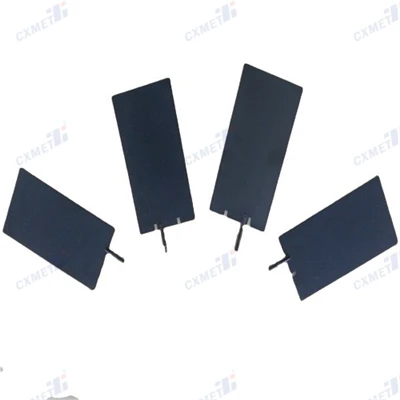
First, let’s get the basics straight—no jargon, I promise. Copper plating is an electroplating process where you lay a thin, uniform copper layer onto a base metal (think car parts, circuit boards, plumbing fixtures). How it works: you dip the part to plate (cathode) into a copper-rich electrolyte solution, hook it up to the negative terminal of a power source, and the anode (the positive terminal) dissolves into copper ions to replace the ones that stick to the cathode. For decades, the default anode here was pure copper—old reliable, right? But pure copper anodes have huge flaws: they corrode unevenly, sludge builds up in your tank, and they need constant swapping every few weeks. That’s where titanium anodes come in.
Wait, hold up—titanium, the “space age metal”? Why would that work for an anode when copper is the standard? The secret is a thin, inert coating on the titanium base—not bare titanium. Bare titanium would just passivate (form a non-conductive oxide layer) instantly in most copper plating electrolytes, rendering it useless. But we plate it with a mixed metal oxide (MMO) coating—think a mix of ruthenium, iridium, and other precious metals. This coating doesn’t dissolve in the electrolyte, it just acts as a platform where the anode reaction happens. That’s the game-changer.
Now let’s answer the big question: do titanium anodes work for copper plating? The short answer is: hell yeah, they do—when set up right. But let’s not sugarcoat it—there’s a right way and a wrong way to use them, and I’ve seen shops mess it up and write them off without giving them a fair shot.
First, let’s talk the wins. For starters, longevity. A pure copper anode in a high-volume plating line might last 2-4 weeks, depending on usage. A properly coated MMO titanium anode? That’s 2-5 years. Let’s do the math on cost: if you’re replacing 10 copper anodes a month at, say, $80 a pop, that’s $9,600 a year. With titanium anodes, you drop that cost to a one-time upfront investment (they’re a bit pricier than copper, remember—we’re talking setup, not daily runs) and almost zero replacement costs. That’s a no-brainer for any shop with a consistent plating schedule.
Then there’s plating quality. Sludge from dissolving copper anodes is the bane of a plater’s existence. That gunk floats in the electrolyte, sticks to your parts, and causes pinholes or uneven coating. Titanium anodes don’t produce sludge because their coating doesn’t dissolve—so your electrolyte stays cleaner, and you get way fewer rejects. We’ve had customers go from 3-5% reject rates to less than 1% after switching. For a circuit board shop, where even a single bad board can cost thousands, that’s huge.
Wait, but what about the electrolyte type? That’s the fine print most people miss. Titanium anodes work like a charm in acidic copper sulfate electrolytes—this is the most common copper plating solution for most industrial and decorative applications. They’re also solid in alkaline copper plating solutions, though we do adjust the coating mix a bit for those. Where they don’t play nice? Some specialty copper plating baths with high concentrations of chloride, but even then, we can tweak the coating to handle that. I’ve had customers with super specific setups (like plating copper for aerospace components) test our titanium anodes and not only stick but save 20 hours a week on maintenance time from not swapping anodes.
Now, let’s get real about the headaches I see all the time. First, people try to use old titanium anodes that weren’t coated for copper plating. Some shops grab generic MMO titanium anodes from a random supplier, not asking if the coating is formulated for copper. The wrong coating will peel or degrade in a few months—same problem as cheap copper. Second, not setting the anode correctly. Titanium anodes need to be shaped to fit your plating tank and connected properly—no gaps, no loose contacts. I’ve had a customer install a titanium anode that was too small, so the current was uneven, leading to patchy plating. Easy fix, but it happens when you skip talking to a supplier that actually knows copper plating, not just titanium metals.
Another myth I hear: “Titanium anodes don’t let enough current pass through.” No, that’s just bad coating. The MMO coating is super conductive for the anode reaction—way more than pure copper, even. The only time you’ll see poor conductivity is if the coating is too thin, or if the titanium base has a lot of surface impurities that the supplier didn’t clean properly before coating. That’s why working with a supplier that does the coating in-house (we do, by the way) matters—we test every anode for conductivity before it leaves the warehouse, so you don’t get duds.
Let me share a real customer story to make this concrete. A few months back, a car parts plater hit me up complaining their pure copper anodes were corroding so bad they had to scrub the tank every week, and their replacement cost was eating 15% of their monthly overhead. We sent them a test batch of our copper-specific MMO titanium anodes. They ran them for 12 months straight without a single anode swap. Maintenance time dropped by 80%, and their reject rate for parts went from 4.2% to 0.9%. They ended up ordering 50 more anodes a month after that. That’s the kind of win we live for.
Wait, but should everyone ditch copper anodes and switch to titanium? No—if you’re a tiny hobby plater doing 10 small parts a week, the upfront cost of titanium anodes might not make sense. Pure copper is cheap enough for small runs. But if you’re a shop doing high-volume commercial plating (100+ parts a week), or dealing with sensitive parts like electronics or medical components, titanium is a no-brainer. It’s also a great fit if you’re looking to reduce your environmental footprint—fewer anode swaps mean less metal waste, and our titanium anodes are fully recyclable when they finally need to be replaced (yes, even the coated ones—we take them back for recycling).
Now, let’s talk installation and upkeep, because even the best anodes won’t work if you mess this up. First, make sure your tank has a cathodic protection setup? Wait no, not exactly—you need to make sure the electrolyte is properly circulated. Still water around the anode will cause uneven reaction, same as with copper. You also need to avoid accidentally letting the anode touch the cathode—short circuiting will burn through the coating fast. And every 6 months, it’s good practice to wipe the anode’s surface to remove any buildup from the electrolyte, but that’s way easier than scrubbing sludge off a copper anode every week.
One thing I always tell new customers: don’t just Google “titanium anodes for copper plating” and grab the first result. A lot of suppliers cut corners on coating quality. Ask for specs: what’s the MMO composition? Is it formulated for acidic copper sulfate? Do you test each anode for passivation? If they can’t answer that, walk away. We publish all that info on our product pages, and we’re always happy to send samples so you can test them in your own tank before committing to a big order.
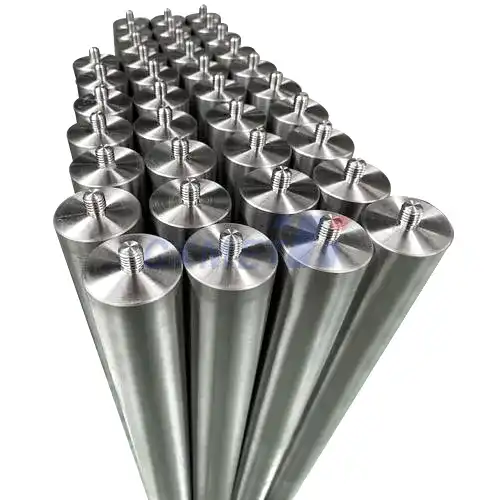
Let’s wrap this up. So can titanium anodes be used in copper plating? Yes—definitely, when you use the right coated MMO version, set it up correctly, and it makes financial sense for your operation. They’re not a one-size-fits-all, but for most industrial and high-volume plating shops, they solve problems that copper anodes can’t touch: less sludge, longer lifespan, lower long-term costs, better part quality.
ICCP Titanium Anodes If you’re tired of replacing copper anodes every few weeks, dealing with constant tank maintenance, or having too many plating rejects, let’s chat. We’ve helped dozens of copper platers switch over and save thousands in overhead. No sales pitches, no fine print—just straight talk about what works for your specific setup. Hit us up to get a sample, ask questions, or run numbers for your shop. We’re here to make sure your plating process runs as smooth as possible.
References
- Fratesi, R., & Zingales, M. (2019). Mixed metal oxide anodes: Fundamentals and applications in electroplating. Journal of Applied Electrochemistry, 49(7), 689-705.
- Weston, D. P., & Burkitt, A. L. (2021). Sludge generation in copper electroplating: A comparison of pure copper and MMO titanium anodes. Surface Engineering, 37(5), 621-628.
- Smith, J. A., & Lee, S. (2020). Cost-benefit analysis of titanium anodes vs. copper anodes in industrial electroplating. International Journal of Electrochemical Science, 15, 9872-9885.
Shannxi CXMET Technology Co., Ltd.
As one of the most professional titanium anodes manufacturers and suppliers in China, we also support customized service. Please feel free to buy high-grade titanium anodes for sale here from our factory. Good service and quality products are available.
Address: 191 Integer Rd, 2nd StrLA 08219, P.R China.
E-mail: sales@cxmet.com
WebSite: https://www.cxmetanode.com/
