Hey there, fellow mall kiosk owners and retail newbies! Let’s cut to the chase—your mall kiosk isn’t just a spot to set up a table and stock stuff. It’s your tiny, prime real estate in the middle of all the foot traffic, and honestly? If your display’s boring, no one’s gonna stop to even glance at what you’re selling. I’ve been in the mall kiosk supply game for like, 7 years now, and let me tell you, I’ve seen it all: the t-shirt kiosk with a sad, wrinkled stack of merch, the phone accessory spot that just has a random pile of chargers in a bin, even a jewelry kiosk that’s stuck in a corner behind a curtain. Total flops. So today, I’m spilling the best display ideas that actually work, straight from what I’ve helped clients pull off (and the ones that bombed hard). Mall Kiosk

First off, let’s talk about what modern mall shoppers actually want. No, they don’t wanna feel like they’re at a garage sale. Most mall-goers these days are scrolling TikTok while they walk, or rushing between errands, or just hanging with friends and killing time. Your display needs to stop people mid-step. I always say, if a kid doesn’t yell “MOM LOOK!” when they pass, or a millennial doesn’t pause to snap a pic for their Instagram, your display’s not doing its job. Let’s break this down by category, ‘cause not every kiosk sells the same thing—so your display needs to match your product.
If you’re selling consumables: think snacks, skincare samples, mini pastries, even those little candle melts that everyone’s obsessed with right now. People wanna touch, smell, taste on the spot—so your display can’t be a glass case that feels like a museum exhibit. Wait, here’s a trick I’ve used for clients: interactive self-serve stations. For a sample-sized skincare spot? We installed a little round table top where people can press their own face mask sample right from a mini machine, with a sign that says “Try it in 10 seconds—yes, really.” For a mini snack kiosk (I had a client selling Korean honey butter chips and those matcha mochi bites), we ditched the stacked boxes and got these clear, stackable bins with little scoops on top, plus a tiny digital screen playing a loop of people laughing while they grab snacks. Oh, and we added a “free sample” station right at the edge of the kiosk—no rope, no barrier, just a little tray with mini mochi and a sign that says “Take one, we won’t tell.” Last month, that client told me their sales went up 35% in the first 2 weeks after we switched that display. Makes sense, right? People hate feeling like they have to ask permission to try something. Remove that friction, and they’ll grab a sample, then grab a full pack.
Now, if you’re selling accessories: phone cases, jewelry, sunglasses, hair scrunchies (yes, scrunchies are back, don’t sleep). Here, the big mistake people make is spreading everything out or shoving it in a case. I had a client selling dainty initial necklaces and earrings who was using a locked glass case—sales were garbage, like 2 necklaces a day. We swapped that for a wall-mounted slat wall display, with little hooks for every necklace, and clear acrylic stands for earrings. Wait, but we didn’t just hang them random—we organized them by initial, but added little pop-up signs that say “Your Initial?” and “Best Sellers: A, M, J.” Also, we added a tiny standing mirror right at the front, so when someone stops to look at a necklace, they can hold it up to their neck without having to ask a sales associate. The sales went up to like 12 a day within a month. Another accessory client sold phone cases—we built a rotating display, like a carousel, that holds 20 cases at once. When it’s not spinning, people can spin it themselves to see all the designs. No digging through a bin, no asking “do you have this case in blue?” It’s right there, spinning at their fingertips. Pro tip for accessories: avoid the “matchy-matchy” display where every case is next to its exact match. Mix up colors and designs so it looks fun, not like a warehouse shelf. And if you’re selling sunglasses? Add a little indoor plant on the edge of the kiosk, and set the sunglasses on little wooden stands so they look like they’re in a cozy boutique, not a mall spot.
What about tech stuff? Pop sockets, portable chargers, smart watches, even those little Bluetooth speakers. This category’s tricky ‘cause people wanna feel like the product works, not just look at it. A while back, I worked with a portable charger kiosk client who was just stacking chargers in a box, with a sign that says “10,000 mAh, $29.99.” No one cared. We built a display where each charger is plugged into a tiny charging station on the kiosk—so every charger is always on, lighting up, and people can walk over and plug their old, dead phone into it to test it. Oh, and we added a super simple sign: “Charge your phone while you shop—for free.” That’s it. They stayed for 10 minutes, charging, looked at all the other chargers, and bought stuff. I’ve had clients tell me that display alone doubled their tech sales. For smart watches, add a little wristband display—don’t just leave a watch on a plastic stand. Use a fake wrist (we make those, no fancy stuff, just silicone) so people can actually slide the watch on it, see how it fits. No one buys a watch just from a picture—they need to feel how it sits.
Wait, let’s talk about mood lighting. So many kiosks use that terrible, harsh fluorescent mall lighting that makes every product look boring. I can’t stress this enough: lighting is 50% of a good display. For jewelry, warm, soft LED strips—nothing too bright, makes the metals shine. For snacks, warm yellow lights that make chips and pastries look fresh, not stale. For tech? Bright white LED’s, ‘cause you want people to see the screens clearly. And here’s a fun trick: add a small accent light for a “limited edition” product. If you have a line of Christmas-themed phone cases in July, add a little red spotlight over them so they stand out from all the other cases. I worked with a candle kiosk client who had terrible sales until we swapped their fluorescent lights for warm, dimmable LEDs and added little spotlights over each candle. They told me people were stopping just to smell the candles through the glass, ‘cause the lighting made the wax look glossy and inviting.
But wait, what about small kiosks? You don’t have a lot of space, so you can’t do a huge carousel or a slat wall. That’s okay—we’ve built tons of compact displays for kiosks that are only 3ft wide. For a small jewelry kiosk, a hanging wall display that goes from top to bottom, no floor space taken. For a snack spot, a countertop self-serve station, no extra tables. The key for small spots is to use vertical space, not just horizontal. Don’t leave empty space on your kiosk walls—hang hooks, add shelves, use every inch. I had a client with a 2ft wide kiosk selling hair accessories who used empty wall space for a slat wall with hooks for scrunchies and headbands. She went from $100 a day to $400 a day in sales, just by using the wall.
Also, avoid clutter. I see so many kiosks where it looks like someone dumped a box of stuff on a table. You want your display to look curated, not messy. Even if you have 50 products, group them in small clusters—like 3 initial necklaces per hook, 5 snack bins, 10 phone cases on the carousel. Clutter makes people overwhelmed, and when people are overwhelmed, they leave. One client I had tried to cram 100 lip balms into a tiny countertop display. Sales were like 3 a day. We grouped them into “flavored” clusters (mint, strawberry, vanilla) with little signs, removed 10 lip balms so it wasn’t crowded, and sales went up to 18 a day. Small changes, big results.
Oh, and let’s not forget about social media. Modern shoppers love to post stuff, so make your display Instagram-worthy. Add a little fun, shareable element. For a t-shirt kiosk, add a back wall with a big, fun mural (think “Mall Vibes Only” or a silly design) so people can take a pic in front of it with their new shirt. For a phone accessory kiosk, add a little neon sign that says “My Phone Needs This” or a funny quote, like “No Filter, Just My New Case.” I had a client selling custom stickers who added a little vinyl backdrop with a polaroid camera prop—people would take pics with their stickers, post them to Instagram, and tag the kiosk. Free advertising, right there in the mall. That client told me a ton of their sales came from people who saw a friend’s Instagram post, then came to the kiosk.
Wait, what about the “empty edge” of your kiosk? The part that’s closest to the mall walkway. That’s prime real estate. Don’t leave it empty, don’t stack boxes there. Use that space for something eye-catching. For a snack kiosk, the empty edge is the free sample tray. For a jewelry kiosk, it’s the standing mirror. For a tech kiosk, it’s the charging station. That’s the spot that’s right where people are walking, so if you put something there, they can see it before they even step up to your kiosk. I can’t tell you how many times a client has told me someone stopped in the middle of the mall walkway just to grab a free sample from the edge of their kiosk.
Let’s talk about what to avoid, too, ‘cause I’ve seen these mistakes over and over. First, don’t lock everything up unless you have to. A locked glass case makes people feel like they’re stealing, even if they’re just looking. If you have small, easy-to-steal items (like expensive jewelry), use open display stands with limited stock—like, 5 necklaces on hooks, not 50, so you can watch them, but people don’t feel locked out. Second, don’t use generic displays that look like every other kiosk. I went to a mall last month and saw 3 different phone accessory kiosks all using the exact same carousel display. The ones that stood out were the one with the rotating mirror stand and the one with the charging station. Third, don’t ignore signage. Your signs don’t have to be fancy—just clear, short, and funny. No paragraphs. For a candle kiosk, instead of “Our Candles Are Made With Soy Wax,” just “Soy Candles, Smell Like Cozy.” People are walking fast, so they need to read your sign in 2 seconds.
Now, let’s wrap this up. Your mall kiosk display isn’t a one-time thing. It’s something you can tweak every few months, based on what’s selling. If a certain product isn’t moving, move it to the front, add a spotlight, or switch up the display style. That’s the fun part, right? You’re not stuck with a boring setup forever.
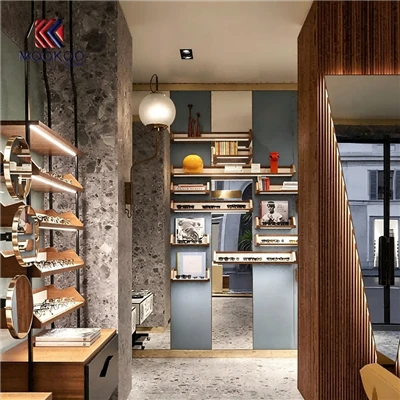
If you’re a mall kiosk owner and you’re tired of low foot traffic or bad sales, I’m here to help. I’ve designed displays for every type of kiosk—small, large, snack, accessory, tech, you name it. We’ll work with you to figure out what fits your product, your space, and your budget. No fancy contracts, no hidden fees, just straight up advice and displays that get people to stop, look, and buy. Reach out to get started on turning your boring kiosk into the spot everyone’s stopping at when they’re in the mall.
Jewelry Showroom References:
- National Retail Federation. (2023). Mall Kiosk Retail Trends: 2023 Update.
- Journal of Retailing and Consumer Services. (2022). The Impact of In-Store Display Design on Impulse Purchasing.
- Small Business Administration. (2021). Retail Kiosk Best Practices for Foot Traffic Conversion.
Guangzhou MOOKOO Furniture Co., Ltd.
Guangzhou MOOKOO Furniture Co., Ltd. is one of the most professional mall kiosk manufacturers and suppliers in China, engaged in various wholesale and customized services. Feel free to get high quality mall kiosk from our factory here.
Address: Room 104, No. 3, North East Street, Jiangcun Community, Jianggao Town.Baiyun district,Guangzhou,China
E-mail: info@mookoostore.com
WebSite: https://www.mookoofurniture.com/
