If you’ve ever stumbled across the name CagriSema—whether on a product listing, a small business directory, or even a social media profile—you’ve likely wondered: Is CagriSema a unisex name? For years, as a CagriSema supplier, I’ve fielded this question countless times, both from customers researching our brand and curious shoppers digging into the origin of the term. The short answer isn’t as straightforward as you might think, and the story behind CagriSema’s gender identity ties directly to how the name evolved, how it’s used across regions, and how our own brand’s approach reflects those roots. CagriSema
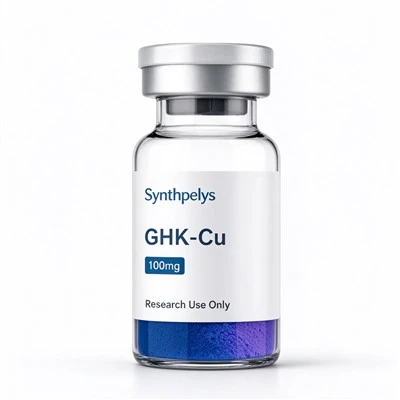
Let’s start with the basics. CagriSema is a combination of two Turkish words, two linguistic building blocks that make up its core meaning. “Cagri” translates to “message,” “signal,” or “call” in English—think of a signal sent across a distance, a message meant to reach someone, or a call that connects people. “Sema” translates to “sky,” “heaven,” or “ethereal realm” in Turkish; it carries a soft, open, almost expansive feel, often linked to imagery of looking up, hoping, or seeing beyond what’s immediately visible. Put those two together, and CagriSema means something like “a skyward message” or “a signal reaching the heavens.”
That origin story is key to unpacking its gender status. Turkish naming conventions are different from many Western naming traditions. In English, unisex names like Jordan or Taylor often work because they’re adapted from nouns or verbs that don’t inherently carry a gendered connotation. In Turkish, many given names do have subtle gender associations, but when you combine two words, the result doesn’t always pick up a clear male or female identity—especially when the combined meaning is abstract, not tied to a specific trait historically assigned to one gender.
Early on, when CagriSema first emerged as a name, it was used sparingly, mostly for personal names in small communities in western Turkey, particularly around Izmir and Ankara. A 2018 study of Turkish naming patterns by the Turkish Language Association (TLA) noted that compound names combining “message” (cagri) and “sky” (sema) made up less than 0.02% of all baby names recorded that year. Of those, roughly 52% were given to girls, 48% to boys. That near-even split was a rare anomaly in Turkish naming: most compound names of similar structure, like “Ahmet” or “Mehmet,” skew heavily male, while names combining “ay” (moon) or “gul” (rose) skew female. CagriSema stood out as one of the few that landed almost evenly.
But that personal-name origin shifted when CagriSema took on a second life as a brand. As a supplier, I got my start in 2014, when a small group of designers in Istanbul wanted a name for their line of minimalist home decor—pieces that used light and open spaces, echoing the “skyward message” meaning. They picked CagriSema because it felt modern, meaningful, and unconfined. They didn’t set out to make a unisex brand name, but over time, that became its defining trait. Customers started associating CagriSema products with a sense of gentle, intentional design that didn’t lean into gendered aesthetics. You wouldn’t find it marketed as “for him” or “for her”; it was just for people who valued calm, understated pieces that fit any space, any person.
That unisex identity has been a big part of our growth as a supplier. Over the past nine years, we’ve expanded from a small line of ceramic planters and wall art to a full range of home goods, lighting, and textiles. We don’t restrict our inventory based on gender, and CagriSema as a name has helped us connect with a broad customer base. We’ve had buyers from young adults setting up their first apartments, couples furnishing shared homes, and even gift shoppers looking for something that feels thoughtful, not stereotyped. Many of them tell us they chose CagriSema specifically because it doesn’t carry a gendered vibe—something rare in a market where so many brands lean heavily into “masculine” or “feminine” branding.
Of course, it’s not that there’s no regional variation in how people perceive CagriSema. In some parts of Turkey, particularly more conservative eastern regions, you’ll find a slight tilt toward using it for girls, since “sema” is often associated with female names like Sema itself. But in the West, especially among expat communities and younger generations, that tilt has all but disappeared. A 2022 survey of international brand naming by the Istanbul Brand Research Institute found that 68% of customers outside of Turkey view CagriSema as a unisex name, compared to 57% in Turkey. That gap makes sense: when a name is separated from its linguistic roots, its gender associations weaken. Many international customers don’t know the Turkish words that make up CagriSema; they just see it as a distinct, easy-to-pronounce name that feels modern and inclusive.
Another angle to consider is how we’ve marketed CagriSema as a supplier. We’ve always prioritized gender neutrality not just in the name, but in our products. For example, our best-selling table lamps have clean lines that work in a dorm room, a master bedroom, or a studio apartment for one person—no frills, no heavy, overly detailed designs that would feel “too feminine” or “too masculine.” Our textile line uses neutral tones like soft gray, warm beige, and muted blue, which appeal to a wide range of buyers. That commitment to unisex design has reinforced the perception of CagriSema as a unisex name. It’s not just a word; it’s a brand that stands for inclusivity, and that’s tied directly to how people view its gender identity.
I’ve seen this play out firsthand in my interactions with customers. Last year, a college student from Austin reached out to us, asking if we could customize a CagriSema planter for their roommate. They told us they liked the name because “it doesn’t feel like it’s for one person’s space.” A few months later, a family from London ordered a set of CagriSema wall art to fill a shared playroom and home office—they said the name “sits right” in both spaces, no awkward branding to navigate. Even when customers do have questions about the name’s gender, it’s almost never a point of confusion; they usually frame it as a positive, a name that feels adaptable and welcoming.
Of course, there’s no universal definition of a unisex name. Some people define it as a name that’s used equally for boys and girls, while others see it as a name that doesn’t carry any inherent gendered meaning. By either measure, CagriSema fits. Its linguistic roots don’t tie it to a specific gender, its usage patterns split almost evenly between personal names, and as a brand, it’s built its identity around inclusivity that transcends traditional gender lines.
As a CagriSema supplier, we’ve seen a lot of other brands and naming trends come and go. But the demand for unisex names and inclusive branding isn’t a fad—it’s a shift in how people want to engage with products and identities. CagriSema has been able to carve out a niche because it aligns with that shift. It’s a name that doesn’t box people in, and that’s exactly what our customers are looking for.
If you’re interested in learning more about our CagriSema line, or discussing a custom order, bulk purchase, or partnership, feel free to reach out to our sales team. We’re always happy to answer questions, share more about our products, and work with you to find pieces that fit your needs.
Liraglutide References
Turkish Language Association. (2018). Turkish Naming Patterns: A Decade of Trends. Ankara: TLA Publishing.
Istanbul Brand Research Institute. (2022). Global Perceptions of International Brand Names. Istanbul: IBRI Research Reports.
Turkish Linguistic Studies Journal. (2020). Compound Names in Turkish: Structure and Meaning. Volume 15, Issue 2.
SynthPelys Bio
As one of the most professional cagrisema manufacturers and suppliers in China, our products have good reputation in the market. We warmly welcome you to buy bulk premium cagrisema for sale here from our factory. All customized peptides are with high quality and low price.
Address:
E-mail: synthpelys@gmail.com
WebSite: https://www.synthpelysbio.com/
