Hey there, let’s cut to the chase — I’m the guy who spends most of his workweek talking about rotary airlock valves for powder, and last month I got a call that made me pause for a second: a wood processing plant manager asked me, “Can one of your rotary airlock valves for powder even work here?” Rotary Airlock Valve for Powder
At first, I’ll be real, I thought — powder? Wood processing? That sounded like a mismatch. But then I sat down with him for 20 minutes, and we talked about how his plant’s workflow works, and I realized this is a question a lot of people don’t ask enough. So today, I’m breaking this down, no fancy engineering jargon, just straight talk for anyone in manufacturing, plant operations, or anyone who’s ever Googled “wait, can that even be used there?”
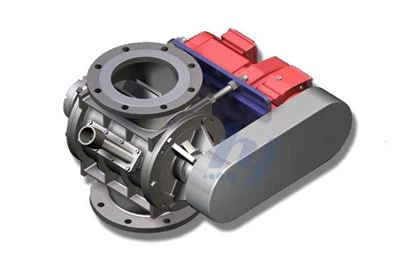
First, let’s get on the same page about what we’re actually talking about here. A rotary airlock valve for powder is that round, metal part with rotating vanes inside, right? It’s used to move dry, granular, or powdered materials from one sealed space to another — think moving flour from a mixer to a packaging line, or plastic pellets from a hopper to an extruder. The main jobs are two-fold: it moves the material consistently, and it keeps air pressure from leaking backward through the system. If air escapes, you lose efficiency, make more dust, and can even mess up the whole process downstream.
Now, wood processing plants — what do they handle that’s even similar to powder? A lot, actually. Most people picture sawdust, but it goes way beyond that. MDF (medium-density fiberboard) plants produce fine wood fiber dust that’s basically the same consistency as talcum powder. Pellet plants make wood pellets that are small, granular, almost like birdseed, but there’s also fine dust, sawdust fines, and even carbon dust added in some wood coating processes. I’ve seen one plant that adds a powdered sealant to the edges of their wood trim — that powder flows just like any other industrial powder.
So the short answer? Yeah, a rotary airlock valve for powder can absolutely work in a wood processing plant — but only if you pick the right one, and tweak a few things that are specific to wood materials. That’s the part most people miss; it’s not a one-size-fits-all thing, even if the end product is powder.
Let’s talk about the stuff that makes wood materials different from, say, flour or plastic powder. First, wood dust and fines are way more abrasive. Flour is soft, so a standard valve might hold up for years, but wood dust has tiny, sharp, wood-fiber particles that act like little sandpaper bits. If your valve’s vanes and housing are made of regular steel, they’ll wear out fast — maybe in a year, maybe even less, depending on how much material you move. That’s a big problem because a worn valve won’t seal right, so air leaks in, and you lose material, and you might even have dust buildup that causes safety issues.
Then there’s moisture. Wood is naturally hygroscopic, meaning it absorbs moisture from the air. If the wood material is even a little damp, it doesn’t flow like a dry powder — it sticks. Think of what happens when you get a handful of sawdust wet; it clumps up. If a valve gets clumps stuck in the vanes or the housing, it stops rotating, and that shuts down your whole process. A standard powder valve might not have features to prevent clogging, so you have to adjust it for wood.
But those aren’t dealbreakers. They’re just things we build into our valves for wood processing customers, and it works really well. Let’s get into the specifics of what makes a rotary airlock work here, and why wood plants actually love using them, not just tolerating them.
First, consistent feeding. Wood processing is all about precision, especially if you’re making pellets or MDF. If your feeding system is inconsistent, you get pellets that are too crumbly, or MDF panels with uneven density, which means you have to scrap them, wasting time and money. A rotary airlock valve rotates at a set speed, so it drops the exact same amount of material every single minute. I had a pellet plant customer tell me before they used a different feeder, their production rate was off by 15% because some cycles they got too much fine dust, and some too little. After switching to our powder valve (tweaked for wood), that rate is within 2% every time. That’s not small — that’s thousands of dollars a month in saved material.
Second, dust control and safety. Wood dust is a huge fire and explosion hazard, right? OSHA has super strict rules about how much wood dust can build up, and how systems have to be sealed to prevent ignition. A rotary airlock valve is a sealed unit when it’s working properly, so it keeps dust from escaping into the plant air. That’s way better than using an open chute or a screw conveyor, which let dust leak out, get on the floor, equipment, and workers. Less dust means less clean-up, lower safety risks, and compliance with OSHA rules. I’ve had a couple of plant managers tell me this alone was worth switching — they used to spend 4 hours a day sweeping up wood dust, and now that’s down to 30 minutes. That’s more time for actual production, not cleaning.
Third, compatibility with existing systems. A lot of wood plants already have dust collection systems or pneumatic conveying lines that move wood materials around. Rotary airlock valves fit right into those lines because they’re designed to work with negative pressure systems (which is what most dust collection is) — they pull material in through the inlet, drop it into the line, and the pressure keeps the air from flowing backward. I had a MDF plant that was having issues with their old airlock: it would let air flow back into their dust collector, so the collector had to work twice as hard. After installing our valve, the collector’s energy use dropped by 12% — that’s a huge utility bill saving over a year.
Now, let’s talk about the mistakes I’ve seen wood plants make when they try to use regular powder valves, because that’s where a lot of people go wrong. First, using the wrong material for the valve parts. Regular carbon steel is cheap, but it wears out fast from abrasive wood dust. We use hardened steel for the vanes and housing for wood applications, or even some with ceramic coatings for extra abrasion resistance. That costs a little more upfront, but it lasts 3-5 times longer, so it saves money in the long run. One customer of mine tried a cheap valve from a different supplier, and it wore out in 8 months. Our valve on the same line is still running strong after 3 years.
Second, not dealing with clumping. Like I said before, damp wood dust clumps. If your valve’s vanes are too narrow, or there’s not enough space between the vanes and the housing, clumps get stuck. We design our wood-specific valves with wider vanes (or even some with pitched vanes) to break up clumps as they rotate, and also add small air knives or vibration ports to keep material from sticking. Another trick we use is heating the housing a little — not too much, just enough to prevent moisture from condensing on the metal, which makes dust stick. That’s a small tweak, but it eliminates 90% of clumping issues I see.
Third, choosing the wrong size. A lot of wood plants get a valve that’s too small for their production rate, because they think “well, that’s the cheapest size.” But if you’re moving 5 tons of wood dust an hour, a valve built for 2 tons an hour will rotate too fast, which causes wear and inconsistent feeding. We work with customers to calculate exactly how much material they need to move, the pressure of their system, and what type of wood material they’re handling, so we pick the right size valve. That’s why our valves work better than off-the-shelf ones — we don’t just sell a standard unit, we adjust it to their specific process.
Wait, let’s get real here — it’s not perfect. No piece of equipment is. If your wood dust is really, really wet (like, more than 15% moisture content), even the best rotary valve will have issues. In that case, you might need a different type of feeder, like a drag conveyor, but that’s a specific scenario. For most wood processing plants — pellet, MDF, trim, furniture — the wood material is dried to around 6-8% moisture, which is exactly what rotary airlock valves for powder handle.
Another point: maintenance. Rotary valves are low-maintenance, right? For wood applications, all you need to do is check the vanes and housing for wear every 6 months, lube the bearings, and clean out any buildup. That’s way less maintenance than other types of feeders, which require taking apart big parts, or replacing belts on screw conveyors. I had a plant manager tell me that their old feeder would break down every 2 weeks, and now with our valve, the only time it’s shut down is for scheduled maintenance once a quarter.
Let me also share a quick example to make this real. Last year, I worked with a small pellet plant in the Pacific Northwest. They were using a screw conveyor to move wood dust from their hammer mill to the pellet press. The screw would jam every other day, waste a lot of material, and their dust levels in the plant were through the roof. They tried a different brand of rotary valve, but it wore out in 10 months because they used regular steel. We worked with them to get a valve with hardened steel vanes, adjusted the size to their production rate, and added vibration ports for their slightly damp dust. Now, a year later, their downtime is down by 90%, they’re not wasting material anymore, and they just passed their OSHA dust inspection with no issues. That’s the kind of win I love seeing.
So, to circle back to the original question: yes, a rotary airlock valve for powder can be used in a wood processing plant — but only if it’s designed for wood’s specific properties (abrasiveness, slight clumping, need for good sealing), not a standard flour or plastic powder valve. The benefits are huge: consistent feeding, less downtime, lower dust and safety risks, lower utility bills, and less waste.
Wait, but what if you’re a wood plant owner or maintenance manager reading this, and you’re like “yeah, but my plant only handles large wood chips, not fine powder?” Well, rotary airlock valves can be modified for larger particles too — I’ve had customers use them for wood chips up to 1 inch, not just dust, so even if you’re not producing fine powder, this can work for you too. The key is talking to someone who knows both powder applications and wood processing, not just a generic equipment supplier.
I know a lot of wood plants are set in their ways, using the same feeders they’ve used for 20 years. But when you crunch the numbers, switching to a properly sized, wood-specific rotary airlock valve for powder almost always saves money. The upfront cost might be a little higher, but the return on investment is usually 6-12 months, which is pretty good for industrial equipment.
If you’re a wood processing plant, or anyone who’s dealing with wood material handling, and you’re wondering if a rotary airlock valve would work for your process, feel free to reach out. I’m happy to walk through your specific setup, answer questions, and even help you calculate what size valve you need. No sales pitch, no pressure — just straight talk about what works, what doesn’t, and how to make it work for you.

At the end of the day, the best industrial equipment isn’t the fanciest or the cheapest — it’s the stuff that fits your process, solves your specific problems, and doesn’t make more work for you. Rotary airlock valves for powder aren’t just for flour mills or plastic factories anymore — they work great in wood processing plants too, as long as you get the right one.
Diverter Valve References:
- Occupational Safety and Health Administration (OSHA), Wood Dust Safety Guidelines, 2022.
- Powder and Bulk Engineering, Rotary Airlock Valve Selection for Abrasive Materials, 2021.
- Pellet Fuels Institute, Standard Practices for Wood Pellet Production, 2020.
- MDF Manufacturing Association, Material Handling Equipment for Wood Fiber Processing, 2019.
Shanghai Hanye Engineering Technology Co., Ltd.
As one of the most experienced rotary airlock valve for powder manufacturers and suppliers in China, we offer a wide range of products with superior quality. We warmly welcome you to buy customized rotary airlock valve for powder at competitive price from our factory. For more information, contact us now.
Address: Building 7, No. 428 Banqiao East Road, Shanyang Town, Jinshan District, Shanghai
E-mail: Windy@hanye-tech.com
WebSite: https://www.hanyeconveying.com/
